Is At-Home Laser Safe and Effective for Facial Hair?
At-home treatment can reduce facial hair for the right person, but it is not a quick fix and it is not suitable for every face. The first things to check are whether the device is actually approved for facial use, whether your skin tone and hair color match its chart, and whether you are dealing with coarse dark hair rather than pale peach fuzz. Most products sold as a home facial hair removal laser are IPL devices, so the manual matters more than the marketing name.
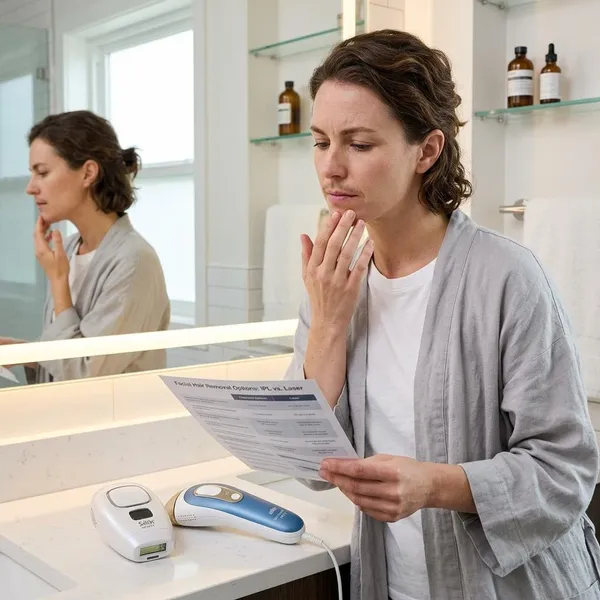
Home facial laser vs IPL
Laser and IPL both use light energy to target pigment in the hair, but they do it differently. That difference affects precision, comfort, and how realistic your expectations should be on small facial areas like the upper lip, chin, and jawline.
| Device type | What it means for facial hair |
|---|---|
| True laser | More focused light, usually more precise, but home versions are still much weaker than clinic systems. |
| IPL | Broader light flash, common in home devices, often useful when there is clear contrast between skin and hair. |
Laser uses a focused wavelength
A true laser sends one focused wavelength into the skin, which can make it better suited to targeting darker, coarser hairs without spreading as much light around the area. On the face, that precision can be useful for a few stubborn chin or jawline hairs, but it does not make a home device equal to professional treatment.
For home use, think in terms of gradual reduction rather than permanent removal after a few sessions. A smaller treatment head, reliable skin contact sensor, and comfortable lower settings are usually more important for facial use than chasing the strongest device you can find.
IPL uses broad-spectrum light
IPL uses a wider flash of light instead of one focused wavelength. It is common in at-home devices because it can cover areas efficiently, but on the face it needs careful placement and a good skin-hair contrast to work well.
It may be a sensible option if you have dark upper-lip or chin hair and your skin tone is listed as suitable. It is less convincing for soft cheek fuzz, pale hairs, or areas where the manual is vague about facial approval.

What to check before treating facial hair at home
Before using any light-based device on your face, check three things in this order: skin tone and hair color compatibility, approved facial zones, and personal risk factors such as skin conditions or medication. If one of those does not fit, do not treat the area just because the device turns on.
Supported skin tones and hair colors
The best match is usually darker hair against a lighter surrounding skin tone, because the light needs pigment in the hair to absorb energy. Blonde, red, gray, and white facial hairs often respond poorly, even when the device is safe for the skin.
- Check the chart in daylight: indoor lighting can make your skin look lighter or warmer than it is.
- Use your current skin tone: if you tan in summer, reassess before treating.
- Look at the actual hair: coarse dark hairs respond differently from fine pale fuzz.
Facial areas and users listed in the manual
Only use the device on facial areas the manual clearly names. "Face" may not mean the whole face; many devices limit use to areas below the cheekbones, and some only mention the upper lip, chin, or jawline.
Men should read this section especially carefully. Dense beard growth is not the same as a few unwanted facial hairs, and some home devices specifically warn against use on male beard areas because treatment can be more painful, less predictable, or not tested for that pattern of growth.
Restrictions for fine hair and peach fuzz
Fine facial hair is usually a poor target because it may not contain enough pigment to absorb useful light energy. If your main concern is soft cheek fuzz that only shows in bright light or makeup, shaving, dermaplaning, or another non-light method may be more predictable.
A different situation is a small number of dark chin hairs that return every few days. Those hairs have a clearer target for the device, although hormonal regrowth can still make maintenance necessary.
Skin conditions and medication warnings
Do not treat over sunburn, active eczema, inflamed acne, open cuts, irritated skin, tattoos, dark moles, or unexplained pigmented spots. Also be cautious if you use retinoids, exfoliating acids, acne treatments, or medication that may increase light sensitivity.
If you have melasma, a history of dark marks after irritation, or sudden new facial hair with acne or cycle changes, it is worth asking a dermatologist before starting. In higher-risk skin, avoiding a visible mark can matter more than saving time at home.
How to use a facial hair removal device
Safe use is mostly about restraint: prepare the skin, test first, treat only approved zones, and stay on the schedule instead of adding extra flashes. Facial areas are small, so it is easy to overdo treatment while trying to be precise.
Prepare the skin as directed
Start with clean, dry skin with no makeup, sunscreen, self-tanner, oil, or heavy skincare left on the area. If the instructions say to shave first, shave rather than wax, thread, tweeze, or epilate, because the device needs the hair root below the skin as its target.
If your skin is already stinging from exfoliants, retinoids, wind, or sun exposure, wait. Treating calm skin is a simple way to reduce the chance of lingering redness or pigmentation.
Complete the required skin test
Patch test on a small approved area at the recommended setting, then wait the time stated in the manual, often 24 to 48 hours. Warmth or brief redness may be expected, but burning, swelling, blistering, strong tenderness, or darkening means you should stop rather than "push through."
Treat only permitted areas
Keep the device away from the eyes, eyelids, eyebrows, nostrils, ears, broken skin, and any area the manual does not clearly approve. On curved spots like the upper lip or jawline, place the window flat against the skin before each flash instead of angling it loosely.
- Use the facial attachment if one is supplied.
- Avoid repeated overlap on the same small patch.
- Skip suspicious marks rather than flashing over them.
Follow the device's treatment schedule
Most home devices work through repeated sessions because hair grows in cycles. More frequent treatment than directed is not a shortcut; on the face, it mainly raises the chance of irritation.
Use gentle aftercare and sun protection
After treatment, keep skincare boring for a while: gentle cleanser, bland moisturizer if needed, and daily broad-spectrum sunscreen. Avoid scrubs, strong acids, retinoids, heat, and fresh tanning until the skin feels normal and the manual's waiting period has passed.
This matters more for year-round facial use than for a hidden body area. The face gets regular UV exposure, and pigmentation from irritation is often more frustrating than the original hair.
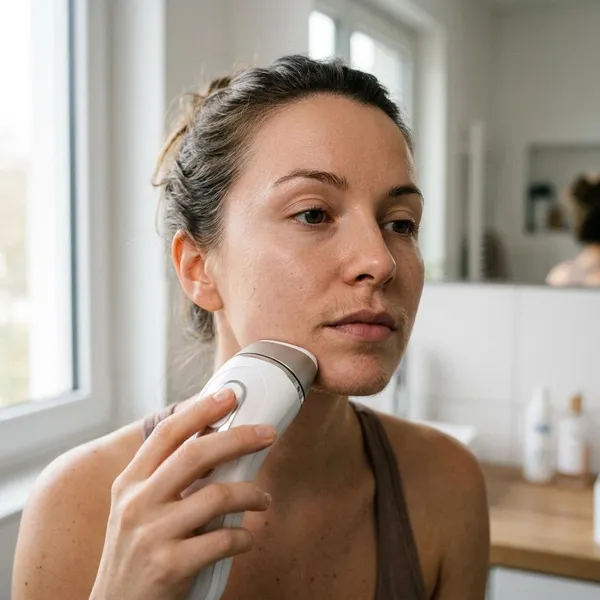
What results can you expect?
The realistic goal is reduced regrowth, not instant smooth skin. If you are a good match for the device, facial hair may come back slower, finer, or in smaller amounts, but results can be uneven because facial hair is strongly affected by hair texture and hormones.
Gradual hair reduction
Early progress may look modest: shaving less often, fewer obvious dark hairs, or softer regrowth. Coarse dark hairs are usually the easiest changes to notice, while fine or light hairs may barely respond.
Do not judge by one patchy week. Hair cycles are staggered, so one area may seem to improve before another even when you are using the device correctly.
Repeat sessions and maintenance
Maintenance is normal with home devices. After the initial treatment phase, many people need occasional touch-ups when hairs start to return, especially on the upper lip, chin, or jawline.
If you want a low-effort option before a holiday or event, an at-home device may be too slow to feel satisfying. If you are willing to build it into a longer routine, it can be more useful as a way to reduce how often you shave or pluck.
Regrowth linked to hormonal changes
Hormonal shifts can reactivate or increase facial hair even after good reduction. PCOS, pregnancy, menopause, certain medications, and other health changes can all affect growth patterns around the chin, jawline, and upper lip.
If facial hair is suddenly getting darker, thicker, or more widespread, treat that as a signal to look beyond the device. Light-based treatment may help manage the visible hair, but it may not address why new hairs are appearing.
Conclusion
At-home facial laser or IPL is most worthwhile when the device clearly allows your facial area, your skin and hair match the compatibility chart, and you are patient enough for repeated sessions. It is not a good gamble for unapproved zones, pale fuzz, irritated skin, or unclear medication risks. If you start with the manual instead of the marketing claims, you will make a safer and more realistic choice.
FAQS
Can men use home devices on beard hair?
Only if the manual clearly approves that use. Beard hair is dense and hormonally driven, so treating it with an unapproved home device can be painful, patchy, or unsafe.
Can facial hair grow thicker after laser or IPL?
It usually should not grow thicker because of the device itself. If hair seems to be increasing, hormonal changes or uneven early reduction are more likely explanations.
What should you do if treatment causes burns or dark marks?
Stop using the device and keep the area cool, protected, and free from harsh skincare. If there is blistering, strong pain, spreading discoloration, or marks that do not settle, contact a dermatologist promptly.
Popular Articles