Is Forehead Laser Hair Removal Right for You?
Forehead laser hair removal can be worth considering if the hairs you want treated are dark, coarse, and clearly separate from your normal hairline. It is much less predictable for peach fuzz, light hairs, or any plan that tries to redesign the front hairline. The safest first step is not booking a package, but checking whether the specific hairs on your forehead are good laser targets at all.
Can you have laser hair removal on your forehead?
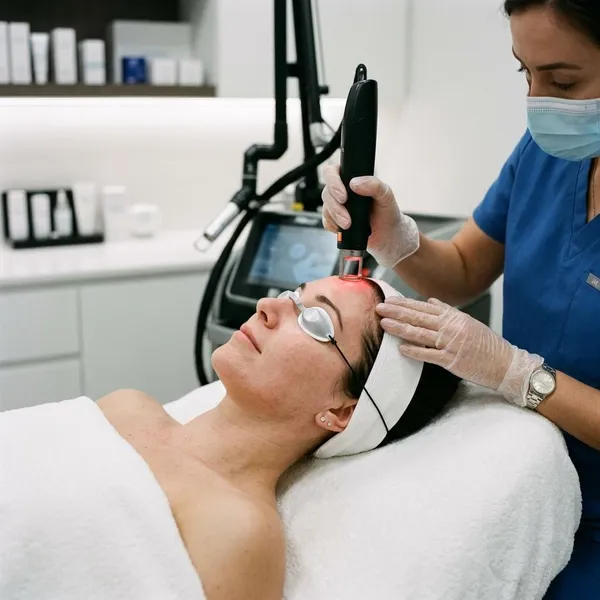
Laser can be used on the forehead in selected cases, but the area needs a careful plan. Treating a few obvious dark hairs near the temples or upper forehead is a different decision from changing the front hairline. The first is usually a small cleanup job; the second can permanently affect how your face is framed.
The main thing to check is the hair type. A forehead often has mixed growth: a few thicker terminal hairs, softer vellus hair, and sometimes lighter strands close to the hairline. Laser does not treat all of those equally, so a provider should not treat the whole area as one simple patch.
If your goal is occasional cleanup of a few stubborn hairs you keep plucking, laser may be reasonable. If your goal is a smooth, fuzz-free forehead or a sharply reshaped hairline, the risk-to-reward balance becomes much less straightforward.
Which forehead hair responds best to laser?
Laser works best when there is enough pigment in the hair for the light energy to target. That is why dark, coarse hairs usually respond better than fine, light, gray, or white hairs. On the forehead, this distinction matters because unsuitable hairs can lead to wasted sessions, patchy results, or in some cases more noticeable growth.
Dark, coarse hairs
Dark, coarse forehead hairs are usually the best candidates because they contain more pigment and give the laser a clearer target. These may be stray hairs near the temples, a small cluster above the brow line, or thicker hairs sitting outside the natural hairline.
Even then, expect reduction rather than instant removal. Several sessions are normally needed because hairs cycle through growth phases, and not every follicle is active during the same appointment.
Fine hair and peach fuzz
Fine hair and peach fuzz are often poor laser targets. They may not absorb enough energy for reliable reduction, and treating broad areas of facial fuzz can sometimes make the result look worse rather than better.
The concern is paradoxical hypertrichosis, where treated or nearby fine hairs become more noticeable after laser. It is not something every person experiences, but it is important enough that a provider should mention it if your forehead concern is mostly soft fuzz.
- Better laser scenario: a few dark hairs you can easily point out.
- Higher-risk scenario: a wide area of barely visible fuzz that you want completely smooth.
Blonde, red, gray, and white hairs
Blonde, red, gray, and white forehead hairs usually respond poorly because standard laser hair removal depends on pigment. Gray and white hairs are especially unlikely to respond well. If these are the hairs bothering you, electrolysis may be a more practical option because it treats follicles individually rather than relying on hair color.
Forehead laser hair removal risks to consider
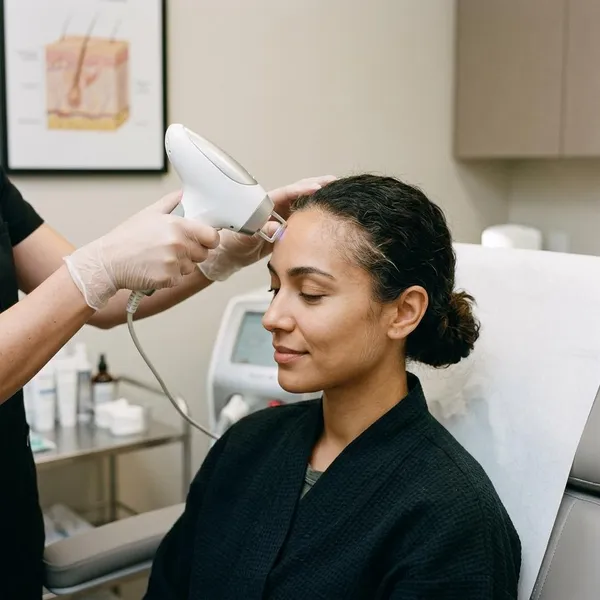
The forehead is a small area, but it is not a casual treatment zone. The skin is visible, often sun-exposed, close to the eyes, and connected to the shape of the hairline. That means small mistakes can be more noticeable here than on areas you can easily cover.
The main risks to think about are skin reaction, unwanted hair stimulation, hairline changes, and eye safety. The point is not to avoid treatment automatically, but to be selective about who is a good candidate and how much should be treated.
Burns and pigment changes
Burns, blistering, prolonged redness, and pigment changes can happen if the settings are wrong for your skin, the area is recently tanned, or the skin is already irritated. Pigment changes may show as darker or lighter patches, and even temporary marks can feel frustrating on the forehead because the area is always visible.
Increased hair growth after treatment
Increased hair growth after laser is uncommon, but the face is one of the areas where it is discussed most. The risk is more relevant when the starting hair is fine or lightly pigmented rather than clearly coarse.
If your provider wants to treat a large fuzzy area without explaining this possibility, pause before committing. A conservative plan that targets only obvious dark hairs is usually easier to judge and less likely to create a new cosmetic problem.
Uneven or unwanted hairline changes
Hairline changes deserve extra caution because laser results can last a long time. Removing a few stray hairs outside the natural edge may look tidy, but raising or sharpening the whole front hairline can look artificial if the shape is too harsh or uneven.
Eye injury near the eyebrows
Eye protection is non-negotiable. Laser and IPL light can be dangerous near the orbital area, so the provider should explain what protection will be used and which brow-adjacent areas are off-limits.

What to confirm before booking forehead laser
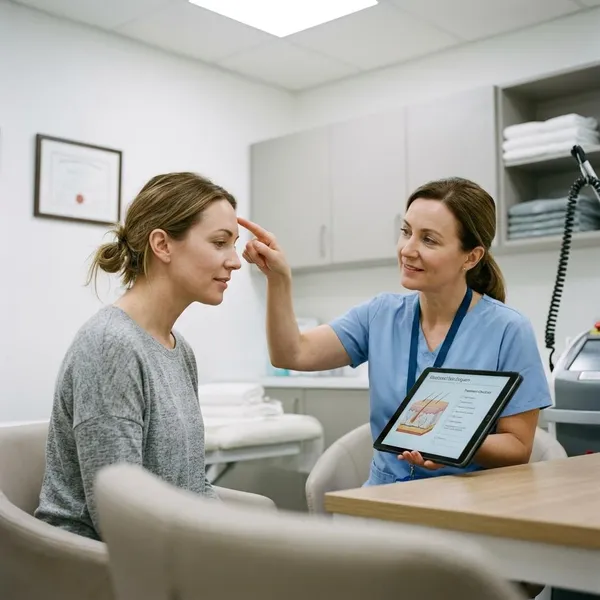
Before booking, make sure the consultation gives you a treatment map, not just a price. The forehead is small enough that the session may be quick, but the planning should not be rushed. Your most important checks are candidate hair type, skin-tone experience, eye safety, boundary marking, and realistic total cost.
Provider experience with your skin tone
Ask whether the provider regularly treats people with your skin tone and how they adjust settings to reduce burns or pigment changes. This matters for everyone, but it is especially important if you have medium to deep skin, melasma, recent tanning, or a history of post-inflammatory hyperpigmentation.
The exact treatment boundary and hairline shape
The treatment boundary should be drawn before the session, and you should approve it while sitting or standing with a mirror. Verbal descriptions such as "just cleaning it up" are too loose for an area where a few millimeters can change the look of your hairline.
- Low-risk goal: remove a few isolated hairs outside the natural edge.
- Higher-risk goal: create a new, straighter, higher, or sharper hairline.
- Safer default: start smaller, then reassess after healing and regrowth.
Eye protection and areas that must be avoided
Ask exactly what eye protection will be used and where the provider will not treat. A responsible clinic should have clear boundaries around the brows and upper eye area, even if that means some hairs cannot be treated with laser.
For anyone mainly bothered by brow-adjacent hairs, this question may decide whether laser is appropriate at all. Precision matters, but safety matters more.
Expected sessions, maintenance, and total cost
Most people need a series of sessions, not one appointment, because laser works only on hairs at suitable points in the growth cycle. The provider should give you a realistic range for your hair type and explain whether occasional maintenance may be needed later.
Do the cost math before buying a package. A small forehead area may seem inexpensive per session, but the total can change once multiple visits, test spots, and future touch-ups are included.
Conclusion
Forehead laser is most sensible when you are treating a small number of dark, coarse hairs and the provider is conservative about the hairline and eye area. If the concern is peach fuzz, light hair, or a major hairline change, slow down and compare safer alternatives before paying for sessions. A good result on the forehead is not just less hair; it is less hair without a visible trade-off you regret later.
FAQS
Can you use a home IPL device on your forehead?
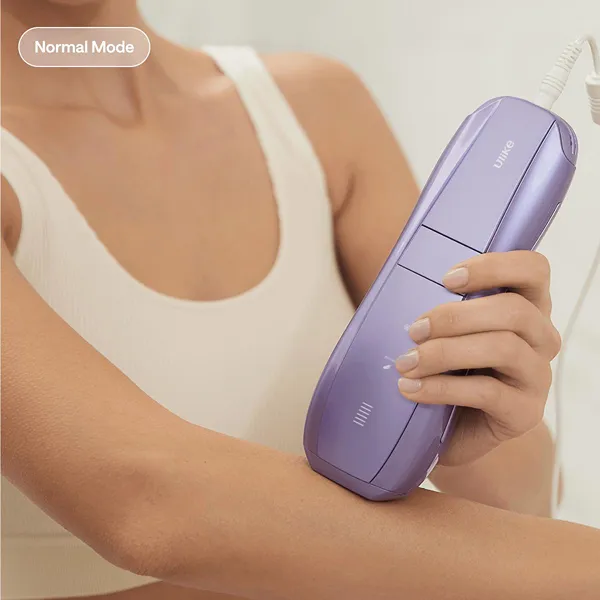
Only if the device instructions specifically allow that area, and even then you should avoid going near the eyes or brows. For hairline shaping or brow-adjacent hairs, professional advice is the safer choice.
Is forehead laser hair removal permanent?
It is better described as long-term reduction, not guaranteed permanent removal of every hair. Some hairs may thin or stop returning, while others may need maintenance later.
When should treated forehead hairs start shedding?
Shedding often starts within about 1 to 3 weeks after treatment. Do not pluck the hairs while waiting; let them release naturally unless your provider gives different aftercare instructions.

Popular Articles