How Does a Facial Threading Hair Remover Work?
A facial threading hair removal machine can be useful if you want to remove fine facial hair from the root at home, but it is not the same as a painless trimmer. It works best for peach fuzz and small facial areas where the device is approved for use, and it takes a little practice to avoid redness, missed hairs, or broken thread.
What Is a Facial Threading Machine?
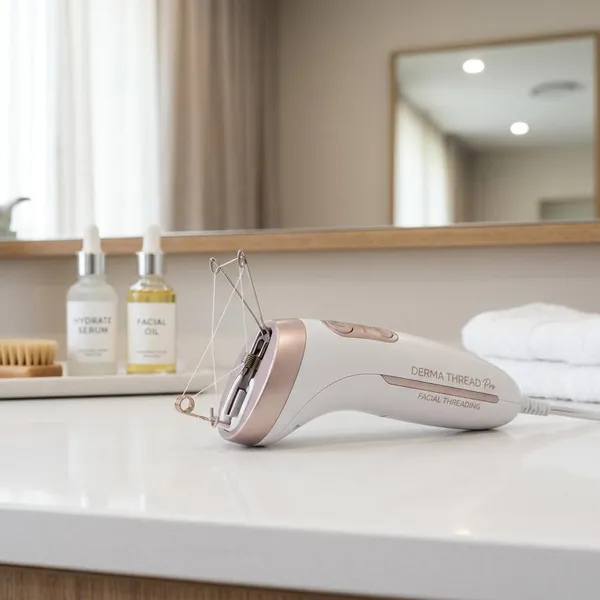
A facial threading machine is a handheld device that uses thread to grab facial hair and pull it out from the root. Think of it as a home-friendly version of threading, with the device helping to create the twisting motion that would normally be controlled by hand.
Thread catches and pulls out hair
The thread twists, catches fine hairs, and removes them from the root instead of cutting them at the surface. That is why the skin may feel smoother for longer than it does after trimming.
Hair needs enough length for the thread to grip. Very short stubble or coarse chin hairs may be harder to remove cleanly, while cheek fuzz and light upper-lip hair are usually easier matches for this kind of device.
Machines assist the threading motion
The machine does not make threading automatic in the way a shaver feels automatic. It helps move or guide the thread, but you still control the angle, pressure, and direction.
- Useful for beginners: the guided motion can be easier than learning manual threading from scratch.
- Still needs care: rushing or pressing hard can lead to irritation without removing more hair.
- Best for simple areas: flat cheek areas are usually easier than curves near the lips or brows.
Trimmers and spring removers work differently
A trimmer cuts hair at skin level, so it is usually quick and comfortable, but regrowth appears sooner. A spring remover pulls hair with a coiled spring instead of thread and often gives less controlled handling on small facial areas.
Waxing also removes hair from the root, but it uses product on a wider skin area. Threading is more targeted, which can suit someone who wants to remove fine facial hair without wax residue, although it may not give the same precision as professional threading for eyebrow shaping.
What to Expect From Machine Threading
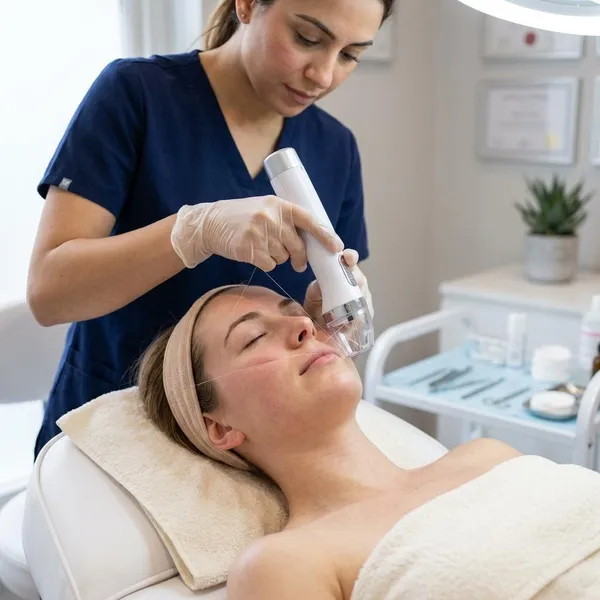
Machine threading is temporary, a little uncomfortable, and better for fine facial hair than for stubborn coarse growth. If you expect it to behave like a painless electric shaver, it will probably feel disappointing; if you expect a small at-home root-removal tool, it makes more sense.
Temporary removal of fine facial hair
Results commonly last longer than shaving because the hair is pulled from the root, but the effect is not permanent. Many people use it for upper-lip hair, cheek fuzz, chin edges, or the jawline, as long as those areas are allowed by the device instructions.
Discomfort and possible redness
Some stinging is normal because the hair is being pulled out. Mild redness can also happen, especially on the upper lip or other sensitive areas.
Do not use the device over broken skin, active irritation, inflamed acne, sunburn, or skin that has just been strongly exfoliated. For sensitive skin, test a small approved area first and wait to see how your skin settles before treating a larger patch.
Practice needed for consistent results
First attempts are often patchy. That usually comes from moving too fast, holding the device at the wrong angle, or going over the same area too many times.
A low-risk first session is a small cheek area, not a full upper lip or brow-adjacent area. Once you know how the thread catches your hair and how your skin reacts, it is easier to decide whether the machine belongs in your regular routine or only works for occasional touch-ups.
What to Check Before Buying
Before buying, check the boring details first: where the device can be used, how the thread is replaced, and how easy it is to clean. Those points matter more in daily use than glossy product photos or broad claims about smooth skin.
Thread mechanism and permitted facial areas
Look at how the thread moves and which areas the manual actually permits. A machine marketed for "facial hair" may still exclude eyebrows, eyelids, nostril edges, or other delicate spots.
This is the first buying check because it affects safety and usefulness. If you only want cheek fuzz removal, a simple device may be enough. If you want sharp brow shaping, a home threading machine may not be precise or appropriate enough.
Replacement thread availability
A cheap machine is not a good buy if the replacement thread is hard to find. Check whether it uses branded cartridges, standard thread, or another refill system before ordering.
- For occasional use: one pack of refills may last comfortably, but availability still matters.
- For regular use: choose a model with easy-to-buy replacements from more than one reliable source.
- Avoid guessing: incompatible thread can snap, pull unevenly, or make the device feel rougher.
Cleaning and maintenance instructions
The machine should be simple to clear of trapped hairs and residue after use. If the thread path is awkward to reach or the instructions are vague, maintenance may become annoying quickly.
Cleaning is not just about neatness. Oil, makeup, skin flakes, and broken hair can affect how smoothly the thread moves, which can make the next session more irritating and less effective.
Grip, controls, and power supply
Choose a device you can hold steadily in front of a mirror. A secure grip and simple on/off control are more useful than extra buttons when you are working around small facial areas.
Rechargeable models suit regular at-home use, especially if you plan to treat several areas. Battery-powered models can be fine for travel or occasional touch-ups, but weak batteries may reduce consistency, so check power before starting.
How to Use a Facial Threading Machine
Use the machine slowly, on clean dry skin, and only on areas approved by the manufacturer. The main goal is not to finish quickly; it is to remove hair without repeatedly irritating the same patch of skin.
Clean the skin and inspect the device
Wash the area gently, remove makeup or sunscreen, and dry the skin fully. Thread usually grips better on dry skin than on a slick surface.
Before switching the device on, check for frayed thread, trapped hair, loose parts, or low power. If your skin is already sore from exfoliants, acne treatments, or sun exposure, wait rather than forcing a session.
Load the thread according to the manual
Follow the exact thread path shown by the manufacturer. Small loading mistakes can stop the thread from twisting correctly, which often leads to snapping or poor hair pickup.
If the device uses cartridges, make sure the refill is seated firmly before it touches your face. Do not substitute random thread unless the instructions clearly allow it.
Test a small permitted area
Start with a small area the manual allows, such as part of the cheek or the edge of the upper lip. This test tells you three useful things: whether the thread catches your hair, how much discomfort you feel, and how red your skin becomes afterward.
Use controlled movements without repeated passes
Move in short, steady strokes and keep pressure light. If a few hairs remain after one or two careful passes, stop and come back later rather than chasing every hair on already irritated skin.
This matters most for high-sensitivity areas such as the upper lip. A beginner trying to perfect one spot in a single session often ends up with more redness, not a cleaner result.
Soothe the skin and clean the device
After threading, use a simple soothing product your skin already tolerates, such as a fragrance-free moisturizer or aloe gel. Avoid acids, retinoids, scrubs, and heavily scented products right away.
- Remove loose hairs from the device head or thread path.
- Wipe only approved surfaces according to the manual.
- Replace damaged thread before the next use.
- Store it dry so residue and moisture do not build up.
Conclusion
A facial threading machine is most sensible for fine facial hair, small approved areas, and someone willing to learn the technique rather than rush through it like shaving. Check the permitted areas and replacement thread first, then start with a small test area; if your skin reacts strongly or the hair is too coarse for the thread to catch cleanly, a different method will probably be less frustrating.
FAQS
Is machine threading as precise as salon threading?
Usually no. A trained threader has better control for sharp shaping, especially around the brows, while a machine is better suited to general facial fuzz on approved areas.
How long do threading results last?
Results often last about one to three weeks, depending on your growth rate and whether the hair was fully removed. Fine facial hair may stay smooth longer than coarse, fast-growing areas.
Why does the thread keep breaking?
The usual causes are incorrect loading, worn thread, too much tension, trapped hair in the thread path, or using thread the device was not designed for. Reload the thread carefully and replace it if it looks frayed before trying again.
Popular Articles