Which Mustache Style Suits You and How Do You Keep It Neat?
A facial mustache usually looks best when you choose the shape your hair can actually support, then keep the lip line tidy. Start by checking where your upper-lip hair grows thickest, how far it reaches toward the corners, and how much grooming you are willing to do most mornings. A simple, well-kept style almost always looks better than a dramatic one that only works on perfect days.
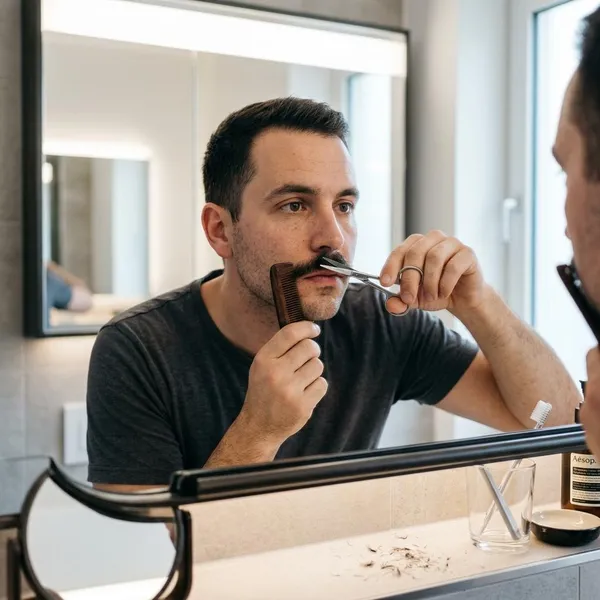
Popular Mustache Styles
Most mustache styles fall into two groups: natural shapes that mainly need trimming, and styled shapes that need length, control, or sharper edges. If you are growing one for the first time, give yourself a few weeks before deciding. Early growth can look uneven, but the real pattern is easier to judge once the hair has some length.
| Style | Best when your growth is | Daily effort |
|---|---|---|
| Chevron | Full through the center and across the lip | Low to moderate |
| Painter's brush | Even, but easier to keep squared and neat | Low |
| Handlebar | Long enough at the ends to train outward | Moderate to high |
| Walrus | Thick, heavy, and fast-growing | Moderate |
| Horseshoe | Strong at the corners and down the sides | Moderate, with frequent edge cleanup |
How to Choose a Mustache Style
Pick the style after you have looked at three things in this order: growth pattern, face balance, and grooming time. A style that matches all three will be easier to keep neat. A style that only looks good in a photo but fights your hair every morning will usually disappoint you.
Work with your natural growth
Let the mustache grow for a few weeks before making a final judgment. Look for where the hair is strongest: center, corners, full width, or downward sides. If the middle fills in but the ends stay light, a compact chevron or painter's brush will usually look better than forcing a handlebar.
If growth is patchy, do not chase symmetry by cutting everything shorter every few days. Give the thinner spots time, then choose a shape that makes the strongest areas look intentional.
Balance width and length with your features
Width changes how your face reads. A wider mustache can add balance to a longer face, while a tight, tidy shape may suit a smaller or rounder face because it does not take over the center of the face.
Length matters just as much. A lower edge that sits close to the lip looks cleaner and more understated; a fuller edge looks bolder but needs more comfort tolerance. If you are unsure, start slightly fuller, take a photo in normal lighting, and only then decide whether it needs narrowing or shortening.
Consider daily grooming time
Your routine should decide more than your mood on the day you choose the style. If you have two minutes in the morning, a chevron or painter's brush is safer. If you enjoy grooming and do not mind product, a handlebar gives you more personality.
- Busy weekday routine: choose a style that survives a quick comb and small lip-line trim.
- Special-event or statement look: a handlebar or horseshoe can work if you are ready to maintain the shape.
- Low-patience grooming: avoid styles that collapse without wax or sharp edge cleanup.
How to Trim a Mustache
Trimming is mostly about restraint. The safest rule is to clean up what clearly breaks the shape before you start changing the whole mustache. Most bad trims happen because someone tries to fix one uneven hair and ends up shortening the entire side.
Wash, dry, and comb the hair
Trim only after the mustache is clean, dry, and combed into its normal position. Wet hair can look longer than it will once dry, and wax or food residue can make several hairs clump together as if they need cutting.
Comb downward for fuller styles and slightly outward for styles with trained ends. This shows which hairs are truly too long and which were simply sitting the wrong way.
Define the lip line for your chosen style
The lip line is the first place to check because it affects both neatness and comfort. For a painter's brush, keep the lower edge cleaner. For a walrus, allow more weight, but still remove hairs that constantly enter the mouth.
Avoid cutting a harsh, ruler-straight line unless the style actually calls for it. A small natural curve usually looks better than an overcorrected edge.
Trim small amounts from each side
Work in tiny cuts from side to side instead of finishing one half first. This keeps the mustache balanced and stops you from chasing perfect symmetry, which most faces do not naturally have.
- Comb the hair into place.
- Cut only the obvious long outliers first.
- Alternate left and right in small passes.
- Step back from the mirror before trimming more.
Check the shape before removing more
Pause after the first pass and look at the mustache from a normal distance. Bathroom-mirror closeness makes tiny differences look bigger than they are.
Good light helps too. If one side looks heavier, check it in even daylight before cutting again. Leaving a little softness is usually better than trimming until the mustache looks thin, stiff, or overworked.
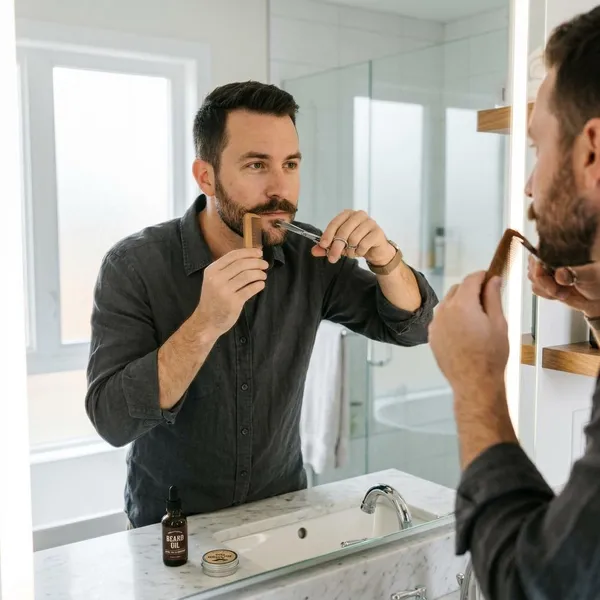
Everyday Mustache Care
Daily care does not need to be complicated. Clean it, comb it, use product only when the style needs hold, and fix obvious strays before they make the whole shape look neglected. Small habits matter more than occasional aggressive trimming.
Clean away food and product buildup
A mustache collects coffee foam, sauces, skin oil, and wax more easily than most facial hair because it sits right above the mouth. Rinse after messy meals when you can, and wash with a gentle face or beard cleanser when it feels stiff or greasy.
If you use wax often, do not keep layering fresh product over yesterday's hold. Buildup makes the hair look dull and harder to comb.
Comb into shape
A small mustache comb gives better control than a large beard comb. Use it to separate clumps, guide the hair direction, and spot the few hairs that actually need trimming.
This is especially useful if your mustache is coarse or curls near the corners. Combing after washing often makes the difference between "messy growth" and "deliberate shape."
Use wax when extra hold is needed
Wax is useful for handlebars, longer ends, and stubborn hairs that refuse to sit with the rest of the mustache. Start with a very small amount, warm it between your fingers, and add more only if the hair still will not hold.
Too much wax can make a natural style look greasy or stiff. For a chevron or painter's brush, wax is usually an occasional fix, not a daily requirement.
Touch up stray hairs
Stray hairs usually appear along the lip line, at the corners, or where the hair grows in a different direction. Snip only the obvious outliers with small scissors or a precision trimmer.
For long-term wear, this light touch matters. A quick check every few days keeps the mustache neat without slowly shrinking the shape through constant overtrimming.

Conclusion
The best mustache is the one your growth can support and your routine can maintain. Start with the natural pattern, keep the lip line comfortable, and make small adjustments instead of trying to perfect everything at once. A simple style kept clean and balanced will look sharper than an ambitious shape you have to fight every day.
FAQS
Does shaving make a mustache grow thicker?
No. Shaving only cuts the hair at the surface, so regrowth may feel blunt for a short time, but it does not change the follicle or create thicker growth.
Can a patchy mustache still look good?
Yes, if the style works with the fuller areas. Shorter, cleaner shapes usually handle patchiness better than long styles that need dense corners.
Do you need a beard to wear a mustache?
No. A mustache can stand on its own, but the edges need to be kept cleaner because there is no beard to soften or hide the outline.


Popular Articles