How Can I Remove Hair Permanently?
If you're asking how can I remove hair permanently, start with this distinction: electrolysis is the closest option to true permanent removal, while laser and at-home IPL are better described as long-term reduction. The right choice depends less on the promise on the box and more on your hair color, skin tone, treatment area, budget, and how much maintenance you are willing to do.

Can you remove hair permanently?
Yes, but not every method that gives smooth skin is permanent. For a result to be truly permanent, the follicle needs to be disabled so it cannot keep producing hair. Because hair grows in cycles, even strong methods need repeated sessions instead of one treatment.
| Method | Best fit | Realistic result |
|---|---|---|
| Electrolysis | Small areas, facial hair, light or gray hair | Permanent removal when follicles are fully treated |
| Laser | Larger areas with dark, coarse hair | Long-term reduction, often with maintenance |
| Ulike IPL | At-home use on compatible hair and skin | Gradual reduction with ongoing upkeep |
Where does Ulike IPL fit for long-term hair removal?
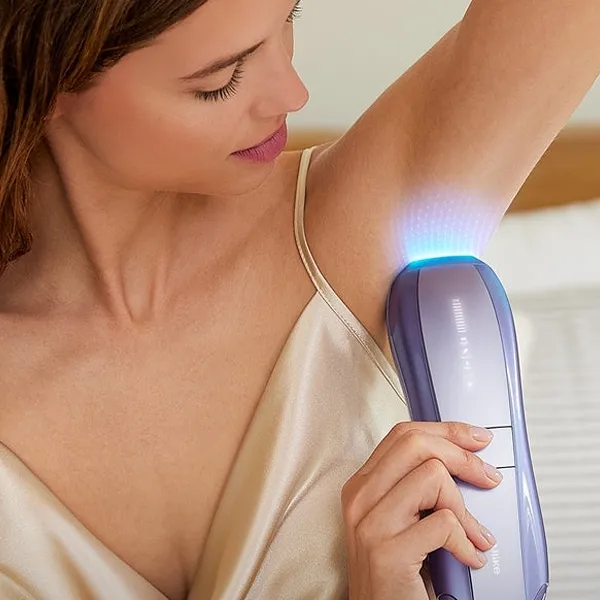
Ulike IPL fits best between temporary methods and clinic treatments. It is more commitment than shaving, less definitive than electrolysis, and usually slower than professional laser. Its biggest strength is that you can keep up with treatments at home without booking appointments.
Offers convenient hair reduction at home
The main advantage is control over your schedule. Treating underarms or legs at home can be easier to maintain than traveling to a clinic every few weeks, especially if your problem is routine shaving rather than a small patch of unwanted facial hair.
Convenience only helps if you actually follow the routine. A home device used consistently is more useful than a stronger option you keep postponing because it is expensive, awkward, or hard to schedule.
Works best on IPL-compatible hair and skin
Before choosing IPL, check the device's hair and skin tone chart. Dark hair on compatible skin usually gives IPL the best chance of working because the light needs enough pigment in the hair to target.
If your skin tone is not listed as suitable for the device, do not try to force it; the risk of irritation or discoloration may outweigh the benefit.
Reduces the need for frequent shaving
For many users, the win is not total removal. It is slower, softer, patchier regrowth that makes shaving less frequent and less annoying.
Requires ongoing use and maintenance
Maintenance is part of the deal with at-home IPL. Some follicles may recover, and new growth can appear later, so results can fade if you stop completely.
- Start with the recommended schedule. Do not guess the frequency; follow the device guidance.
- Track your skin's reaction. If you experience persistent irritation, unusual redness, blistering, or other significant discomfort, stop treatment and allow your skin to recover. Seek medical advice if the reaction is severe or does not resolve.
- Move to touch-ups later. Once regrowth slows, maintenance keeps the result steadier.
What does not remove hair permanently?
Temporary methods can still be useful, but they should not be confused with permanent hair removal. The quick test is simple: if the follicle is still alive, the hair can grow back.
Shaving
Shaving cuts hair at the surface, so it is fast but short-lived. It does not make hair grow back thicker; the blunt cut edge can simply feel rougher as it comes through the skin.
Use shaving when you need a quick, low-cost option. If you are constantly dealing with razor bumps, cuts, or stubble by the next day, it may be worth considering a longer-term method instead.
Waxing and threading
Waxing and threading pull hair from the root, which is why the result lasts longer than shaving. The follicle usually remains active, so the hair can return.
Threading is often chosen for brows or upper lip hair because it is precise. Waxing can cover larger areas, but be cautious if you use retinoids, strong exfoliants, or acne medications, as skin may be more prone to tearing or irritation.
Epilating
An epilator removes hair from the root with rotating tweezers. It can keep legs or arms smooth longer than shaving, but it does not destroy the follicle.
It suits someone who wants a reusable home tool and can tolerate discomfort. Beginners may want to start on a less sensitive area before trying it near the bikini line or underarms.
Hair removal creams
Hair removal creams dissolve the visible hair at or slightly below the skin surface. They are temporary, and the follicle remains able to grow new hair.
Patch test first, even if you have used similar products before. Chemical irritation can happen quickly if the formula is too strong for your skin or left on too long.
Home remedies
Home remedies are not reliable permanent hair removal methods. Scrubs, oils, turmeric mixtures, pumice rubbing, and homemade pastes may irritate the skin without disabling the follicle.
If unwanted hair suddenly becomes heavier, coarser, or appears in a new pattern, treat that as a reason to check in with a dermatologist or healthcare professional. Hormonal changes and conditions such as PCOS can affect hair growth, and removing the hair alone may not address the cause.
Conclusion
For the most permanent result, electrolysis is the strongest choice, especially for small areas or hair colors that light-based methods cannot target well. Laser is often the more practical route for larger areas with dark hair, while Ulike IPL makes sense when convenience and reduced shaving matter more than complete removal. Pick the method by matching your hair, skin, area, and maintenance tolerance first; that will save more frustration than chasing the most impressive-sounding promise.
FAQS
Is electrolysis really permanent?
Yes. When a follicle is fully treated and disabled, it should not produce hair again, but untreated follicles in the same area may still appear later because hair grows in cycles.
Can laser hair removal be permanent?
Laser can give long-lasting reduction, but it is not usually described as fully permanent. Expect the best results on dark, coarse hair and plan for possible maintenance.
How many sessions does permanent hair removal take?
Electrolysis often takes many visits because each follicle is treated individually. Laser and IPL also need repeated sessions, but the exact number depends on the area, hair type, skin compatibility, and response to treatment.


Popular Articles