Why Does My Facial Hair Look More Noticeable?
If your face suddenly seems hairier, the first thing to check is whether the hair is fine peach fuzz or thicker, darker growth. Fine facial hair is normal, and it often becomes more noticeable because of lighting, makeup, skin care, or close-up mirrors. Faster, darker, or sudden growth—especially with other body changes—is the situation that deserves more attention.

Is facial hair normal?
Facial hair is normal. Nearly everyone has some hair on the face, but it does not all look or behave the same. Soft fuzz on the cheeks is a different issue from coarse chin hairs that return quickly after removal.
Fine peach fuzz
Fine peach fuzz is usually vellus hair: short, soft, light hair that grows on much of the face. It may stand out more after exfoliating, applying foundation, using a magnifying mirror, or sitting near a bright window. That does not always mean you have more hair than before; sometimes the same hair is simply catching the light differently.
If your concern is mainly cheek or forehead fuzz, removal is optional. Some people like dermaplaning or gentle shaving because makeup sits more smoothly, while others leave it alone because their skin gets irritated easily. Neither choice is more "correct."
Thicker, darker hairs
Thicker, darker hairs are usually terminal hairs. A few on the chin, upper lip, or jawline can be part of normal aging or family tendency, especially if relatives have a similar pattern.
- Low concern: a few slow-growing hairs that appear gradually over months or years.
- Worth watching: hair that becomes darker, denser, or faster to regrow than your usual pattern.
- Get checked: sudden heavy growth with acne, irregular cycles, scalp hair thinning, or other hormone-related symptoms.
Why facial hair becomes more noticeable
Facial hair can look more obvious for two different reasons: the hair itself may be changing, or your skin and routine may be making existing hair easier to see. New foundation, dry skin, exfoliating acids, strong bathroom lighting, and phone cameras can all make peach fuzz look stronger than it really is.

The timing matters. A gradual change around puberty, pregnancy, postpartum months, perimenopause, or menopause has a different meaning from rapid growth that appears without an obvious reason.
Genetics and natural variation
Genetics affects hair color, thickness, skin contrast, and how sensitive follicles are to hormones. Someone with dark hair and light skin may notice facial hair sooner than someone with lighter hair, even if the amount of hair is similar.
Hormonal changes
Hormones can make some facial hair coarser, especially in areas that are more sensitive to androgens, such as the chin, upper lip, jawline, and sideburns. This can happen during normal life stages, but it can also point to a hormone imbalance when the change is strong or paired with other symptoms.
- Check the location: scattered cheek fuzz is different from new coarse jawline or chin growth.
- Check the timing: note whether it began after pregnancy, stopping hormonal birth control, or entering menopause.
- Check the company it keeps: acne, irregular periods, scalp thinning, or unexpected weight changes make medical advice more important.
Medications and health conditions
Some medications, hormone treatments, steroids, and certain health conditions can increase facial hair or change its texture. Conditions linked with excess facial hair can include hormone-related disorders such as polycystic ovary syndrome, though facial hair alone is not enough to diagnose anything.
If the growth is new, fast, or clearly different from your normal pattern, write down when it started and any recent medication or health changes. That gives a doctor more useful information than simply saying your face looks hairier.
Ways to manage unwanted facial hair
The best removal method depends on what bothers you most: visible fuzz, coarse regrowth, skin irritation, cost, or how often you are willing to maintain it. For fine peach fuzz, gentle at-home methods may be enough. For stubborn dark chin hairs, longer-term professional options may make more sense.
Start with the least aggressive option your goal allows. Sensitive or acne-prone skin often does better with careful trimming than with repeated waxing or strong depilatory creams.
Shaving and trimming
Shaving and trimming are good first options if you want a quick, inexpensive way to reduce visible facial hair without pulling from the root. They are especially practical for occasional peach fuzz removal before makeup or photos.
Shaving does not make hair grow back thicker, darker, or faster. It can feel sharper for a short time because the tip has been cut bluntly. Use a clean facial razor or trimmer, keep pressure light, and avoid shaving over irritated skin or active breakouts.
Threading and waxing
Threading and waxing remove hair from the root, so the smooth result usually lasts longer than shaving. Threading is useful for precise areas like the brows, upper lip, or a few chin hairs. Waxing covers more area quickly but can be rougher on delicate facial skin.
- Choose threading for precision or when you want to avoid wax, heat, or creams.
- Be careful with waxing if you use retinoids, strong exfoliants, or prescription acne treatments.
- Pause both methods if your skin is inflamed, sunburned, peeling, or recently treated.
Facial hair removal creams
Facial hair removal creams dissolve hair at the skin surface. They can be convenient for larger fuzzy areas, but they are also one of the easiest methods to misuse. Only use a cream made for the face, patch test first, and follow the timing exactly.
This is not the best choice if your skin barrier is already irritated from acne treatments, exfoliating acids, retinoids, or recent waxing. Burning, strong stinging, or redness that appears quickly is a sign to rinse it off rather than waiting for the timer.
Professional laser or electrolysis
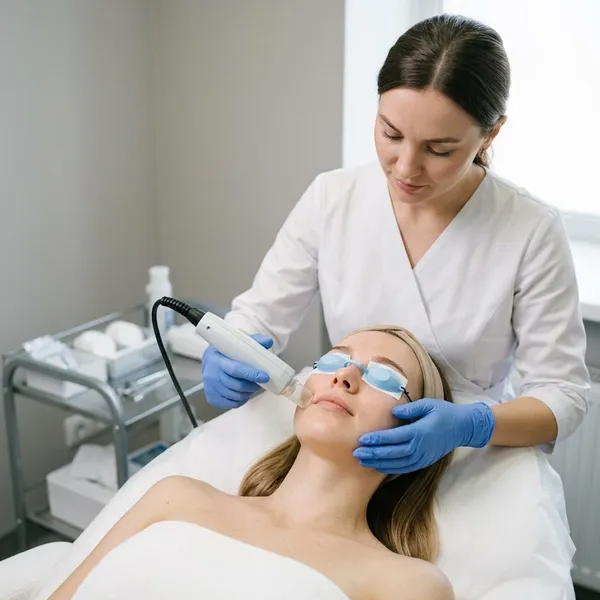
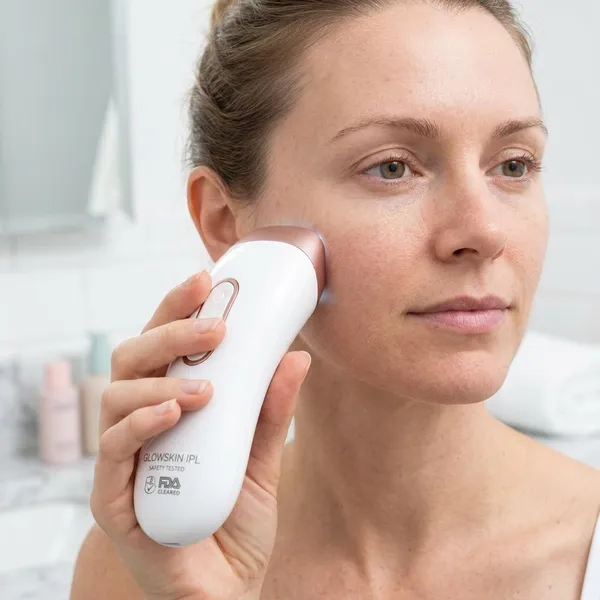
Laser may help with darker, coarser facial hair because it targets pigment in the follicle. It is usually less useful for very fine, light peach fuzz, and a qualified provider should assess whether your hair and skin type are suitable.
Electrolysis treats individual follicles and is often discussed for stubborn isolated hairs, including lighter hairs that laser may not target well. It is slower, but it can be a better fit when your main problem is a small number of persistent chin or upper-lip hairs rather than general fuzz.

Conclusion
A hairy facial appearance is often normal, especially when it is fine peach fuzz or a few slow-growing coarse hairs. The smartest first step is to judge the hair type, location, speed of change, and any other symptoms before choosing a removal method. If the change is mild, manage it only if it bothers you; if it is sudden, heavy, or comes with other body changes, get medical advice before treating it as a purely cosmetic issue.
FAQS
Does shaving peach fuzz make it thicker?
No. Shaving only cuts the hair at the surface, so regrowth may feel blunt for a short time, but the follicle has not changed.
Can laser remove fine facial hair?
Usually not very well. Laser works best on darker, coarser hair, so very fine or light facial fuzz may need a different approach.
Do you need to remove facial hair at all?
No. Facial hair removal is a personal choice, not a hygiene requirement, and leaving peach fuzz alone is completely reasonable if your skin is comfortable.

Popular Articles