Why Does Facial Hair Grow on Your Chin?
A few chin hairs are usually normal, especially if they appear slowly and stay limited to the same small area. What matters more is the pattern: stable, occasional hairs are usually a grooming issue, while sudden growth, heavier patches, or chin hair with acne, irregular periods, scalp thinning, or voice changes deserves a medical check.

Is chin hair normal in women?
Chin hair is normal in many women. Nearly everyone has fine facial hair, and some people also develop a few darker, coarser hairs on the chin or jawline over time.
The first thing to check is not whether any hair exists, but whether it has changed. One or two stubborn hairs that have been there for years are very different from new growth that appears quickly or starts spreading to other areas.
Fine peach fuzz is common
Soft peach fuzz is called vellus hair. It is usually short, light, and harmless. Coarser chin hair is called terminal hair, and it can show up when certain follicles become more sensitive to normal hormone signals. If the change is mild and gradual, it often fits normal genetics, aging, or natural follicle sensitivity.
Increasing growth may need a closer look
Growth that becomes heavier, darker, or more widespread is worth paying attention to. A practical test is to compare today's pattern with your usual pattern, not with someone else's face.
If you used to pluck one hair every few weeks and now you are removing several every few days, that is a different situation. It does not automatically mean something serious, but it is enough to track the change and look for other symptoms.

What causes chin hair in women?
Chin hair can come from several overlapping causes. The most common are inherited follicle sensitivity, hormone shifts with age, conditions that increase androgen activity, and some medications.
Genetics and follicle sensitivity
Some follicles naturally react more strongly to androgens, even when hormone levels are within a normal range. Family pattern matters here. If close relatives developed visible chin hair with age, a similar slow pattern may be more about inherited sensitivity than a medical problem.
Aging and menopause
Chin hair often becomes more noticeable during perimenopause and after menopause. As estrogen levels shift downward, androgens can have a stronger relative effect on facial follicles, especially around the chin and jawline.
PCOS and other hormonal conditions
PCOS is one of the better-known medical reasons for increased chin hair, but doctors usually look at the full pattern rather than the hair alone.
- More likely to need evaluation: new coarse hair with irregular periods, acne, scalp thinning, or unexplained weight changes.
- More concerning pattern: hair spreading beyond the chin to the upper lip, chest, lower abdomen, or inner thighs.
- Possible causes to discuss: PCOS, insulin resistance, adrenal conditions, thyroid issues, or other hormone-related changes.
Most chin hair is not caused by a dangerous condition. Still, a broader symptom pattern is a good reason to book an appointment instead of only changing your hair-removal routine.
Certain medications
Some medications can make facial hair more noticeable, especially treatments that affect hormones, adrenal activity, or hair growth cycles. If the timing lines up with a new prescription, dose change, steroid use, hormone therapy, or certain seizure medications, mention it to a clinician. Do not stop a prescribed medication on your own just because hair growth changed.
When should you see a doctor about chin hair?
See a doctor when chin hair is sudden, rapidly increasing, or appears with other body changes. A few stable hairs are usually a cosmetic concern; a fast shift can be a sign that hormones or medication effects should be reviewed.
Before the appointment, note when the growth started, where it appears, how often you remove it, whether your periods have changed, and whether acne, scalp hair loss, weight changes, or new physical symptoms appeared around the same time.
Sudden or rapidly increasing growth
Hair that appears over a few months deserves more attention than one stubborn hair that has returned for years. Speed matters because a quick change can suggest stronger androgen activity.
Irregular periods with acne or scalp hair loss
Irregular periods plus acne or scalp thinning is a strong reason to ask for medical advice. That combination can point toward androgen excess, with PCOS being one possible cause.
A doctor may ask about your cycle history, skin changes, weight changes, fertility concerns, and family history. Blood tests or other checks may be suggested depending on the full picture.
A deeper voice or other new physical changes
A deeper voice, increased muscle mass without an obvious reason, clitoral enlargement, marked libido changes, or male-pattern balding should be assessed promptly. Those changes are not typical of ordinary chin hair or gradual aging alone.

How to remove chin hair temporarily
Temporary removal is usually enough when the hair is mild, stable, and mainly bothers you cosmetically. Choose the method by hair amount and skin sensitivity, not by what sounds the most "permanent."
- One to a few coarse hairs: tweezing is usually the simplest.
- Several hairs or quick upkeep: trimming or shaving is often easier.
- Longer smoothness: threading or waxing can help, if your skin tolerates root removal.
- Wider soft growth: a facial depilatory may work, but only after a patch test.
Tweezing for a few stray hairs
Tweezing works well for a small number of isolated chin hairs. Use clean tweezers, pull in the direction of growth, and avoid digging at hairs that are too short to grip.
It becomes less useful when you are chasing many hairs every day. At that point, the irritation may bother you more than the hair itself, and a faster method or longer-term treatment may make more sense.
Trimming or shaving for quick upkeep
Trimming or shaving is practical when you want fast, low-cost maintenance. Shaving does not make chin hair grow back thicker; the blunt cut edge can simply feel rougher as it grows out. Use a clean facial razor or small trimmer and light pressure, especially around the curve of the chin.
Threading or waxing for removal at the root
Threading and waxing remove hair from the root, so the area may stay smooth longer than with shaving. Threading is useful for smaller facial areas; waxing can clear a wider patch more quickly.
Be cautious if you use retinoids, strong exfoliating acids, or acne medications. Waxing over fragile or sensitized skin can cause more than redness; it may lift or damage the surface layer. In that situation, threading, trimming, or careful shaving is usually a safer first choice.
Facial hair removal creams for suitable skin
Facial hair removal creams can be convenient for people who tolerate them well, but they are not a good fit for everyone. Use only a product made for the face, patch test first, and avoid applying it over broken, inflamed, sunburned, or freshly exfoliated skin.

Options for reducing chin hair over time
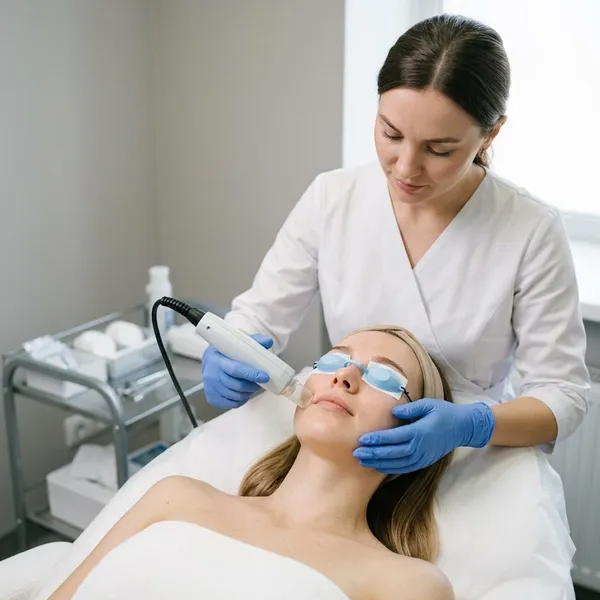
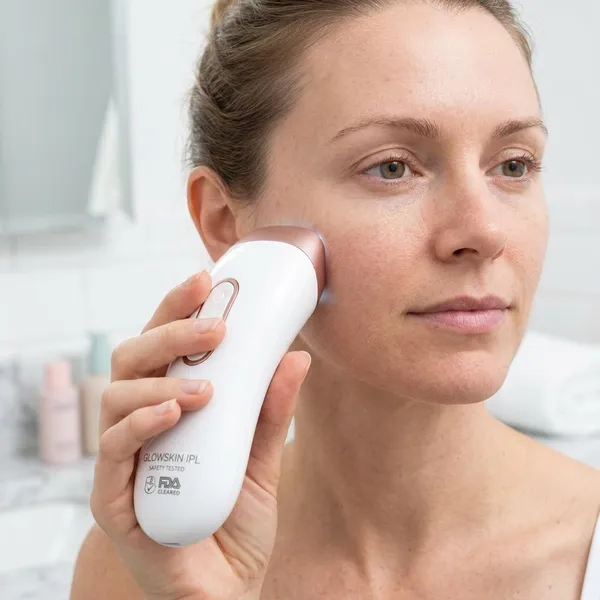
If chin hair removal has become a constant part of your routine, longer-term options may be worth considering. Laser and electrolysis are the main professional choices, but they suit different hair types.
Think of the goal as reducing hassle, not always achieving perfect permanent smoothness. Hormone-driven growth can activate new follicles later, so some people still need maintenance even after good treatment results.
Laser for suitable dark hair
Laser hair removal is usually best for dark hair because the device targets pigment in the follicle. It is less useful for white, gray, red, or very light blonde hairs.
This can be a good fit if you have multiple dark chin hairs and want less frequent shaving or plucking. It usually takes several sessions, and the safest settings depend on skin tone and device type, so choose a qualified provider rather than shopping by price alone.
Electrolysis for individual hairs of any color
Electrolysis treats hairs one follicle at a time, which makes it slower than laser but useful for stubborn individual hairs of any color, including white or gray. It is often the better choice when the same few chin hairs keep returning in the same spots.
Because it is precise, electrolysis can suit someone with a small number of coarse hairs who does not want to keep plucking forever. For a dense patch of dark hair, laser may be more efficient first, with electrolysis later for remaining light or resistant hairs.
Conclusion
Chin hair is often normal when it is mild, slow, and familiar for your body, but a sudden or symptom-linked change is worth checking rather than simply removing. For a few stray hairs, keep the routine gentle and simple; for repeated dark growth or white hairs that keep coming back, laser or electrolysis may reduce the long-term effort.
FAQS
Does chin hair mean your estrogen is low?
Not necessarily. Lower estrogen around menopause can make chin hair more noticeable, but genetics, follicle sensitivity, PCOS, medications, and normal aging can also play a role.
Does shaving chin hair make it grow back thicker?
No. Shaving cuts the hair at the surface, so the regrowth may feel blunt or stubbly, but it does not change the follicle or make the hair truly thicker.
Why does chin hair keep growing in the same spot?
The same follicle is likely producing it again. Tweezing removes the hair, not the follicle, which is why one exact spot can keep returning unless the follicle is treated with a method such as electrolysis.

Popular Articles