How Is Facial Hair Removal FDA Approved?
If a product advertises fda approved facial hair removal, pause before treating that as proof it is right for your face. For most laser and IPL hair removal devices, the more accurate claim is usually FDA cleared, not FDA approved, and even clearance may apply only to certain areas, users, skin tones, and hair colors. The practical move is simple: verify the exact device, read the cleared use, and check the facial restrictions before you buy a home device or book a treatment.
What FDA claims mean for hair removal devices
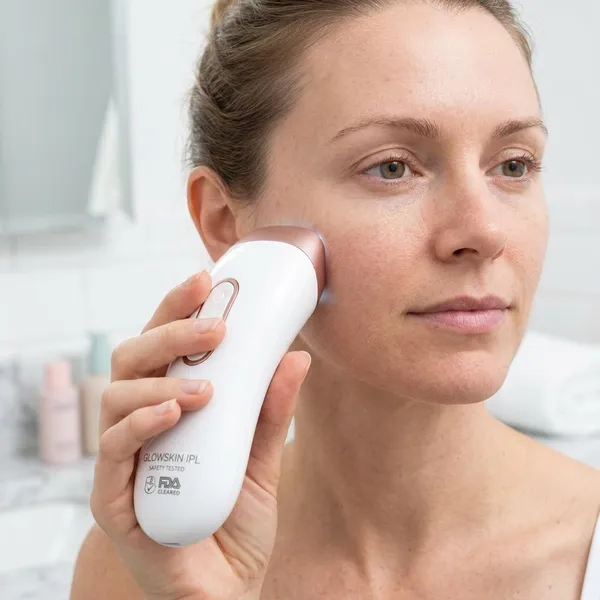
The words used in marketing are not interchangeable. "Approved," "cleared," and "registered" can sound similar on a product page, but they do not tell you the same thing about how a device was reviewed or what it is allowed to claim.
For facial hair, the wording matters more than it does for many body areas. A device may be suitable for legs but not the upper lip, or allowed below the cheekbones but not near the eyes. Treat the FDA claim as the starting point, not the final decision.
FDA approved
"FDA approved" is usually not the precise term for laser and IPL hair removal devices. Approval is commonly associated with different types of FDA review, while many hair removal devices reach the market through clearance pathways instead.
If a seller uses "approved" as a broad trust phrase but cannot show the official device record, be careful. A real answer should include the manufacturer, model, and documentation—not only a badge on a sales page.
FDA cleared
FDA cleared is the term you are more likely to see for laser and IPL hair removal devices. Clearance often means the device went through the 510(k) process and was found substantially equivalent to a legally marketed device for its intended use.
For hair removal, that intended use is often permanent hair reduction, not a guarantee that every follicle is gone forever. Facial hair can also be influenced by hormones, so even a suitable device may still require maintenance.
FDA registered and listed
Registration and listing are much weaker signals for a shopper. They can mean a company or device is recorded with the FDA, but they do not prove the device was reviewed for facial hair reduction claims.
Facial hair removal options and their regulatory status
At-home IPL, professional laser treatment, and electrolysis are not simply three versions of the same thing. They differ in how they work, what claims are usually made, and which facial hair problems they handle best.
At-home IPL devices
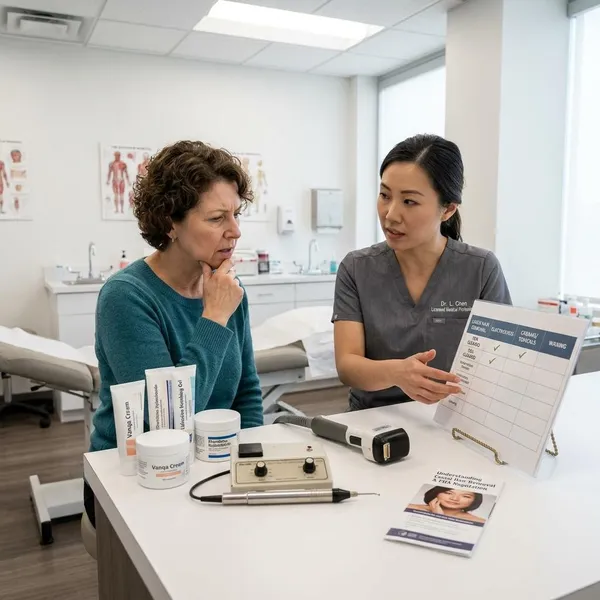
At-home IPL devices are convenient, but they are not a free pass for full-face use. Many are designed for lower-energy consumer treatment and may allow only limited facial areas, such as the upper lip or chin, for certain users.
They tend to work best when there is clear contrast between darker hair and lighter surrounding skin. Fine facial fuzz, very light hair, or dense male beard growth can fall outside what a home IPL device is meant to handle, even if the packaging looks reassuring.
Professional laser devices
Professional laser treatment can offer more power and more adjustment than a home device, but the clinic still needs the right machine, settings, and screening. A stronger device in careless hands is not automatically safer or more effective.
This route can make sense for recurring dark chin or jawline hair, especially when a provider can assess skin tone, tanning history, medications, and whether the hair is thick enough to respond. Ask which device will be used and whether it is cleared for the type of facial treatment being offered.
Electrolysis devices
Electrolysis treats follicles individually and does not depend on pigment in the hair shaft in the same way laser and IPL do. That makes it especially relevant for blonde, gray, white, red, or isolated facial hairs that light-based devices often struggle with.
The tradeoff is time. Electrolysis can be slower for larger areas, but for a few stubborn chin hairs or scattered light facial hairs, its precision may be more practical than repeatedly trying a device that was never a good match.
How to verify laser or IPL clearance for facial use
The most useful verification is not "Does this brand have an FDA claim?" but "Does this exact model have clearance for the way I plan to use it on my face?" That difference prevents a lot of bad purchases.
Use the same logic for clinics. You are not verifying the word "laser"; you are verifying the machine that will touch your skin, the stated indication, and the facial limits in its documentation.
Get the exact model and manufacturer
Start with the full device name and manufacturer. A brand may sell several models, and one model's clearance does not automatically apply to another.
Request the 510(k) clearance number
If a laser or IPL device is described as FDA cleared, the company or clinic should be able to point you toward the relevant 510(k) information. You do not need to be confrontational—just ask for the clearance number or official documentation for the device being sold or used.
Match the details in the FDA database
Once you have the number or exact device information, compare it with the FDA database entry. Look for the same manufacturer, device name, and description rather than assuming a similar-looking product is covered.
This is especially important with imported or marketplace devices, where listings sometimes borrow language from a related product line. If the match is unclear, ask the manufacturer for clarification in writing before using it on your face.
Read the cleared indications for use
The indication for use tells you what the device is cleared to do. For laser and IPL, the wording may refer to permanent hair reduction rather than permanent removal, and it may specify body areas, user groups, or treatment limits.
This is the part that matters for real decisions. A device can be FDA cleared and still not be appropriate for your upper lip, chin, cheeks, or beard area.
Check facial restrictions in the device manual
The manual is where many practical restrictions appear: below the cheekbones only, do not use near the eyes, avoid eyebrows, do not treat tattoos or moles, or do not use on certain skin tones or hair colors.
What to check beyond FDA clearance
FDA clearance helps you avoid unsupported claims, but it does not decide whether the treatment fits your face. The next checks are more personal: your skin tone, hair color, treatment area, medication history, and how much risk you are willing to accept on visible skin.

Supported skin tones and hair colors
Laser and IPL depend heavily on how well the device can target pigment in the hair without overheating surrounding skin. Dark, coarse hair is usually the easiest target; very light, gray, red, or fine hair is much less predictable.
Do not skip the compatibility chart. If your skin tone or hair color sits outside the listed range, the issue is not just weaker results—it may also be a higher chance of irritation, burns, or pigment changes.
Permitted facial areas and user groups
Facial permission is usually narrow. Upper lip and chin are commonly discussed areas, while eyebrows, eyelids, areas close to the eyes, and internal nose areas are generally not appropriate for consumer light-based devices.
User group matters too. Some home devices exclude male facial hair because beard hair can be denser and more reactive. If your plan is long-term beard shaping rather than a small upper-lip area, do not assume a consumer IPL device is built for that job.
Limits for fine facial hair and peach fuzz
Fine facial hair is where many people waste money. Peach fuzz may not absorb enough energy for reliable laser or IPL results, so the device can be technically legitimate and still disappointing for that specific problem.
Medication warnings and skin conditions
Medication and skin-condition warnings are not fine print to ignore. Retinoids, certain acne treatments, some antibiotics, recent peels, sunburn, eczema flares, rosacea irritation, or broken skin may raise the chance of a bad reaction.
If anything about your skin is currently inflamed or changing, postpone treatment until you can check the manual or ask a qualified provider. Facial side effects are not hidden by clothing, so a cautious delay is often the smarter choice.
Provider training for professional treatment
For professional treatment, the operator's judgment matters as much as the machine. A trained provider should screen your skin, explain likely results, choose settings carefully, use proper eye protection, and say no when the treatment is not a good fit.
Conclusion
The safest way to read any FDA claim is to make it specific: exact device, exact clearance, exact facial area, exact user limits. If the product or clinic cannot give you that trail, choose a more transparent option; if your hair is fine, light, hormonally driven, or your skin is currently irritated, the smarter decision may be professional screening or electrolysis rather than forcing a laser or IPL device to fit.
FAQS
Does the FDA approve hair removal clinics?
No. The FDA regulates certain devices, not clinics as businesses. For a clinic, check the device being used, the provider's training, and your local licensing or supervision rules.
Is a CE mark the same as FDA clearance?
No. A CE mark and FDA clearance belong to different regulatory systems. If you are relying on U.S. clearance, look for the FDA device record rather than treating a CE mark as a substitute.
Where can you check hair removal device recalls?
Use the FDA's recall and safety notice databases, searching by manufacturer, brand, or exact model. This is especially worth doing for secondhand devices or unfamiliar marketplace brands.


Popular Articles