How Can You Fade Dark Spots After Facial Hair Removal?
Dark spots after facial hair removal usually fade best when you stop the irritation first, then treat the leftover pigment gently. If the area keeps getting razor bumps, ingrown hairs, burning, or tiny cuts, brightening products can only do so much. Also check whether you are looking at true discoloration or a hair shadow, because creams can fade pigment but they will not remove dark hair showing under the skin.
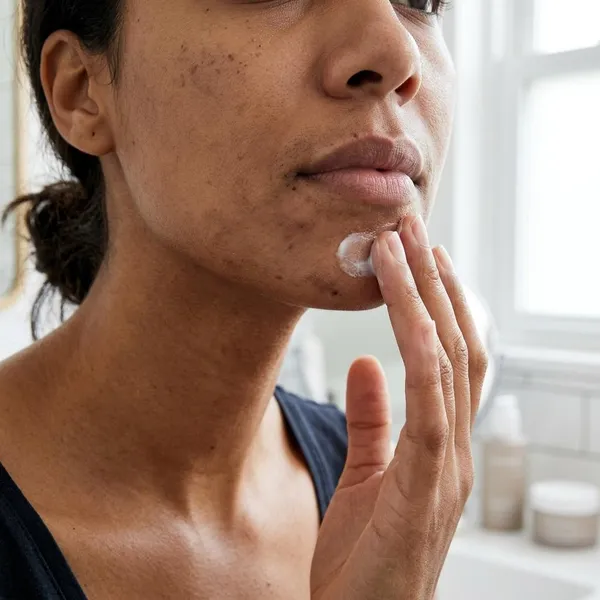
How to fade marks from facial hair removal
The first priority is not the strongest dark spot serum. It is making sure the same patch of skin is not being inflamed every few days by shaving, waxing, threading, plucking, or picking at bumps. Once the skin is calmer, one targeted fading ingredient has a much better chance of helping.
Address irritation and recurring bumps first
If bumps keep coming back, treat them as the main problem. A brown mark on the chin or upper lip often starts as a small inflamed follicle, especially when hair is coarse, curly, or shaved very close to the skin.
Use gentle cleansing and moisturizing
Gentle cleansing and moisturizing do not bleach dark marks, but they make the skin less reactive. That matters because irritated skin is more likely to sting from active ingredients and more likely to create new post-inflammatory pigmentation.
Choose a cleanser that leaves your face comfortable rather than tight. Follow with a plain moisturizer, especially after shaving or washing off sunscreen. If a product burns every time you apply it, do not treat that as proof it is working.
Apply broad-spectrum SPF 30 or higher
Sunscreen is the step that keeps fading efforts from being undone. UV exposure can make post-shave marks look darker and linger longer, even when shaving caused the original spot.
Use broad-spectrum SPF 30 or higher each morning on the upper lip, chin, cheeks, jawline, or neck if those areas are exposed. If you are outdoors often, sweat, or wipe your face during the day, reapply when needed. For medium to deep skin tones, a tinted sunscreen may be worth considering because visible light can contribute to stubborn pigmentation in some people.
Introduce one fading treatment at a time
Start with one active ingredient and give your skin time to show whether it tolerates it. Beginning a retinoid, exfoliating acid, vitamin C serum, and dark spot cream all in the same week is a common way to turn mild discoloration into a bigger irritation problem.

Which ingredients can help fade dark spots?
The most useful ingredient depends on what is still happening on your skin. If you still get bumps, choose something that is less likely to inflame the area. If the bumps have stopped and only flat discoloration remains, a pigment-focused or turnover-supporting product may make more sense.
Azelaic acid
Azelaic acid is often a sensible first choice when dark spots come with bumps, clogged follicles, or acne-like irritation. It can support fading while also being useful for redness and inflammation, which makes it a good fit when the mark is part of a repeat shaving cycle.
Start slowly if your skin is sensitive. Mild tingling can happen, but burning, rawness, or worsening bumps are signs to pause or reduce use.
Retinoids
Retinoids can help uneven tone by supporting skin turnover, but they are not the best match for every routine. They can cause dryness and peeling, especially at the beginning, and freshly shaved skin may not tolerate them well.
A safer pattern is to avoid using a retinoid right after hair removal and to moisturize well. If your skin is already reactive or you shave frequently, introduce it gradually rather than treating it like a quick dark spot fix.
Vitamin C
Vitamin C can be helpful when the main issue is dullness or flat leftover discoloration rather than active bumps. Some formulas are gentle, while others sting on freshly shaved or recently waxed skin.
If your skin gets irritated easily, use vitamin C on calm skin and avoid applying it immediately after hair removal. Consistency matters more than choosing the strongest formula.
How to prevent new marks during hair removal
Prevention is where many routines succeed or fail. If every hair removal session creates fresh inflammation, you end up fading one mark while making the next one.
Think about your real goal before you remove hair. If you only need a cleaner look for a day, a very close shave may seem worth it. If you are dealing with months of marks afterward, a slightly less smooth result from a gentler method may be the better trade-off.
Shave with the direction of hair growth
Shaving with the direction of growth usually causes less irritation than shaving against it. It may not feel as perfectly smooth, but it lowers the chance of cutting the hair so short that it curls back into the skin.
Before shaving, soften the hair with warm water and use a slippery shaving cream or gel. On areas like the chin and neck, hair can grow in more than one direction, so mapping the pattern with your fingers before shaving can prevent unnecessary passes.
Avoid close shaving and repeated passes
The closer the shave, the higher the risk of friction, tiny cuts, and ingrown hairs for some people. Multi-blade razors and repeated passes can be especially irritating if you are prone to dark marks.
If you get spots after nearly every shave, try a less aggressive option for a few weeks, such as a single-blade razor or an electric trimmer. This is one of those cases where a little texture or shadow may be easier to live with than new pigmentation that lasts for months.
Stop picking or digging out ingrown hairs
Picking turns a small ingrown hair into a bigger injury. It can increase inflammation, leave a darker mark, and raise the chance of scarring or infection.
Use a warm compress and gentle care instead. If a bump becomes very painful, swollen, hot, or filled with pus, it is safer to get medical advice than to keep digging at it with tweezers.
Change methods if irritation keeps returning
When the same method keeps causing marks, changing the method is not overreacting. It is often the most practical fix.
- Frequent chin or neck bumps: an electric trimmer may be less irritating than a close razor shave.
- Occasional upper-lip hair removal: waxing or threading may be fine for some people, but stop if it repeatedly leaves burning or dark patches.
- Long-term recurring irritation: professional laser hair removal may reduce future hair growth, though it does not guarantee instant fading of existing spots.
For deeper skin tones, choose a provider experienced with your skin type if you consider laser or other in-office treatments. Wrong settings or overly aggressive treatment can worsen pigmentation.
Avoid harsh scrubs and products that sting
Harsh scrubs, lemon juice, baking soda, strong alcohol aftershaves, and heavily fragranced products can all make the skin barrier more irritated. That irritation can trigger the exact discoloration you are trying to fade.
How long do hair removal marks take to fade?
Hair removal marks usually fade slowly. Mild surface discoloration may improve over a few months once irritation stops, while deeper or repeated pigmentation can take much longer.
The timeline depends on your skin tone, how deep the pigment is, whether you use sunscreen, and whether new bumps are still forming. If you are checking progress every day, it can feel like nothing is changing, so monthly photos in similar lighting are more useful.
Surface marks may take months
Flat, lighter marks often improve first, especially when the skin is no longer being irritated. A mark that looks less sharp around the edges or slightly lighter in photos is still progress, even if it has not disappeared.
Deeper pigmentation can take longer
Dark brown, gray-brown, bluish, or very stubborn marks may sit deeper and can linger for many months. Over-exfoliating to speed things up usually backfires, particularly on skin that already develops post-inflammatory hyperpigmentation easily.
If a spot has not changed after several months of careful home care, or if it is growing, changing shape, bleeding, or looking unusual, it is better to have it checked rather than keep treating it as a simple shaving mark.
Repeated irritation can delay fading
Progress often stalls when the trigger is still active. A brightening product cannot fully compete with shaving too closely, picking bumps, skipping sunscreen, or using products that sting every few days.
If you feel stuck, do a two-week irritation audit: note when you remove hair, what you use afterward, whether the area burns, and where new bumps appear. Patterns usually show up faster on paper than in memory.
Conclusion
The best approach is to stop the cycle that creates the marks, then fade what is left with sunscreen and one gentle active treatment. If your skin stays calm between hair removal sessions, you are on the right track; if bumps, burning, or picking keep returning, fix that before chasing stronger products. For stubborn pigmentation, deeper skin tones, or irritation that will not settle, professional guidance is the safer next step.
FAQS
Can dark spots from shaving fade on their own?
Yes, mild shaving marks can fade on their own if the skin stops getting irritated. Sunscreen helps them fade more evenly instead of darkening again with daily exposure.
Does laser hair removal fade existing dark spots?
Not directly in most cases. Laser hair removal is more useful for reducing the repeated hair growth and shaving irritation that create new marks, and existing discoloration may still need time or separate treatment.
Are lemon juice and baking soda safe for dark spots?
No. Both can irritate facial skin and may make pigmentation worse, especially after shaving or waxing when the barrier is already stressed.


Popular Articles