Why Do Women Get Upper Lip Hair and What Helps?
Upper lip hair is common in women, and a female mustache is not automatically a sign that anything is wrong. The first thing to notice is whether the hair has always been part of your normal pattern or whether it has changed quickly. Stable fine or dark hair is usually a cosmetic concern; sudden coarse growth, especially with other body changes, deserves a medical check.
Is it normal for women to have a mustache?
Yes. Most women have some hair on the upper lip, usually fine vellus hair, often called peach fuzz. It can look more noticeable when the hair is darker, the skin is lighter, or the hair naturally grows a little coarser because of genetics.
The most useful question is not "Is there hair?" but "Has the pattern changed?" If you have had the same amount of upper lip hair for years, it is often just your normal hair growth. If it becomes darker, thicker, or starts spreading to the chin, chest, abdomen, or back over a short time, it may be closer to hirsutism, which means excessive coarse hair growth in areas more sensitive to androgens.
- Usually low concern: light peach fuzz, a stable family pattern, or hair that is only more visible because of contrast.
- Worth watching: gradual changes around puberty, pregnancy, perimenopause, or menopause.
- Worth checking: rapid new growth, coarse hair in several areas, or hair changes paired with period, skin, scalp, or voice changes.
When upper lip hair needs a medical check
Upper lip hair should be checked when it is new, rapidly increasing, or appears with symptoms that suggest a hormone shift. A clinician may ask about your menstrual cycle, acne, scalp shedding, medications, supplements, and family hair patterns. In some cases, they may suggest blood tests or further evaluation for conditions such as PCOS or, less commonly, adrenal or other hormone-related problems.
Sudden or rapidly increasing growth
A fast change is the main red flag. Hair that becomes noticeably darker, coarser, or more widespread over weeks or a few months is more important than hair that has looked the same for years.
Pay attention to where the change shows up. New upper lip hair plus chin, chest, stomach, or back hair gives your doctor more reason to look at androgen-related causes. It may still turn out to be manageable, but it is not something to dismiss as "just facial hair."
Irregular periods or scalp hair thinning
This combination is worth mentioning to a doctor because androgens can affect follicles in opposite ways: more coarse facial hair, but thinner scalp hair around the temples or crown. Irregular periods, persistent acne, or difficulty getting pregnant can add to the picture.
- Track timing: note when the hair change started and how your cycle changed.
- Take photos if useful: a few dated photos can show whether growth is actually progressing.
- List products and medicines: include acne treatments, hormone medications, supplements, and hair-growth products.
A deeper voice or other new body changes
A deeper voice, sudden severe acne, increased muscle bulk, reduced breast size, clitoral enlargement, or fast-growing body hair should be assessed promptly. These changes are less typical of ordinary upper lip hair and may suggest stronger androgen effects.
Ways to remove upper lip hair
The best removal method depends on what matters most to you: speed, comfort, cost, skin sensitivity, or longer-term reduction. A quick touch-up before a photo or event calls for a different choice than managing coarse hair every week.
| Best fit | Methods to consider | Main caution |
|---|---|---|
| Fast at-home touch-up | Shaving, trimming, facial depilatory cream | Results are short-term; creams can irritate |
| Smoother result for longer | Threading, tweezing, waxing | Pulling can cause redness, bumps, or skin lifting |
| Long-term reduction | Laser, IPL, electrolysis | Needs sessions, budget, and the right hair/skin match |
If you only notice fine hair in bright sunlight, surface methods may be enough. If the hair is coarse, dark, and returns quickly, professional options may be more practical over time.
How to reduce irritation from upper lip hair removal
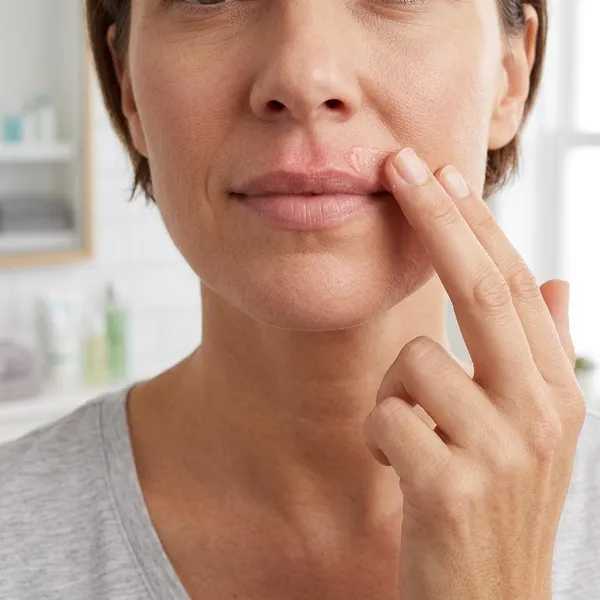
Irritation usually comes from one of three things: the method is too harsh for your skin, the skin was already stressed, or the product was used too aggressively. The upper lip is small, but redness, stinging, bumps, and dark marks can linger there longer than you expect.
Choose a method suited to your skin and hair
Fine peach fuzz often does well with trimming, careful shaving, or dermaplaning. Coarse dark hair may be better handled with threading, waxing, laser, or electrolysis, depending on your skin and budget.
If you have eczema-prone, rosacea-prone, or easily pigmented skin, start conservatively. For a one-time event, a gentle trim may be smarter than testing wax for the first time. For constant weekly upkeep, a longer-term method may reduce repeated irritation.
Check medication and retinoid warnings
Retinoids, exfoliating acids, acne treatments, and some prescription medicines can make facial skin more reactive. This matters most before waxing or using strong creams, because fragile skin can peel, lift, or burn.
Check labels and ask a pharmacist, clinician, or dermatologist if you are unsure. Also mention medicines or products that may increase facial hair, such as testosterone, anabolic steroids, minoxidil, or certain other treatments.
Follow patch-test and preparation instructions
Patch testing is especially important for depilatory creams, bleach, wax products, and home IPL devices. Test a small area first and wait for the reaction window recommended by the product, rather than assuming facial skin will tolerate it because another body area did.
- Start with clean skin: remove makeup, sunscreen, and oil.
- Use the right product: face formulas only for the upper lip.
- Respect timing: more minutes does not mean better results.
- Avoid repeat attempts: if the first pass fails, give the skin time before trying again.
Avoid treating sore or broken skin
Do not remove hair over cuts, active cold sores, cracked corners of the mouth, sunburn, peeling skin, or irritation from a previous treatment. Hair removal over damaged skin is more painful and raises the chance of scabbing, infection, or lingering discoloration.
If the area feels raw, wait until it feels normal again. Delaying by a couple of days is usually easier than covering redness or dark marks for a week.
Use gentle aftercare and sun protection
After hair removal, keep the area calm: a fragrance-free moisturizer or simple soothing gel is usually enough. Avoid scrubs, acids, retinoids, heavy fragrance, and heavy makeup until the skin feels settled.
Sun protection matters because freshly treated skin is more prone to dark marks, especially after waxing, depilatory creams, laser, or IPL. If you are dealing with upper lip shadow or hyperpigmentation already, sunscreen is not optional after treatment.

Conclusion
A female mustache is usually normal when it is stable, familiar, and not paired with other symptoms. Treat sudden change as the dividing line: get medical advice if the hair becomes coarse quickly or comes with period changes, scalp thinning, acne, or voice changes. For day-to-day management, choose the least irritating method that gives you an acceptable result, not the most aggressive option available.
FAQS
Does shaving upper lip hair make it grow back thicker?
No. Shaving cuts the hair bluntly at the surface, so regrowth can feel sharper, but it does not change the root, color, or growth speed.
Can you bleach a mustache instead of removing it?
Yes, bleaching can work well for fine dark hair that you mainly want to make less visible. Use a facial bleach product and patch test first, because upper lip skin can react quickly.
Can upper lip hair be removed permanently?
Electrolysis is the main permanent hair removal option because it treats individual follicles. Laser and IPL can give long-term reduction, but results depend heavily on hair color, skin tone, and the device used.
Popular Articles