How to Eliminate Facial Hair and Reduce Regrowth
If you want to eliminate facial hair, start by deciding whether you need a quick cosmetic fix, longer-lasting reduction, or the strongest chance of permanent removal. Shaving, dermaplaning, threading, waxing, and creams can remove hair temporarily; laser can reduce growth over time; electrolysis is the most established option for permanent treatment of individual follicles.

Professional facial hair removal options
Professional treatments are worth considering when the hair is coarse, visible, recurring, or difficult to manage without irritation. They are also a better choice if you have reactive skin, frequent ingrown hairs, or a facial area where a mistake would be hard to hide, such as the upper lip, chin, or brows.
The main difference is the goal: threading shapes and removes hair temporarily, laser reduces growth over a course of sessions, and electrolysis treats follicles one by one for permanent removal. If you only need tidy brows before an event, threading may be enough. If you are tired of weekly chin-hair maintenance, electrolysis or laser is usually a more practical conversation.
Threading for precise shaping
Threading is best for small areas where shape matters: eyebrows, upper lip edges, and a few stray facial hairs. It removes hair from the root without wax, heat, or depilatory chemicals, which can make it a useful option for people who react badly to creams or prefer not to use wax on the face.
- Best for: brows, upper lip detail, small patches.
- Less ideal for: large facial areas or very dense growth.
- Watch for: short-term redness, bumps, or irritation if the area is touched too much afterward.
Laser for long-term hair reduction
Laser is usually chosen when the goal is less regrowth, less shadow, and fewer repeated removal sessions. It works by targeting pigment in the hair, so dark, coarse hair tends to respond better than blonde, white, gray, or red hair.
Facial laser often needs maintenance because facial hair can be influenced by hormones. For someone with dark upper-lip or chin hair who shaves often and gets bumps, laser can be a good long-term reduction option. For someone with mostly pale peach fuzz, it is usually not the most useful starting point.
Electrolysis for permanent hair removal
Electrolysis is the strongest option when you want permanent treatment, especially for individual chin hairs, upper-lip hairs, or light hairs that laser may not target well. It treats each follicle separately, so it is slower than laser but more precise.
The tradeoff is time and consistency. A few stubborn hairs may be manageable over a series of appointments, while a large area can take much longer. Choose a qualified electrologist, because poor technique can increase the risk of marks, scabbing, infection, or scarring.

How to choose a facial hair removal method
The best method is the one that matches your hair type, skin tolerance, budget, and patience for upkeep. A cheap method that irritates your skin every week is not really cheap; an expensive treatment is not automatically worth it if your hair type is unlikely to respond.
Match the method to your hair color and thickness
Dark, coarse hair usually gives you the widest range of options, including laser. Fine peach fuzz is often better handled with dermaplaning, careful facial shaving, or leaving it alone if it does not bother you. Light, gray, white, and red hairs are usually better candidates for electrolysis than laser.
For a few thick chin hairs, treating the exact follicles with electrolysis may be more sensible than paying for a broader laser plan. For dense dark regrowth along the jaw or upper lip, laser may save more time because it can cover a larger area faster.
Check suitability for your skin and treatment area
Facial areas do not all tolerate the same treatment. Brows need precision, the upper lip can redden easily, and the chin often has thicker hairs that people over-pluck. If your skin is already inflamed, sunburned, broken, or flaring from acne, eczema, or rosacea, delay stronger methods rather than trying to push through.
- Brows: threading or tweezing gives better control.
- Peach fuzz: dermaplaning or facial shaving may be enough.
- Coarse chin hairs: electrolysis or laser may reduce repeated plucking.
- Reactive skin: avoid experimenting right before photos, travel, or an event.
Compare discomfort and irritation risks
Pain and irritation are not the same thing. Threading may sting briefly but calm quickly; creams may feel easy at first but can burn sensitive skin; waxing can remove hair quickly but may lift fragile skin, especially if you use retinoids or exfoliating acids.
If you can tolerate a brief sting but hate visible redness, threading or professional treatment with aftercare may suit you better than a cream you have never tested. If your skin marks easily, the safest method is often the one that removes the least skin along with the hair.
Balance cost with results and upkeep
Compare methods by how often you will realistically repeat them. Occasional brow cleanup can stay low-cost with threading or tweezing. Weekly upper-lip or chin maintenance may make laser or electrolysis worth considering, even if the upfront price is higher.
| If your main issue is... | Often worth considering | Think twice about |
| Peach fuzz and makeup texture | Dermaplaning or facial shaving | Laser, unless there is darker coarse hair too |
| A few stubborn chin hairs | Electrolysis or careful tweezing | Large-area treatments as a first step |
| Dark shadow or frequent shaving bumps | Laser consultation | Constant close shaving if it keeps irritating skin |
| Light or gray visible hairs | Electrolysis | Laser promises that sound too certain |
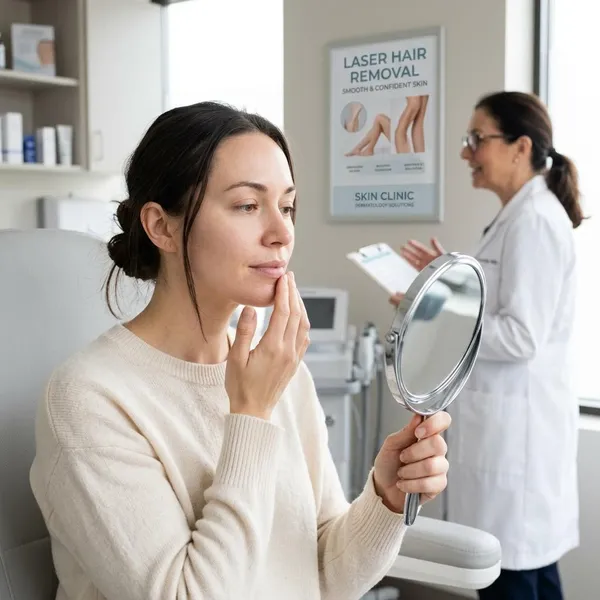
Can you eliminate facial hair permanently?
You can permanently treat some facial hairs, but not every method can do it and not every future hair can be prevented. Electrolysis is the clearest permanent option for treated follicles. Laser is better described as long-term reduction, especially on the face.
This distinction matters because facial hair is often affected by hormones. A treated follicle may stop producing hair, while a different follicle can become active later because of age, medication, menopause, pregnancy, polycystic ovary syndrome, or another hormonal change.
Electrolysis permanently treats individual follicles
Electrolysis treats one follicle at a time. When a follicle is successfully destroyed, that specific hair should not return, which is why electrolysis is commonly used for permanent facial hair removal.
Multiple sessions are still normal because hairs grow in cycles and not every follicle is ready to treat at the same visit. It is most practical when the area is small enough to manage patiently, such as scattered chin hairs or a defined upper-lip area.
Facial laser results may need maintenance
Laser can make facial hair finer, slower, and less dense, but it should not be treated as a one-and-done cure. Maintenance sessions may be needed, particularly around the chin and jawline where hormonal influence is common.
The result can still be worthwhile. Someone shaving dark chin hair every morning may be happy with needing far less frequent upkeep, even if a few hairs remain. Someone expecting every hair to disappear forever may be disappointed unless electrolysis is part of the plan.
Hormonal changes can trigger new hair growth
New or heavier facial hair can appear when hormones shift, even after successful cosmetic treatment. If growth becomes sudden, darker, thicker, or more widespread, it is sensible to ask a healthcare professional, especially if it comes with irregular periods, acne changes, scalp thinning, or other new symptoms.
Cosmetic removal can still help, but it works better when you understand whether there is an underlying trigger. Otherwise, you may keep treating new hairs without knowing why they are appearing.
How to remove facial hair more safely
Safe facial hair removal is mostly about not damaging the skin barrier. The biggest mistakes are using body products on the face, skipping patch tests, waxing over retinoid-treated skin, using dirty tools, and repeating several methods in one session because the first result was not perfect.
Check your skin and medication warnings
Look at your skin before choosing a method. Do not wax, thread aggressively, shave closely, or use depilatory cream over sunburn, open cuts, active irritation, or a damaged skin barrier. If you use retinol, tretinoin, strong acids, isotretinoin, or prescription acne products, ask a dermatologist, pharmacist, or prescribing clinician which methods to avoid and how long to pause if needed.
Use clean tools and products made for the face
Use a dedicated facial razor, clean tweezers, or tools that can be disinfected before they touch your skin. Body razors, old blades, and shared tools raise the chance of nicks, bumps, and irritation.
The same caution applies to creams and waxes. A product that works on legs may be too harsh for the upper lip or cheeks, so choose products clearly intended for facial use and follow the label rather than guessing.
Patch test hair removal creams
Patch testing is not optional with depilatory creams. Apply a small amount to a discreet facial-adjacent area if the instructions allow it, wait for the recommended time on the label, and watch for burning, itching, swelling, or redness before using it more visibly.
Skip the cream if your skin is already dry, peeling, freshly exfoliated, or stinging from skincare. A delayed reaction on the upper lip or chin can be more annoying than the hair you were trying to remove.
Follow timing and technique instructions
More pressure, more passes, or more minutes will not give a better result; it usually just raises the risk of irritation. Use good lighting, work slowly, and stop if the skin starts to burn, sting sharply, or look unusually red.
- With blades: avoid scraping the same spot repeatedly.
- With wax: do not re-wax irritated skin to catch one missed hair.
- With creams: never exceed the product's stated time.
- With tweezers: pull the hair, not the surrounding skin.
Use gentle aftercare and sun protection
After removal, use bland moisturizer and keep active skincare simple for a day or two if your skin feels sensitive. Avoid scrubs, strong acids, retinoids, steam, heavy sweating, and fragranced products until the area has calmed.
Sun protection matters because freshly treated skin can mark more easily, especially if you are prone to post-inflammatory dark spots. If redness, swelling, crusting, or burning does not settle, stop treating the area and get professional advice rather than trying another removal method on top.
Conclusion
The most sensible way to deal with facial hair is to match the method to the hair you actually have, not the result you wish a method could promise. Use temporary methods for light upkeep, consider laser for dark coarse hair you want reduced, and choose electrolysis when permanent treatment of specific hairs is the real goal. If growth changes suddenly or your skin reacts easily, get professional guidance before chasing a faster fix.
FAQS
Does removing facial hair make it grow back thicker?
No. Shaving or dermaplaning can make regrowth feel blunt because the hair is cut straight across, but it does not change the follicle or make the hair biologically thicker.
Can home remedies permanently remove facial hair?
No. Scrubs, pastes, oils, and masks may exfoliate or temporarily make hair look less noticeable, but they do not destroy follicles. Be careful with DIY mixtures that can irritate or stain facial skin.
Can you wax your face while using retinol?
It is usually not a good idea. Retinol and stronger retinoids can make skin more fragile, so waxing may lift or tear the skin; ask a dermatologist how long to pause before waxing if you use these products.
Can prescription creams slow facial hair growth?
Yes, some prescription creams, such as eflornithine, may slow facial hair growth when used consistently. They do not remove existing hair, and growth may return to its previous pattern after stopping.

Popular Articles