Does Facial Hair Grow Back After Laser Hair Removal?
Facial hair can grow back after laser hair removal, especially on hormone-sensitive areas such as the chin, upper lip, jawline, and neck. The better expectation is long-term reduction: less hair, slower growth, and often finer regrowth, rather than a promise that every follicle is gone forever. Before you commit, the two things to check first are whether the hair is dark and coarse enough for laser to target, and whether hormones may be driving the growth.
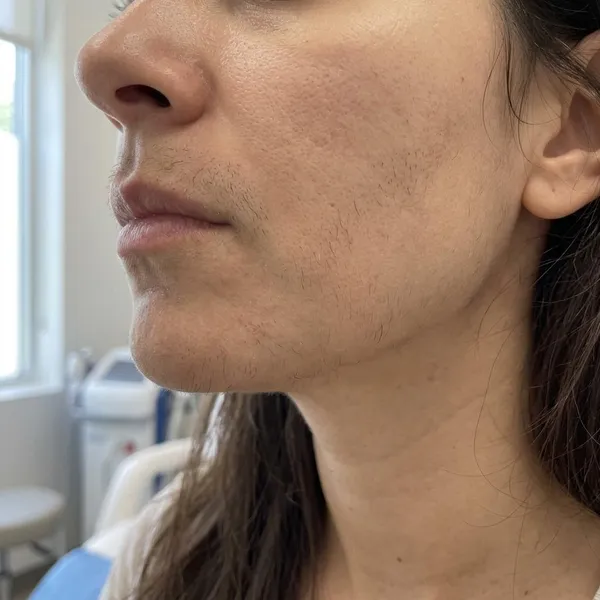
What results can you expect from facial laser hair removal?
Facial laser hair removal usually works best as a reduction treatment. If you have dark, coarse chin hairs, you may notice a clear drop in density after a course of sessions. If your main concern is soft peach fuzz on the cheeks, laser may do very little and may not be the right choice.
Less hair, but not guaranteed permanent removal
The most realistic result is fewer active hairs, not guaranteed permanent removal. Laser targets pigment in growing hairs and uses heat to damage the follicle, but not every follicle is in the right stage during a session. A good result might mean you no longer need to tweeze daily, even if a few hairs still appear later.
Often finer and sparser regrowth
Regrowth after laser is often softer, thinner, and more scattered than before. That matters in everyday life: a dense patch on the upper lip or chin can become a few isolated hairs that are easier to shave or manage without constant irritation.
Possible maintenance treatments
Maintenance is common with facial laser, and it should not automatically be seen as failure. The first course does most of the reduction; touch-ups help control follicles that recover or become active later.
- Occasional regrowth: a touch-up may only be needed when the area becomes visibly bothersome again.
- Hormone-driven growth: maintenance may be more regular, especially around the chin, jawline, or neck.
- A few pale hairs left behind: electrolysis may be more useful than repeating laser on hair the laser cannot "see" well.
Why does facial hair grow back after laser?
Facial hair comes back for a few different reasons: some hairs were not in the right growth stage, some follicles were weakened but not fully disabled, and new hairs can be triggered by hormones. This is also why facial laser results can feel less predictable than underarm or leg treatments.
Hairs in different growth stages
Laser works best on hairs in the active growth phase, when the hair is still strongly connected to the follicle. Resting or transitioning hairs may not absorb enough energy to be affected, so they can appear later even after a properly done session.
Follicles that survive treatment
Some follicles are only partly damaged. They may still produce hair later, but the hair is often thinner or slower-growing. This can happen when hair is too fine, the settings are too conservative, or the follicle simply does not absorb enough heat during treatment.
Hormonal changes that trigger new growth
Facial hair is strongly influenced by androgens, which is why the chin, jawline, neck, and upper lip can behave differently from body hair. Pregnancy, menopause, stopping or changing hormonal contraception, and conditions such as PCOS may all change how much facial hair appears.
If coarse hairs suddenly increase, or if facial hair comes with irregular periods, acne, or scalp thinning, it is worth discussing the pattern with a medical professional. Laser can reduce visible hair, but it cannot fix an underlying hormonal trigger on its own.
Hair that responds poorly to laser
Laser depends on pigment. Dark, coarse hair is usually the easiest target; light blond, red, gray, white, or very fine facial hair usually responds poorly. Treating soft facial fuzz can also be disappointing, and in some cases providers may avoid it because of the risk of stimulating nearby growth.

How long do facial laser results last?
Facial laser results can last for months or years, but the timeline is not the same for everyone. A single session may only create patchy early change, while a full course is more likely to give lasting reduction. Hormonal growth is the main reason results can fade sooner on the face.
Early changes after one session
After one session, hair may still look present for several days or even a couple of weeks. Often this is shedding, not true regrowth: treated hairs can sit in the follicle before they work their way out. Judge the session after the shedding phase, not the next morning.
Longer lasting reduction after a full course
A full course often involves several sessions, commonly around 6 to 10, though facial areas sometimes need more. The useful sign is not perfect smoothness after every appointment; it is slower return, less density, and fewer coarse hairs over time.
Variable regrowth over months or years
Regrowth months or years later can be mild, such as a few scattered hairs, or more noticeable if hormones are involved. Watch the pattern rather than panicking over one hair.
- Wait through shedding: early visible hair may be treated hair leaving the follicle.
- Finish the planned course: stopping early usually leaves more growth cycles untreated.
- Track density: compare thickness, speed, and frequency of removal with your starting point.
- Book touch-ups by pattern: one stray hair is different from a patch returning.
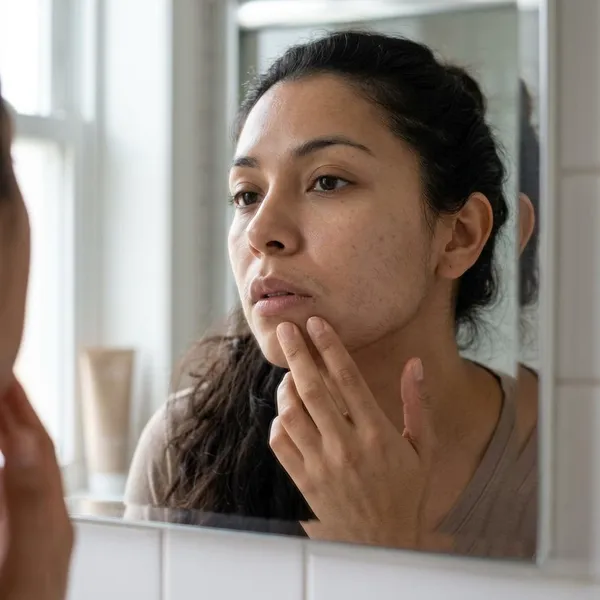
What affects how much facial hair returns?
The amount of regrowth depends on the hair, the skin, the settings, the timing, and what is happening hormonally. If you are deciding whether laser is worth it, start with hair type first, then ask whether the growth pattern suggests hormones, and only then compare devices or prices.
Hair color and thickness
Dark, coarse hair usually responds best because it contains more pigment for the laser to target. Fine or pale hair gives the laser less to work with, so results are often weaker or not worth the cost.
This is where many people make the wrong choice. Laser can be helpful for coarse upper-lip or chin hair, but it is often a poor match for diffuse peach fuzz. More sessions will not necessarily solve the problem if the hair type was not suitable in the first place.
Skin tone and laser settings
Skin tone affects how safely and effectively energy can be delivered. The provider needs to choose settings that protect the skin while still producing enough heat in the follicle. Too low may mean weak results; too aggressive may increase the risk of irritation or pigment changes.
For darker skin tones, device choice and experience matter especially. The safest plan is a provider who regularly treats your skin tone and is willing to patch test or adjust carefully rather than using a one-setting-fits-all approach.
Treatment timing and consistency
Good timing helps the laser catch more hairs in the active growth phase. Delaying appointments repeatedly, plucking between sessions, or stopping after two or three visits can make facial results look underwhelming.
- Keep the spacing your provider recommends: it is designed around growth cycles.
- Shave if needed: shaving leaves the follicle available for laser.
- Avoid plucking, waxing, or threading: removing the root can make the next session less useful.
Hormonal conditions such as PCOS
PCOS and other hormonal shifts can keep activating facial follicles, especially on the lower face. Laser may still be worthwhile, but it often becomes ongoing management rather than a one-time fix.

Conclusion
Facial laser is usually worth considering when the hair is dark, coarse, and bothersome enough that regular shaving or tweezing is taking over your routine. Expect reduction rather than a permanent guarantee, and be more cautious if the issue is peach fuzz or sudden hormone-related growth. The best long-term plan is the one that matches the hair type: laser for suitable coarse hair, maintenance when needed, and electrolysis or medical advice when laser is unlikely to solve the real problem.
FAQS
How many laser sessions does facial hair need?
Many people need around 6 to 10 sessions, but hormone-sensitive facial areas can need more. If the hair is still becoming clearly thinner and slower after each visit, the course may still be working.
Can you shave or pluck facial hair between sessions?
You can usually shave between sessions, but avoid plucking, waxing, or threading unless your provider says otherwise. Laser needs the follicle area available, and removing hair from the root can reduce the value of the next appointment.
Does laser work on facial peach fuzz?
Usually not very well. Peach fuzz is often too fine or light for reliable laser targeting, so ask specifically whether treating it is sensible before paying for sessions.
Is electrolysis permanent for facial hair?
Electrolysis is considered a permanent hair removal method when completed properly over multiple treatments. It is slower than laser because it treats follicles individually, but it can be a better option for light hairs, gray hairs, or small stubborn areas on the face.

Popular Articles