Can Facial Hair Removal Change How It Grows Back?
Removing facial hair does not make it grow back thicker, whether you shave, trim, wax, pluck, or dermaplane. What changes is how the hair feels when it returns: a blunt, short end can feel prickly and look more obvious than the softer tip you had before. If the hair is suddenly becoming darker, coarser, or spreading into new areas, that is more likely about hormones, age, genetics, medication, or a health condition than the removal method itself.
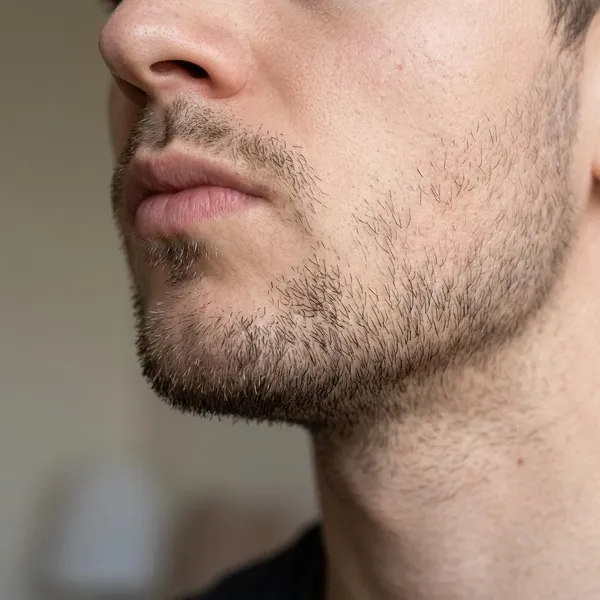
Why can shaved facial hair seem thicker?
The first thing to check is whether the hair has truly changed, or whether you are noticing normal regrowth more than usual. Shaving and dermaplaning cut the hair above the skin. They do not reach the follicle, which is the part that controls hair type, color, and growth speed.
Blunt ends feel rough or prickly
The rough feeling comes from the cut edge of the hair. Natural facial hair often has a fine, tapered tip, but shaving slices it straight across. As that short edge grows out, it can feel sharper against the skin, especially on the upper lip, chin, or jawline.
Short hairs can look darker
A darker look after shaving usually comes from seeing the thicker base of the hair shaft close to the skin. The hair has not gained pigment; the short regrowth is just easier to spot than a longer, finer tip.
- Dark hair and light skin: short regrowth is more visible.
- Bright bathroom lighting: tiny hairs can look stronger than they do in normal light.
- Magnifying mirrors: useful for detail, but they can make harmless regrowth feel like a bigger problem.
Regrowth stands out against recently smooth skin
Freshly smooth skin creates a strong before-and-after effect. One day your face feels polished; a few days later, even normal regrowth can seem new or heavier because you are comparing it with a hair-free surface.
What can actually make facial hair thicker?
Real thickening happens when the follicle starts producing a different type of hair. That usually points to internal influences, not surface grooming. The most useful clue is timing: a slow change over years is different from a sudden change over weeks or months.
Hormonal changes
Hormones, especially androgens, can make some facial hairs become darker, coarser, or more noticeable. This can happen around puberty, pregnancy, perimenopause, or menopause, and it may show up as new chin hairs or more visible upper-lip hair.
The practical difference is that hormone-related changes tend to continue or slowly increase. If your usual peach fuzz feels prickly only after dermaplaning, that is probably blunt regrowth. If you are seeing new coarse hairs in a pattern you did not have before, hormones are a more realistic explanation.
Age and genetics
Family pattern matters. If close relatives have noticeable facial hair, you may be more likely to develop it too, especially as hormone balance changes with age.
For many people, a few coarse chin hairs in their thirties, forties, or fifties are frustrating but not unusual. That is different from suddenly developing dense or widespread facial hair. Gradual, familiar-looking changes usually point more toward age and genetics than shaving.
Conditions such as PCOS
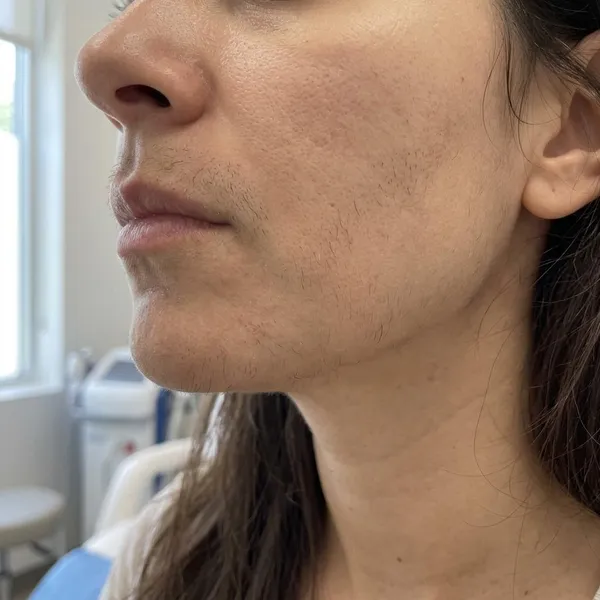
PCOS can cause coarse facial hair because it is often linked with higher androgen activity or increased follicle sensitivity to androgens. The hair may appear on the chin, jawline, upper lip, or sideburn area and may feel different from soft peach fuzz.
Look at the whole pattern, not just the hair. Irregular periods, acne, oily skin, scalp hair thinning, or unexplained weight changes can make a hormone-related condition more likely. PCOS is one possible cause, but it is not the only one, so it is better not to self-diagnose from facial hair alone.

Certain medications
A medication change can sometimes explain new facial hair better than any grooming habit. Treatments that affect hormones, androgen levels, or hair follicles may influence hair growth in some people.
If the change started after a new prescription, supplement, hormone treatment, or hair-loss medication, write down the start date and ask a doctor or pharmacist whether hair growth is a known side effect. Do not stop a prescribed medicine on your own just because you notice facial hair.
When should you ask a doctor about new facial hair?
A few stray hairs are usually not urgent. The situations that deserve more attention are sudden growth, coarse hair with menstrual changes, or facial hair appearing alongside other body changes. Those patterns can give a doctor useful clues about hormones or medication effects.
Sudden or rapid growth
A fast change is worth checking. If facial hair becomes noticeably darker, coarser, or more widespread within weeks or a few months, it is less likely to be just normal aging.
- Lower concern: one or two new chin hairs that appear slowly over time.
- More concern: a new patch of coarse hair or rapid spread across the jawline or upper lip.
- Helpful record: dates, photos in normal lighting, and any recent medication or health changes.
New coarse hair with irregular periods
Facial hair plus irregular periods is a stronger reason to book a medical appointment. That combination can point toward a hormone-related issue such as PCOS, especially if acne, oily skin, or scalp hair thinning is also new for you.
This is not about panic; it is about not blaming shaving when your body may be giving a separate signal. If the pattern is new, persistent, and paired with cycle changes, getting assessed is more useful than switching between hair removal methods.
Hair growth with a deeper voice or other changes
Facial hair growth with a deeper voice, new muscle changes, scalp thinning, or unusual body-hair growth should be evaluated promptly. These symptoms can suggest a more significant hormone shift and should not be brushed off as normal stubble.

Conclusion
If your hair only feels rougher after shaving or dermaplaning, the most likely explanation is blunt regrowth, not thicker hair. Surface hair removal is generally fine if your skin tolerates it, but a new, fast, or symptom-linked change deserves a different response: track the pattern and ask a medical professional instead of assuming your razor caused it.
FAQS
Can shaving turn peach fuzz into a beard?
No. Peach fuzz is vellus hair, and shaving cannot convert it into beard-like terminal hair. If it looks stronger afterward, you are probably seeing short blunt ends rather than a new hair type.
Does shaving your face every day make hair grow faster?
No. Daily shaving may keep creating a stubbly feel, but it does not speed up the follicle's growth cycle. If shaving every day irritates your skin, spacing it out or using a gentler method may be the better choice.
Will facial hair stop growing if you keep plucking it?
Not reliably. Plucking removes the hair from the root, so regrowth may take longer than shaving, but many follicles keep producing hair. Repeated plucking can also cause irritation or ingrown hairs, especially on the chin.
Can laser treatment ever increase facial hair growth?
Rarely, yes. An uncommon reaction called paradoxical hypertrichosis can happen, particularly on the face. If you have hormonal concerns or dense facial hair, it is worth discussing that risk with a qualified provider before starting treatment.


Popular Articles