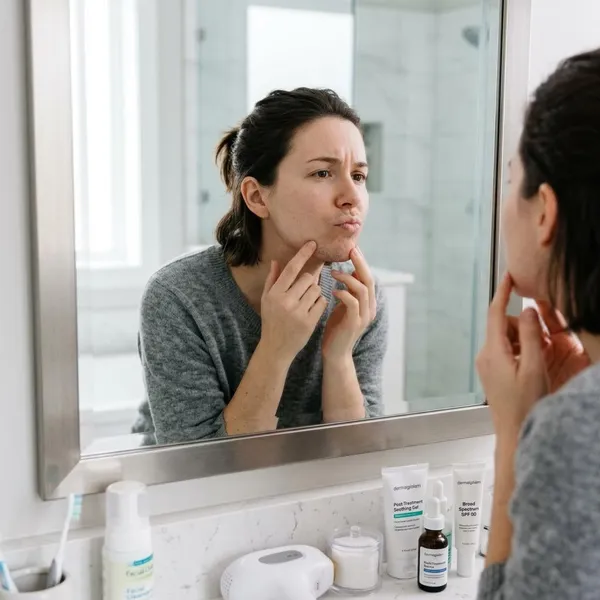
Is a Facial Before Laser Hair Removal Safe?
You can get a facial before laser hair removal in some cases, but the safe choice depends on what the facial involved and how your skin looks now. A calming, non-exfoliating facial is very different from a peel, dermaplaning, waxing, or aggressive extractions. Before you keep the laser appointment, check three things first: what was done, how long ago it happened, and whether the skin is completely calm.

What determines whether a facial is safe before laser?
The main issue is not the word "facial." It is whether the treatment left the skin more sensitive or removed hair in a way that affects the laser. Laser hair removal is usually safest when the treatment area is intact, not inflamed, and prepared according to the clinic's instructions.
The treatments and products used
A simple hydrating facial with cleansing and a soothing mask is usually lower risk than a facial that includes acids, enzymes, strong scrubs, dermaplaning, microdermabrasion, peels, or heavy extractions. The more the facial exfoliates or irritates the surface, the more cautious you should be about doing laser soon after.
| Facial detail | Why it matters before laser |
|---|---|
| Hydrating or calming facial | Often lower risk if the skin is fully settled by treatment day. |
| Chemical peel, dermaplaning, or microdermabrasion | Can leave the barrier more reactive, even if the skin looks mostly normal. |
| Waxing, threading, tweezing, or epilating | May remove the hair root that the laser needs to target. |
| Retinoids, acids, benzoyl peroxide, or prescription acne products | Can increase sensitivity and may need to be paused if your provider advises it. |
The time between appointments
Timing matters, but counting days is not enough. A gentle facial several days before laser may be fine for someone whose skin settles quickly, while a peel or dermaplaning treatment close to the appointment may need a longer gap.
Your skin's recovery
Your skin's condition on the day matters more than how "mild" the facial sounded on the menu. Do not treat the area as ready if you still notice:
- Redness, heat, stinging, or tenderness.
- Peeling, flaking, raw patches, or unusual dryness.
- Open blemishes, scratches, scabs, or broken skin.
- A burning or tight feeling when applying a plain moisturizer.
If your skin is naturally reactive, you use acne medication, or you are prone to pigmentation after irritation, it is worth being more conservative. A short delay is usually less frustrating than treating skin that was not ready.
Your laser provider's guidance
Your laser provider should make the final call because they know the device, your skin type, the treatment area, and the settings they plan to use. Tell them the exact facial name, the date, the products used if you know them, and how your skin reacted afterward.
A careful clinic will not only ask whether you had "a facial." They may ask about peels, dermaplaning, exfoliating acids, retinol, extractions, waxing, threading, sun exposure, and current irritation. Those details can change the advice.
How to plan the gap between treatments
The easiest way to avoid a problem is to plan the facial and laser appointment together instead of treating them as separate bookings. Put the laser session first if hair removal is the priority, and keep skincare simple in the days leading up to it.
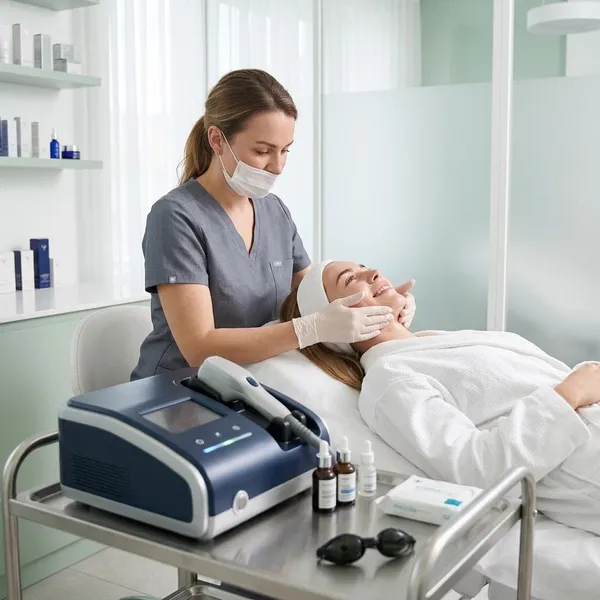
Share the facial details with your laser provider
Give the clinic specifics, not a general description. "Hydrating facial with no exfoliation six days ago" is much more useful than "I had a facial last week."
- Treatment name and date.
- Any peel, acid, enzyme, scrub, or retinoid used.
- Whether there was dermaplaning, microdermabrasion, steam, or extractions.
- Any waxing, threading, tweezing, or epilating on the laser area.
- Current symptoms, even if they seem minor.
Ask for a treatment-specific waiting period
Ask the clinic what waiting period they recommend for that exact facial and your treatment area. A face treated with dermaplaning needs a different answer than legs treated with laser after a relaxing facial that never touched the laser area.
If the provider cannot safely judge from the treatment name alone, send photos only if they request them or ask whether they prefer to assess the skin in person. Avoid adding new exfoliants while you wait for their answer.
Allow redness, peeling, and tenderness to settle
Wait until the skin feels boring again: no sting when washing, no flakes to pick at, no warm patches, and no sore spots. Trying to rush that stage with scrubs, acids, or "brightening" products can make the barrier more irritated.
Confirm your skin is ready before laser
Use a quick day-before check rather than hoping the clinic will sort it out at the appointment. The area should be clean, calm, intact, and free from makeup, self-tanner, heavy moisturizer, or leftover product.
- Keep: plain, gentle skincare if your clinic allows it.
- Avoid: fresh exfoliation, tanning, picking, waxing, threading, or tweezing.
- Ask: whether shaving is needed for facial laser hair removal, since shaving leaves the root in place while removing surface hair.
What if you already had a facial?
If the facial already happened, do not panic and do not guess. The next step is to work out exactly what was done, check your skin honestly, and let the laser clinic decide whether the appointment should stay where it is.
Tell the clinic what was done and when
Call or message the clinic with the treatment date and details. If you do not know what products or add-ons were used, ask the spa or esthetician before contacting the laser provider. This is especially important if the facial included anything marketed as resurfacing, brightening, peeling, or deep cleansing.
Report irritation or broken skin
Mention redness, burning, bumps, peeling, scabbing, scratches, open blemishes, or a scraped feeling. Do not cover the area with makeup to make it look better at the appointment; the provider needs to see the real condition of the skin.
For a low-risk scenario, a gentle facial a week ago with no current symptoms may only need a quick confirmation. For a higher-risk scenario, such as a recent peel, dermaplaning, or irritated acne area, moving the appointment is often the safer choice.
Ask whether to keep or move your appointment
Ask directly: "Based on this facial and how my skin looks, should I keep the appointment or reschedule?" That gives the clinic a clear decision to make instead of a vague safety question.
If they recommend rescheduling, ask what to avoid before the new date. Usually the safest approach is simple skincare, no extra exfoliation, no root hair removal, and no sun exposure on the treatment area unless your provider gives different instructions.

Conclusion
A facial is not automatically a problem before laser, but it becomes a concern when it exfoliates, irritates, or removes hair from the root. If the skin is calm and the facial was gentle, your appointment may be fine; if there is peeling, tenderness, broken skin, recent dermaplaning, a peel, or waxing, check with the clinic before going ahead. The safest decision is the one based on the actual treatment and how your skin looks now, not on a fixed rule from the internet.
FAQS
Does a facial improve laser hair removal results?
Not directly. Laser results depend more on the hair growth cycle, hair color, device settings, and correct prep than on having a facial first.
Should you stop retinol before laser hair removal?
Often, yes, especially when treating the face. Ask your provider how many days to pause it, because the right timing depends on the product strength, your skin tolerance, and the clinic's protocol.
Can you have a facial before laser treatment elsewhere on your body?
Usually it matters less if the facial was on a completely different area. Still tell the clinic if you used strong actives, had a body treatment near the laser area, or have any irritation where the laser will be used.

Popular Articles