How Can Women Shave Their Upper Lip Without Irritation?
If you want to shave upper lip hair, you can do it safely as long as your skin is calm, your razor is clean, and you avoid scraping the same spot again and again. Shaving does not make the hair grow back thicker, but it can feel blunt as it grows in. The main things to get right are light pressure, enough slip, and simple aftercare.

Does shaving a mustache make it grow back thicker?
A razor cuts hair at the surface of the skin; it does not change the follicle, so it cannot make future hair grow denser, darker, or faster. The reason shaved hair may feel more noticeable is the cut end: instead of tapering naturally, it grows back with a blunt edge.
The result can look different depending on your hair type. Fine peach fuzz may barely show as it returns, while darker or coarser upper lip hair can feel prickly sooner. That does not mean shaving caused the change; it means the original hair was already more visible.
Shaving is usually a reasonable choice for a quick touch-up before makeup, photos, or an event. If your upper lip hair has suddenly become much heavier, darker, or more widespread, though, it is worth asking a doctor or dermatologist, especially if the change comes with acne, irregular periods, or other hormone-related symptoms.
How to shave your upper lip step by step
Start by checking two things: whether your skin is already irritated, and whether your blade is clean and sharp. If the area is sunburned, peeling, freshly waxed, or stinging from skincare, wait. Shaving over angry skin is the fastest way to turn a small grooming job into redness and bumps.
Choose a clean, sharp razor
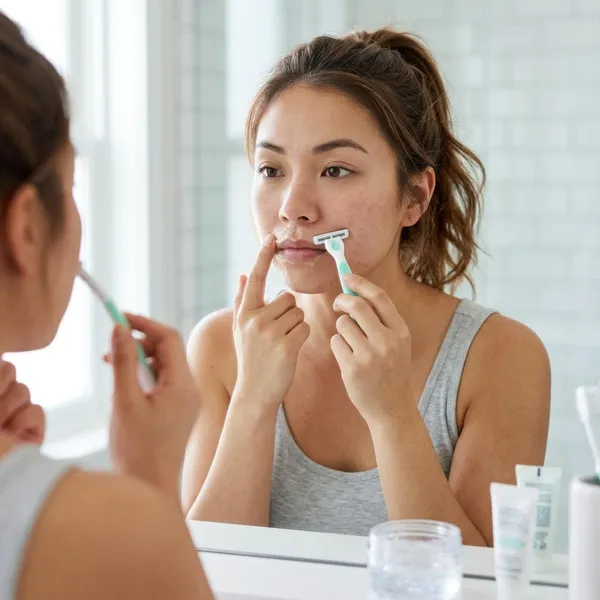
Use a fresh facial razor, a small single-blade razor, or a clean facial trimmer. A dull blade makes you press harder, and pressure is usually what causes nicks, soreness, and that raw feeling above the lip. Do not share razors, and replace the blade if it drags, looks rusty, or feels rough.
- For the closest finish: use a sharp facial razor with very light pressure.
- For reactive skin: an electric facial trimmer may be safer, even if it leaves a tiny bit more texture.
- For occasional touch-ups: a small facial razor is easier to control than a body razor.
Cleanse and soften the hair
Wash away makeup, sunscreen, oil, and food residue before shaving. Then soften the hair with warm water or a warm damp cloth for about a minute. You do not need a scrub first; shaving already gives the skin some physical exfoliation, and stacking exfoliation can make the upper lip sting.
Apply a gentle shaving cream or gel
Add a thin layer of fragrance-free shaving gel, cream, or a simple gentle lotion so the blade has slip. This matters most if your skin often turns red after hair removal. Too much product can make the area slippery and harder to control around the cupid's bow, so keep the layer light.
Shave with the hair growth using light strokes
Look closely at the direction of growth before you start. For many people, upper lip hair grows downward or slightly outward, but it is not always perfectly even on both sides.
Hold the skin gently taut and shave with the grain using short strokes. One calm pass is better than five rushed passes. If you are shaving for a same-day event, choose comfort over an ultra-close result; visible redness is usually harder to hide than a tiny bit of remaining texture.
Rinse the blade between strokes
Rinse the blade often so hair and product do not clog the edge. A clogged razor tugs instead of gliding, which makes you more likely to repeat strokes over the same patch. This is especially important on the small curves near the corners of the mouth.
Rinse your skin and apply moisturizer
When you are done, rinse with cool or lukewarm water, pat dry, and apply a plain moisturizer. If you shave during the day, use sunscreen before going outside. Freshly shaved skin can feel more exposed, and sun plus friction can make redness last longer.
How to care for your upper lip after shaving
Aftercare should be boring on purpose. The upper lip does not need a complicated routine after shaving; it needs fewer irritants, less touching, and a little time to settle. If you use strong skincare, treat shaving day as a gentler day for that area.

Use gentle, fragrance-free products
Choose a bland moisturizer and avoid fragranced balms, alcohol-heavy toners, strong vitamin C, and acne treatments on the freshly shaved area if they tend to sting. Ingredients such as glycerin, ceramides, or hyaluronic acid can help with tightness without making the routine complicated.
If you are shaving only once before a holiday, wedding, or makeup-heavy day, test the method on a normal day first. That way you know whether your skin gets bumps, flakes, or redness before you rely on it for an important occasion.
Avoid exfoliating irritated skin
Skip scrubs, acid toners, peeling pads, and strong exfoliating masks if the upper lip feels warm, tight, or red. Shaving already removes some surface buildup, so another exfoliating step can push the skin too far. Wait until the area feels normal again before using stronger actives there.
Leave bumps and ingrown hairs alone
Do not pick at bumps or dig at ingrown hairs. A warm compress and gentle moisturizer are safer first moves. If bumps keep coming back, the problem may be too much pressure, shaving against the grain, or using a blade that is too dull.
- Small, mild bumps: pause shaving until the skin calms.
- Frequent ingrowns: try fewer passes or switch to a trimmer.
- Pain, swelling, pus, or spreading redness: get medical advice instead of continuing to shave over it.
Clean and dry your razor before storing it
Rinse the razor well, shake off excess water, and let it air dry somewhere clean. Storing a damp blade in a closed drawer or shower corner can leave residue on it and make the next shave rougher. If the blade no longer feels smooth, replace it rather than compensating with more pressure.
Conclusion
Shaving upper lip hair is fine for many women when the skin is calm and the technique is gentle. The best routine is not the most aggressive one; it is the one that removes enough hair without leaving you red, sore, or stuck in a cycle of bumps. If your skin keeps reacting, move to a trimmer, shave less often, or pause and check whether skincare products or sudden hair changes are part of the problem.
FAQS
How often can a woman shave her mustache?
As often as her skin tolerates it. Some women touch up every few days, while others wait a week or more; if the area feels tender, bumpy, or dry, give it more time before shaving again.
Can you shave upper lip hair while using retinol?
Yes, but be cautious. If retinol already makes your upper lip dry or flaky, skip it around shaving day and restart only when the skin feels comfortable.
Is an electric facial trimmer gentler than a razor?
Often, yes. A trimmer usually does not cut as close as a razor, but that small trade-off can mean less friction, fewer nicks, and easier frequent touch-ups.

Popular Articles