Does Facial Laser Hair Removal Hurt on the Face?
If you are asking, does facial laser hair removal hurt, the honest answer is: it can sting, but for most people it is quick and manageable rather than deeply painful. The face has sensitive spots, so the upper lip or chin may feel sharper than the cheeks. The best first check is whether your skin is calm, your provider uses proper cooling, and you know what level of discomfort is normal before the session starts.
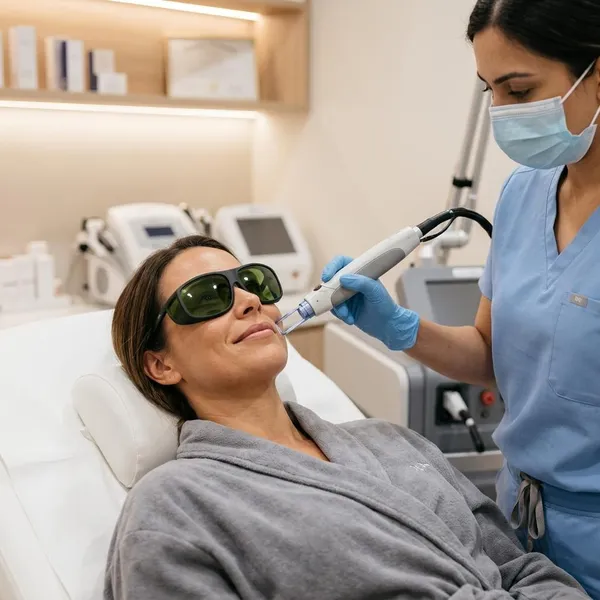
What does facial laser hair removal feel like?
Most people describe facial laser hair removal as short bursts of heat and sting, not continuous pain. It often feels more intense in small, nerve-rich areas, but the session itself is usually brief because the face does not take long to treat.
Brief pinpricks or snapping sensations
The classic feeling is a rubber-band snap or a tiny hot pinprick. On the upper lip, those snaps can feel close together because the treatment area is small and sensitive. On the cheeks, the same type of pulse may feel much milder.
Coarse facial hair can make the snap feel stronger. For example, someone treating a few fine cheek hairs may barely react, while someone treating dense chin hair may need short pauses during the first session.
Warmth during each pulse
Warmth is normal because the laser energy is targeting the hair follicle. You may feel a quick hit of heat, followed by cooling from the device or from the provider's cooling method.
The warmth should feel brief and controlled. If it feels like burning, or if one area suddenly feels much hotter than the rest, say something right away rather than trying to tolerate it.
Temporary tenderness afterward
Mild tenderness afterward can happen, especially around the upper lip, chin, or jawline. The skin may look pink, feel tight, or seem a little puffy around the follicles.
For many people, this settles within hours. Sensitive skin may stay pink longer, but it should gradually improve. Pain that gets worse, feels sharp after you leave, or comes with blistering is not something to ignore.
What affects how much it hurts?
The biggest factors are the treatment area, hair type, skin condition, laser settings, cooling, and your own pain tolerance. Two people can have the same area treated and walk away with very different opinions about how it felt.
Treatment area and skin sensitivity
The upper lip is often the sharpest area because the skin is thin and sensitive. The chin and jawline can also feel strong when the hair is coarse or dense. Cheeks and forehead usually feel easier for many people.
Skin condition matters just as much as location. If your skin is dry, sun-exposed, over-exfoliated, or reacting to acne products, the same laser setting may feel much harsher. If your face is already irritated on appointment day, ask whether it is better to wait.
Hair thickness and density
Thicker, darker hairs often create a stronger snap because they absorb more laser energy. That can make early sessions feel more intense, especially on the chin or upper lip.
The encouraging part is that dense, dark hair is often the type providers expect to respond better than very fine hair. As the hair becomes finer over a course of treatments, later sessions may feel less sharp.
Laser settings and cooling
Settings should be chosen for safety and effectiveness, not simply turned down until you feel nothing. Too much discomfort is a warning sign, but no sensation at all does not automatically mean better treatment.
- Ask how cooling is used. Chilled tips, cold air, or cooling sprays can reduce the hot feeling during pulses.
- Tell your provider about your skin tone and reactions. This helps them choose settings more carefully.
- Do not compare settings with a friend. Different hair, skin, and devices can require different approaches.
Personal pain tolerance
Your own pain threshold can change the experience a lot. Stress, poor sleep, anxiety, or focusing too hard on every pulse can make treatment feel sharper than it is.
If you know you are sensitive to quick stings, plan a lower-pressure appointment: avoid rushing in late, skip harsh skincare beforehand if your provider has told you to, and ask at the start how to signal for a pause.
How to make treatment more comfortable
The most helpful comfort steps are simple: arrive with skin that is calm, follow shaving instructions, tell the provider what products you use, and speak up during treatment. Trying to "push through" severe pain is not the goal.
Think of comfort in priorities. First, avoid anything that makes the skin more reactive. Second, use cooling and pauses. Numbing cream is a later option, not something to apply casually on your own.
Follow your provider's shaving instructions
Shaving instructions matter because hair left above the skin can heat up and add unnecessary sting. Your provider may want the area shaved close to treatment, but facial instructions can vary depending on the area and your hair growth.
Discuss sensitive skin and skincare products
Tell your provider about retinoids, exfoliating acids, benzoyl peroxide, acne prescriptions, peels, eczema, rosacea, or recent irritation. Facial skin is often exposed to active products, and those products can make laser feel more intense.
This is especially important if you are a regular retinoid or acid user. You may normally tolerate those products well, but laser treatment on recently sensitized skin can feel much sharper and may leave redness for longer.
Ask about cooling during treatment
Cooling is one of the most practical ways to reduce discomfort. Ask whether the device has built-in cooling, whether cold air is used, or whether the provider can cool the area before or after pulses.
- Upper lip: ask for short pauses if the pulses feel too concentrated.
- Chin or jawline: mention coarse or hormonal hair growth so the provider can pace the area carefully.
- Reactive skin: ask how they monitor redness and heat during treatment.
Use numbing cream only as directed by your provider
Numbing cream can help some people, but it should not be used casually on the face. Using too much, leaving it on too long, or covering a larger area than advised can be unsafe or irritate the skin.
If you are nervous about pain, ask before the appointment whether numbing is appropriate for your treatment area. Your provider can tell you what product, timing, and amount are suitable, or whether cooling and shorter pauses are enough.
Speak up if you need a pause
A pause is a normal request, not a failure. If the treatment starts feeling too sharp, ask for a moment, more cooling, or slower pacing.
Speak up immediately if the pain feels burning, extreme, or different from the earlier pulses. That information helps your provider decide whether to stop, adjust, or check the skin before continuing.
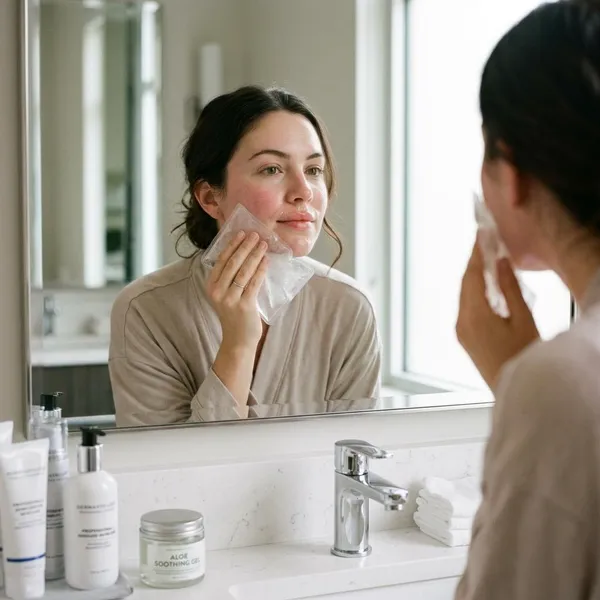
How to soothe your skin afterward
After treatment, your job is to keep the skin calm rather than "treat" it aggressively. Most irritation after facial laser is made worse by heat, friction, sun, or strong skincare too soon.
A low-risk recovery usually looks like mild redness that slowly fades. A higher-risk recovery looks like worsening pain, swelling that spreads, blistering, or skin that looks injured.
Apply a cool compress as advised
A cool compress can ease warmth and tenderness. Use a clean, soft cloth and hold it gently against the area instead of rubbing.
Avoid direct ice unless your provider specifically recommends it. Very cold pressure on freshly treated facial skin can sometimes irritate rather than soothe.
Use gentle skincare
Keep skincare boring for a short while. A mild cleanser and simple moisturizer, if your provider approves, are usually safer than active serums right after treatment.
- Pause harsh exfoliation. Scrubs, acids, and peeling products can make redness worse.
- Be careful with acne treatments. Products that sting are usually a sign to stop and ask your provider.
- Avoid fragrance-heavy products. Freshly treated skin may react even if it normally does not.
Protect treated skin from the sun
Sun protection is not just a beauty step after laser; it helps reduce irritation and the chance of pigment changes. Treated facial skin can be more vulnerable, especially if you already discolor easily after breakouts or inflammation.
If you have a beach day, outdoor sports, or heavy sun exposure planned, ask whether your appointment timing still makes sense. For many people, scheduling laser when sun exposure is easier to control is the more comfortable choice.
Follow instructions on heat and exercise
Heat can make the face flush and sting more after treatment. If your provider tells you to avoid hot showers, saunas, steam rooms, or hard workouts for a short period, take that seriously.
This is not usually about long downtime. It is more about giving the skin a calm window to settle before sweat, heat, and friction test it again.
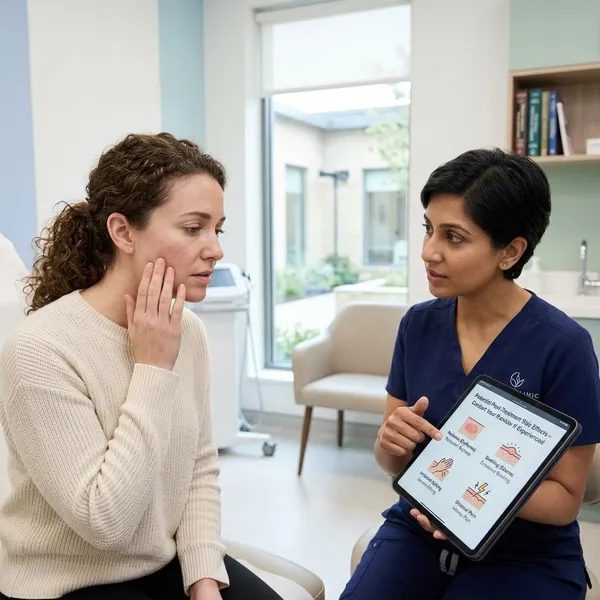
When should you contact your provider?
Contact your provider if symptoms are stronger than expected, worsening, or look like skin injury. Mild redness and tenderness can be normal; severe pain or broken skin is different.
When in doubt, send a clear description and ask whether a photo would help. Early advice is especially useful on the face because irritation, marks, and pigment changes are more visible there.
Severe or worsening pain
Pain should usually move in the direction of improvement after treatment. If it becomes more intense, throbs, or feels hot and sharp hours later, contact your provider instead of waiting it out.
Blisters, crusting, or open skin
Blisters, crusting, oozing, or open areas are not typical "normal redness." Do not pick at the skin or apply strong products to fix it yourself. Keep the area clean and ask your provider what to do next.
Lasting redness or swelling
Redness or puffiness that lingers longer than your provider told you to expect deserves a check-in, especially if it spreads or becomes more noticeable. Mention any sun exposure, active skincare, workouts, or heat exposure after the appointment because those details can change the advice you receive.
Conclusion
Facial laser hair removal is usually uncomfortable in quick flashes, not painful in a constant or unbearable way. If your skin is calm, the area is prepared properly, and your provider uses good cooling, most sessions are manageable. The main rule is simple: normal stinging is one thing, but severe pain, burning, blistering, or symptoms that get worse should be checked rather than tolerated.
FAQS
Is facial laser hair removal more painful than waxing?
For many people, no. Waxing is one strong pull, while laser is a series of quick stings. The upper lip can still feel sharp, but the discomfort usually stops as soon as the pulse ends.
Does upper lip treatment hurt more than chin treatment?
Often, yes. The upper lip is thin and sensitive, so it can feel sharper. Chin treatment may feel stronger if the hair is coarse or dense.
Does more pain mean better results?
No. More pain does not prove the treatment is working better. Results depend on the right device, settings, hair type, and skin response; excessive pain may be a sign to pause and reassess.
Can you ask for a test spot before a full session?
Yes. A test spot is a reasonable request if you have sensitive skin, darker skin prone to pigment changes, a history of reactions, or anxiety about how the laser will feel.
Popular Articles