Is Facial Laser Hair Removal Linked to Cancer?
If your main worry is whether facial laser hair removal causes cancer, current evidence does not show that it does. The more realistic safety issues are skin irritation, burns, pigment changes, and treating over moles or unusual spots. The first thing to check is not "laser versus radiation," but whether the device, settings, skin tone, hair color, and treatment area are appropriate for your face.
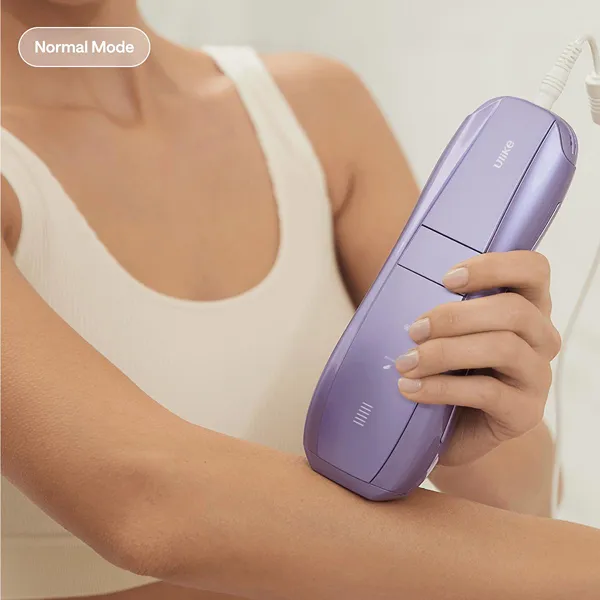
Why hair removal lasers are not like X-rays
Hair removal lasers are often described as using "radiation," but that word can be misleading. X-rays use ionizing radiation, which has enough energy to directly damage DNA under certain conditions. Hair removal lasers use non-ionizing light, which works mainly by creating heat in pigment-rich hair follicles near the skin surface.
That difference is why the cancer concern is usually not the main risk to focus on. A better safety checklist is: avoid treatment over suspicious spots, make sure settings match your skin tone, protect your eyes, and take aftercare seriously.
They use lower-energy light
Hair removal lasers are designed to affect hair follicles, not travel through the body like medical imaging radiation. The energy is chosen to be absorbed by melanin in the hair, then converted into heat in a controlled treatment area.
On the face, that control matters because the upper lip, chin, jawline, and sideburns are visible and can react easily. The concern with poor settings is usually a burn or dark mark, not a hidden cancer risk.
They do not use ionizing radiation
The key distinction is ionizing versus non-ionizing. Ionizing radiation can directly disturb atoms and DNA; standard laser hair removal and IPL do not work that way.
- X-rays: ionizing radiation used for imaging.
- Radiation therapy: ionizing radiation used medically to treat disease.
- Hair removal laser or IPL: non-ionizing light used to heat pigmented hair.
They target pigment in hair follicles
The device is looking for contrast: darker hair against lighter surrounding skin usually gives the clearest target. That is why coarse dark chin hairs often respond better than pale peach fuzz on the cheeks.
The same pigment-targeting effect is also the reason moles, dark freckles, and changing spots need caution. If a brown spot is raised, uneven, newly changing, bleeding, or simply unfamiliar to you, do not treat over it with laser or IPL before getting it checked.
They heat a shallow treatment area
Facial laser hair removal works close to the skin surface. It does not send energy through the face toward internal organs, and it does not create a body-wide exposure. If something goes wrong, the sign is usually local and visible: strong redness, blistering, crusting, tenderness, or pigment change.
What facial laser hair removal actually does
Facial laser hair removal is a local heat-based treatment. It finds pigment in suitable hairs, turns light into heat, and weakens the follicle enough to reduce future growth. It does not change hormones, scan internal tissue, or remove every hair permanently in one session.
A useful way to judge whether it makes sense for you is to separate low-risk situations from higher-caution ones.
- More straightforward: dark, coarse upper-lip or chin hair with no recent tan, no active irritation, and no suspicious spots in the area.
- Needs more caution: darker skin, melasma, recent tanning, cold sore history, active acne, many facial moles, or a history of skin cancer.
- Often disappointing: gray, white, red, or very light blond facial hair, because there may not be enough pigment for the light to target.
Finds pigment in the hair
The treatment works best when the hair contains enough melanin to absorb the light. Dark chin hairs may reduce well, while soft blond upper-lip fuzz may barely respond. A good provider should say this before you start, because limited results are often a hair-color issue rather than a cancer or safety issue.
Converts light into heat
Once the light is absorbed by pigment, it becomes heat. That heat is the working mechanism. Too little heat may do almost nothing; too much heat, or heat delivered to the wrong target, can injure the skin.
This is where technique matters most. For someone with light skin and dark hair, the settings may be simpler. For someone with deeper skin tone or a tendency to dark marks, the margin for error can be smaller, so device choice and operator experience become more important.
Damages the hair follicle
The heat injures parts of the follicle involved in regrowth. It usually reduces growth over a series of treatments rather than permanently removing every follicle at once.
Slows future hair growth
Successful treatment usually means less dense, slower, finer regrowth. If you currently tweeze chin hairs every morning, the practical win may be needing less frequent removal and getting fewer irritation bumps.
Facial hair can also be hormonally influenced. People with PCOS or other hormonal drivers may still need maintenance, even after a good response. That is not a sign that the treatment is unsafe; it is a sign that new or stimulated follicles can keep appearing over time.
Leaves nearby tissue largely untreated
When settings are appropriate, nearby skin should absorb much less energy than the targeted hair. "Largely untreated" still does not mean "ignore your skin." Recent sun exposure, a fresh tan, harsh exfoliation, or treating over a dark lesion can all shift energy into places you do not want it.
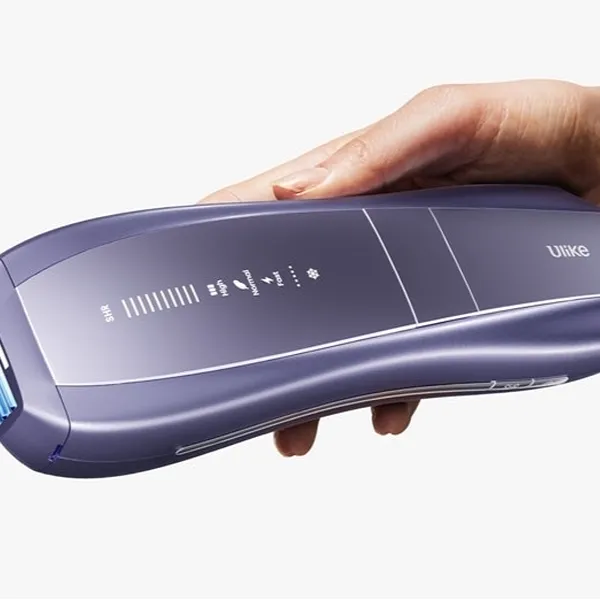
Is Ulike Air 10 the same as facial laser treatment
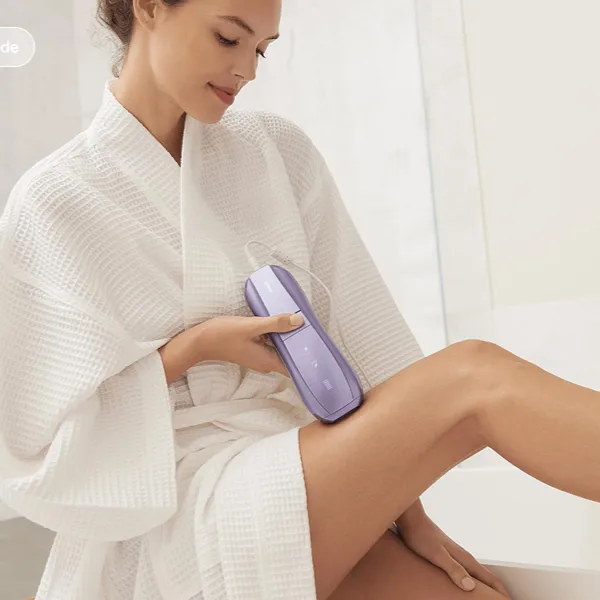
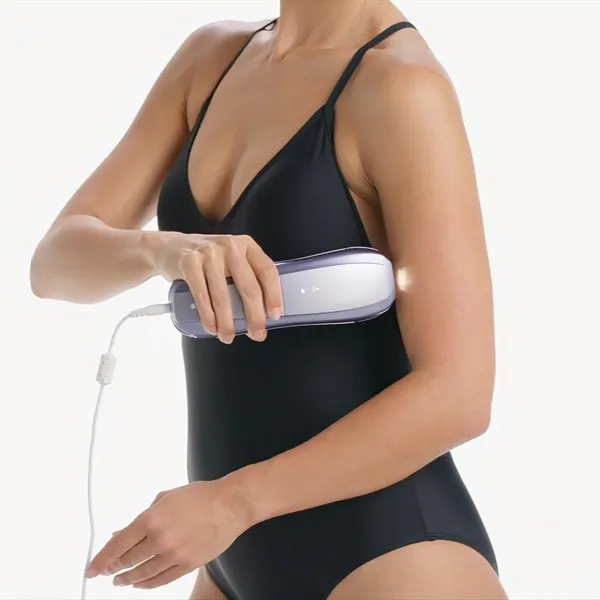
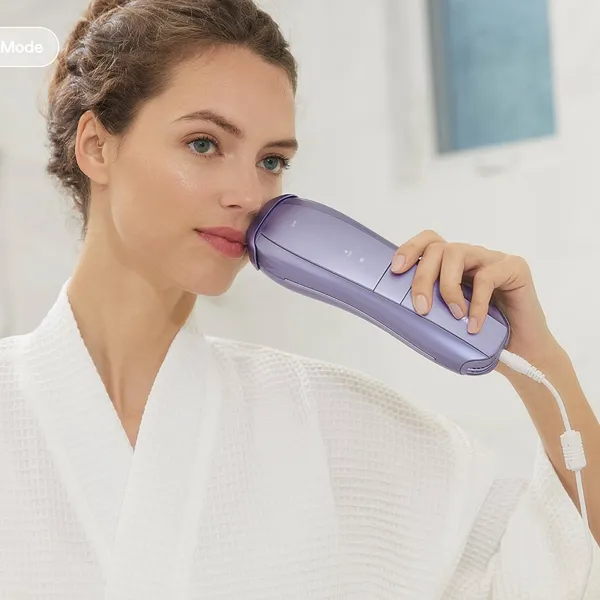
Ulike Air 10 is not the same as professional facial laser treatment. It uses IPL, while a clinic treatment usually uses a focused laser. Both use non-ionizing light and both target pigment, but they differ in precision, intensity, supervision, and how much room there is for customized settings.
For a small, low-risk area and suitable hair color, a home IPL device may be a convenient option if used exactly as directed. For darker skin, stubborn facial hair, melasma-prone skin, or a face with several moles, professional assessment is the safer starting point.
Ulike Air 10 uses IPL
IPL stands for intense pulsed light. Unlike a true laser, IPL sends out a broader range of light in pulses, with filters helping direct useful wavelengths toward hair pigment.
For home use, the advantage is convenience: you can treat on a regular schedule without clinic visits. The tradeoff is that results may be slower and less precise, especially on the face where hair can be mixed in thickness and color. Do not use it near the eyes unless the product instructions specifically allow that area and the required eye-safety steps are clear.
Professional treatment uses a focused laser
Professional lasers use a more specific wavelength. A trained provider can choose a device and settings based on skin tone, hair thickness, treatment area, and previous reactions.
- Choose professional care first if you have darker skin, melasma, many moles, or a history of burns from hair removal.
- Ask for a patch test if you are unsure how your facial skin reacts.
- Pause treatment if the area is sunburned, irritated, infected, or recently tanned.
Both use non-ionizing light
The cancer question is similar for both laser and IPL: neither uses ionizing radiation. Based on current evidence, there is no proven direct link showing that standard facial laser or IPL hair removal causes cancer through the light used for hair reduction.
Both target pigment in hair
Both methods depend on pigment contrast, so the same practical limits apply. Dark hair usually responds better; gray, white, red, and very light blond hairs often respond poorly. Pigmented skin marks can also absorb light, which is why you should not casually flash over moles, dark patches, or any spot that has changed.
How to care for skin after treatment
Aftercare is where you have the most control. Most normal reactions are mild redness, warmth, or slight swelling, but poor aftercare can turn a small reaction into longer irritation or discoloration. The first 24 to 48 hours are usually the time to keep things boring: cool, gentle, and protected from sun.
Apply a cool compress
Use a clean, cool damp cloth or a wrapped cold pack for short periods if the skin feels hot or puffy. Do not put ice directly on the face, and do not press hard on freshly treated skin. Mild warmth should settle; increasing pain is a reason to contact the clinic or stop home use and get advice.
Keep skincare gentle
For a few days, stick with a mild cleanser and a simple moisturizer. Avoid exfoliating acids, retinoids, benzoyl peroxide, scrubs, aftershave products, and fragrance-heavy skincare until the area feels normal again.
If you use prescription acne or anti-aging products, ask when to restart them. Guessing is where many avoidable problems start, especially around the upper lip and chin where skin can sting easily.
Avoid direct sun
Freshly treated facial skin is more likely to react badly to sun. If you are planning beach days, outdoor sports, or a sunny holiday, it may be smarter to schedule treatment for a period when you can actually avoid direct exposure.
Recent tanning is also a red flag. More pigment in the skin can mean more unwanted heat absorption, which increases the chance of burns or temporary darkening.
Use daily sunscreen
Use broad-spectrum sunscreen every day on the treated area, especially between sessions. SPF 30 or higher is a sensible baseline, but the practical part is applying enough and reapplying when you are outdoors. A hat or shade helps too, because sunscreen alone is easy to underuse.
Watch for lasting skin changes
Most mild redness fades, but blistering, crusting, strong tenderness, dark patches, pale patches, or a mole that looks different after treatment should be checked. Do not try to "treat through" those signs at home.
Conclusion
Facial laser hair removal is not considered cancer-causing based on current evidence, because it uses non-ionizing light rather than the DNA-damaging radiation associated with X-rays. The smarter safety decision is to treat skin risks seriously: avoid suspicious spots, match the method to your skin and hair, use extra caution with home IPL on the face, and protect your skin afterward. If anything about a mole, skin history, or reaction feels uncertain, get that checked before the next session rather than hoping it is harmless.
FAQS
Can laser hair removal damage facial DNA?
It is not known to damage facial DNA in the way ionizing radiation can. The light used for hair removal mainly creates heat in pigmented follicles, so the practical concern is skin injury from poor settings or misuse.
Can laser or IPL be used over facial moles?
It is better not to treat directly over moles or suspicious pigmented spots. Cover or avoid the area, and have any changing, raised, uneven, or unusual lesion checked before using laser or IPL nearby.
Is facial laser hair removal safe for darker skin?
It can be safe with the right device, settings, and experience. Darker skin has more melanin in the surrounding skin, so professional evaluation is usually wiser than starting aggressively with a home device.


Popular Articles