Could Laser Hair Removal Work for Chin Hair?
Chin laser hair removal is usually worth considering when the hairs are dark, coarse, and annoying enough that shaving or tweezing has become a regular chore. It is less reliable for very light, grey, red, or soft fuzzy hairs, and the chin can need maintenance because hormones often influence growth there. The first thing to check is not the package price, but whether your hair type and skin tone are a safe, sensible match for the laser a provider uses.
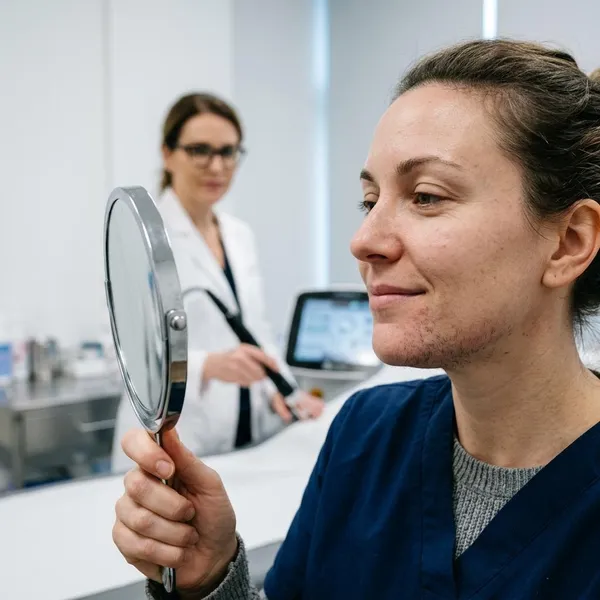
What results can you expect from chin laser?
The most realistic result is long-term reduction, not a guarantee that every chin hair disappears forever. Dark, coarse hairs tend to respond best because the laser targets pigment in the hair follicle. Fine peach fuzz, white hairs, grey hairs, and many red or very blonde hairs often respond poorly, so those may be better discussed as electrolysis cases.
Gradual reduction across sessions
Reduction builds over a series of appointments because only some hairs are in the right growth phase at any one time. Many clinics start with several sessions spaced weeks apart, but the exact schedule should come from the provider treating you.
Early improvement may look subtle: slower regrowth, softer texture, or fewer obvious dark hairs rather than a perfectly clear chin. For someone who normally checks the mirror every morning for new stubble, that smaller change can still be a meaningful win.
Shedding after treatment
Treated hairs do not vanish during the appointment. They often look like stubble for days before loosening and shedding, which can be mistaken for "new" growth.
Possible regrowth and touch-ups
Some regrowth is normal on the chin, especially if your hair is influenced by PCOS, menopause, genetics, or other hormone shifts. Laser can damage active follicles, but it cannot stop every future follicle from becoming active.
| Chin hair pattern | What to expect | Question to ask before paying |
|---|---|---|
| Small patch of coarse dark hairs | Often a stronger laser candidate | How many sessions do you usually start with for this pattern? |
| Wider hormone-linked growth | Reduction may need ongoing maintenance | How often do similar clients return for touch-ups? |
| Fine or light facial hair | Laser may be weak or unsuitable | Would electrolysis be a better choice? |
Compare the longer-term plan, not just the first treatment bundle. A cheaper package may not be cheaper if it ignores maintenance or treats hairs that were never likely to respond well.

What are the risks of chin laser hair removal?
Chin laser treatment is generally routine when it is done by a trained provider with suitable equipment, but it is still a cosmetic procedure on a visible part of the face. The main risks are irritation, burns, pigment changes, scarring, and in some cases increased hair growth. Risk goes up when tanned skin, active irritation, unsuitable hair, or poorly chosen settings are involved.
Temporary redness and swelling
Redness, warmth, tenderness, and small bumps around follicles are common after treatment. They usually settle fairly quickly, though sensitive skin may stay pink longer.
- Use cooling if advised: a cool compress can calm heat and swelling.
- Keep skincare plain: gentle cleanser, simple moisturizer, and sunscreen are usually enough.
- Skip extra heat: hot showers, saunas, and intense workouts can make redness linger.
Worsening pain, spreading redness, pus, blistering, or swelling that keeps getting worse is not the normal "pink for a few hours" reaction and should be reported.
Burns and pigment changes
Burns and color changes are less common, but they matter because the chin is hard to hide. The laser is attracted to pigment, so recently tanned skin or settings that are too aggressive can absorb more heat than intended.
Daily facial SPF is not just a nice aftercare detail here. If your chin darkens easily after acne, cuts, or irritation, tell the provider before treatment because post-inflammatory marks may be more of a concern for you.
Scarring
Scarring is uncommon, but it becomes more possible after a burn, blister, infection, picking, or poor healing. If the skin crusts or blisters, do not scrub it or try strong home remedies; contact the clinic for specific advice.
Increased hair growth in some cases
A rare but frustrating risk is paradoxical hypertrichosis, where hair becomes thicker or denser in or near the treated area. It is discussed most often with facial zones such as the chin, jawline, and cheeks, especially when fine or borderline hairs are treated.
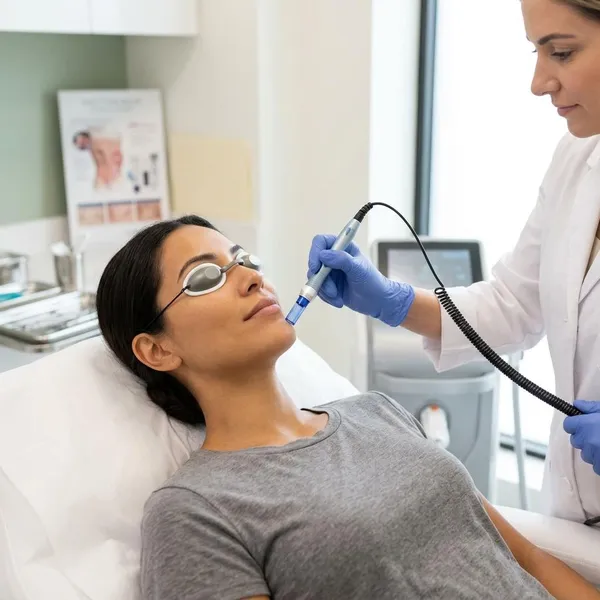
What happens at a chin laser appointment?
The lasering itself is usually quick because the chin is a small area, but the appointment should not feel rushed. A safe visit includes a suitability check, a treatment plan, eye protection, cooling, and clear instructions for what to do afterward.
Skin, hair, and health assessment
The provider should look at the actual hair you want treated, not just accept "chin hair" as one category. Coarse dark hairs, sparse wiry hairs, and fine facial fuzz behave differently under laser.
- Have you tanned, used self-tanner, or had strong sun exposure recently?
- Do you use retinoids, exfoliating acids, acne medication, or prescription skin products?
- Do you have PCOS, thyroid issues, pregnancy-related changes, or new sudden facial hair growth?
- Have you had pigment changes, burns, or unusual scarring before?
Treatment planning and eye protection
Eye protection should be used even for a small chin area. Lasers can harm the eyes, so goggles or shields are not optional.
Planning also means agreeing on the exact treatment zone. Someone with three dark hairs in the center of the chin does not need the same approach as someone with growth under the chin and along the jawline. Treating nearby fine hairs "just in case" can be a bad idea if those hairs are not suitable laser targets.
Laser pulses and cooling
During treatment, the provider applies short laser pulses across the planned area. Many people describe the feeling as a hot snap or a quick rubber-band flick; dense coarse patches can sting more, but the active treatment time is usually brief.
Cooling may be built into the device or applied separately. It helps with comfort and also protects the surface of the skin, which is especially useful if you need to go back to work, school, or errands afterward without looking overly irritated.
Aftercare and follow-up advice
Before you leave, you should know what reaction is expected, what to avoid, and when to come back. Good aftercare advice is specific enough that you do not have to guess about makeup, workouts, shaving, or skincare that evening.
- For the first day or two: keep the area cool, clean, and protected from sun.
- If you use active skincare: ask exactly when to restart retinoids, acids, benzoyl peroxide, or scrubs.
- If the clinic gives a return window: try to stay close to it so sessions match the hair growth cycle.
How to prepare and care for your chin
Preparation is mostly about giving the laser a clear target while keeping the skin calm. The easiest mistakes to avoid are plucking right before treatment, showing up with recently tanned skin, or using strong skincare on skin that is already irritated.
Shave as your provider directs
Most providers ask you to shave before treatment because shaving leaves the follicle in place while removing surface hair that could singe. The exact timing varies, so follow the clinic's instruction rather than copying someone else's routine.
Avoid waxing and plucking as instructed
Waxing, plucking, threading, and epilating remove the hair from the root, which makes laser less effective. This is the hardest rule for people who are used to tweezing a few chin hairs every day, but it is also one of the most important.
Use shaving or careful trimming between sessions if your provider allows it. That manages the visible hair without removing the target under the skin.
Follow sun and tanning precautions
Do not treat sunburned or freshly tanned skin. That includes tanning beds and self-tanner, not only beach sun. More pigment in the skin can make the laser less predictable and may increase the risk of burns or discoloration.
Follow skincare and makeup guidance
After treatment, keep the chin boring for a short while: gentle cleansing, simple moisturizer, and facial sunscreen are usually the safest basics. Strong acids, retinoids, scrubs, fragrance-heavy products, and heavy makeup can be irritating while the skin is warm or tender.
- Acne-prone chin: ask when to restart benzoyl peroxide, salicylic acid, or prescription topicals.
- Makeup users: check whether light coverage is fine or whether the clinic wants bare skin for the rest of the day.
- Sensitive skin: restart products one at a time rather than returning to a full routine immediately.
Report worsening skin reactions
Mild redness is expected; worsening symptoms are not something to "wait out" casually. Contact the provider if you notice blistering, crusting, increasing pain, unusual swelling, pus, or a strong color change.
Take clear photos if the reaction is changing quickly. They can help the clinic decide whether you need a setting adjustment, different aftercare, or an in-person review before another session.
Conclusion
Chin laser hair removal makes the most sense when the problem is visible dark, coarse hair and you are comfortable with gradual reduction plus possible maintenance. Be more cautious if the hair is fine, light, newly hormone-driven, or if your skin is recently tanned or easily discolored. A good provider should help you decide whether laser is the right first choice or whether electrolysis, medical evaluation, or simply waiting would be smarter.
FAQS
Does chin laser hair removal hurt?
It can sting, especially on dense coarse hairs, but the chin is small so the uncomfortable part is usually brief. Cooling and conservative settings can make a noticeable difference.
How far apart should chin laser sessions be?
Many chin sessions are scheduled several weeks apart, often around a monthly-to-bimonthly rhythm. Follow your provider's timing because facial hair growth, device type, and your reaction after the last session can change the plan.
Can you shave between sessions?
Yes, shaving is usually allowed between sessions because it leaves the follicle in place. Avoid plucking, waxing, or threading unless your provider specifically says otherwise.



Popular Articles




