Can Grey Facial Hair Be Permanently Removed on the Face?
Grey facial hair can be permanently removed, but the most suitable method depends on its colour and texture. Electrolysis is generally the most reliable option because it treats each hair follicle directly. Laser hair removal and IPL typically require pigment in the hair to work effectively, so they may be less suitable for white, silver, or very pale grey hairs. In these cases, electrolysis is usually the better option to consider.

Why is grey facial hair harder to remove?
Grey facial hair is harder to remove permanently because many popular treatments are built around hair pigment. Dark hair gives laser and IPL something to target. Grey or white hair often does not.
Grey hair contains little or no melanin
Melanin is the pigment that gives hair its color. As facial hair turns grey, it usually contains less melanin; white hair may contain almost none. That matters because light-based hair removal depends on that pigment to absorb energy.
Laser needs pigment to target the follicle
Laser hair removal works best when there is enough contrast and pigment in the hair shaft for the laser energy to travel down toward the follicle. With grey facial hair, there may not be enough pigment to create reliable heat where it matters.
- Still mostly dark: laser may reduce some hairs, depending on skin and hair contrast.
- Mixed dark and grey: laser may affect the darker hairs but leave pale ones behind.
- Mostly white or silver: electrolysis is usually the more sensible permanent route.
IPL also relies on hair pigment
IPL uses broad-spectrum light rather than a single laser beam, but the same basic problem remains: it needs pigment in the hair to absorb energy. Warmth on the skin does not mean the grey follicle has been disabled.
At-home IPL is especially easy to overestimate for grey upper lip or chin hairs. If the device instructions say it works best on dark hair, that is not a minor detail; it is the reason grey facial hairs often keep growing after repeated use.
How does electrolysis remove grey facial hair?
Electrolysis takes a different route. Instead of trying to target color, it treats the follicle itself, one hair at a time. That makes it much more suitable for grey facial hair, especially when the problem is a small number of stubborn hairs on the chin, upper lip, cheeks, or jawline.
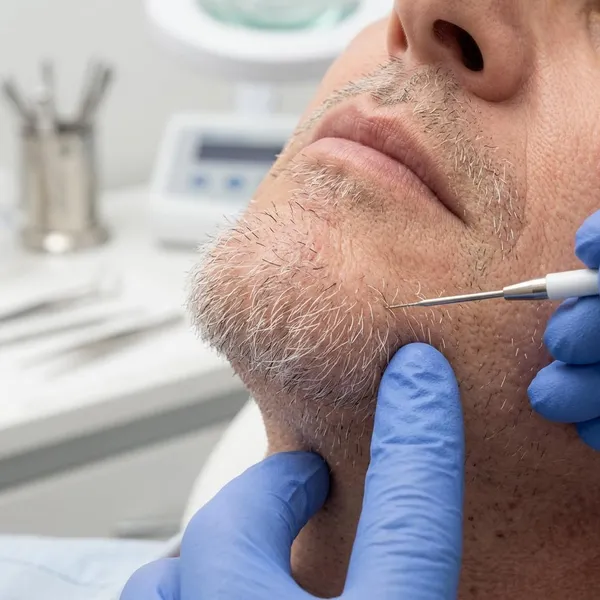
A fine probe treats each hair follicle
During electrolysis, a trained practitioner places a very fine probe into the natural opening of the follicle. The probe follows the hair's path; it should not work like a needle piercing the skin.
This one-by-one approach is slower than treating a large area with light, but it is exactly what makes electrolysis useful for facial hair. If you only have ten coarse chin hairs that keep coming back, treating the exact follicles is more useful than treating the whole chin with a method that cannot target grey hair well.
Electrical energy damages the follicle
Once the probe is positioned, a small amount of electrical energy is applied. Depending on the technique used, this may involve heat, a chemical reaction, or a blend of both. The goal is to damage the growth area of the follicle enough that it can no longer keep producing that hair.
Treated follicles can stop producing hair
A successfully treated follicle can stop producing hair permanently. The reason results take time is not that electrolysis is temporary; it is that facial hairs grow in cycles, and not every follicle is ready to be treated at the same visit.
If a hair appears later, it may be a different follicle becoming active rather than the exact same treated hair returning. This is one reason consistency matters more than trying to judge the whole process after one appointment.
Why does electrolysis work on grey and white hair?
Electrolysis works on grey and white hair because hair color is not the target. The follicle is. That single difference is why electrolysis often becomes the practical answer after laser or IPL has reduced darker hairs but left pale strays behind.
It does not rely on hair color
A dark chin hair, a grey upper lip hair, and a white jawline hair can all be treated by the same basic electrolysis principle. The treatment energy is delivered into the follicle through the probe, not through pigment in the hair shaft.
It can treat individual grey or white hairs
Electrolysis is well suited to precise cosmetic problems: a few coarse chin hairs you feel with your fingers, pale upper lip hairs that catch the light, or scattered jawline hairs that make makeup sit unevenly.
- Occasional stray hair: temporary removal may be enough if it does not bother you often.
- Same hairs returning every week: electrolysis is worth considering because the pattern is repetitive.
- Wider facial growth: ask for an assessment before assuming a short treatment plan will be enough.
It works across different skin tones
Because electrolysis is not based on contrast between dark hair and lighter skin, it can be used across different skin tones. Technique still matters, and the practitioner may adjust settings or timing for your skin and hair type, but grey hair color itself is not the barrier.
What to expect from electrolysis on the face
Facial electrolysis is usually a series of appointments, not a single clear-and-done visit. The best expectation is gradual improvement: fewer visible hairs, longer clear periods, and less need to keep tweezing or trimming the same spots.
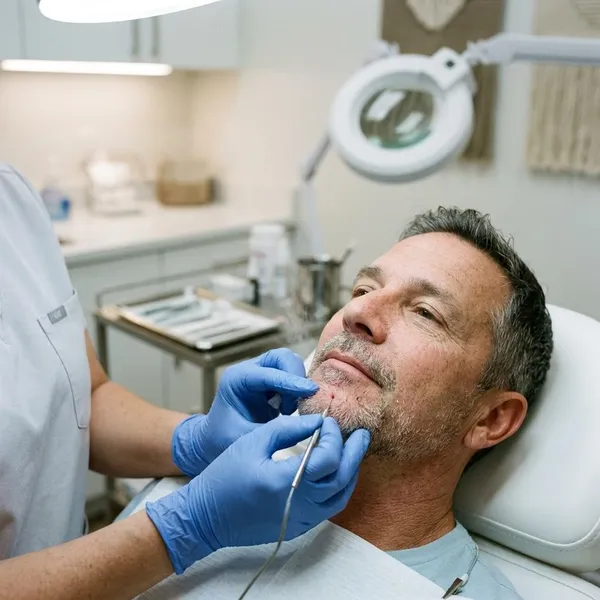
Multiple sessions are usually needed
Multiple sessions are normal because facial hair does not all grow at the same time. Electrolysis works best when a follicle is treated at the right point in its growth cycle, so new visible hairs can appear between appointments.
Treatment time depends on the amount of hair
Treatment time depends mainly on how many hairs need attention and how concentrated they are. A few isolated chin hairs may need short appointments. A denser area across the chin or upper lip usually needs longer sessions and a longer overall timeline.
| Facial hair pattern | What to expect |
|---|---|
| A few coarse grey chin hairs | More manageable, because the electrologist can target specific follicles. |
| Mixed dark and grey hairs | Electrolysis can treat all colors, though some people may have used laser first for darker hairs. |
| Sudden or heavy facial growth | Consider asking a healthcare professional about possible underlying causes, especially if the change is new. |
Temporary redness or tenderness can occur
Some redness, warmth, or tenderness after facial electrolysis is common, especially on sensitive areas like the upper lip. It should usually be temporary, but your practitioner's aftercare advice matters.
- Avoid picking or scratching the treated area.
- Go easy on strong skincare right after treatment unless your practitioner says otherwise.
- Ask before applying makeup immediately after a session, especially if your skin reacts easily.
Results build gradually as hairs are treated
Progress often feels subtle at first. You may notice that the hairs come back more slowly, that there are fewer to remove between appointments, or that the area stays clear longer after each visit.

Conclusion
Grey facial hair can be permanently removed, but electrolysis is usually the method that fits the problem. Laser and IPL are often poor choices once the hair has lost pigment, while electrolysis can treat the follicle directly regardless of color. If the same grey chin, upper lip, or jawline hairs keep coming back, the most practical next step is a consultation with a qualified electrologist rather than buying another light-based device and hoping the pale hairs respond.
FAQS
How do I permanently remove grey hair from my face?
Book electrolysis with a qualified practitioner. It is the main permanent option for grey or white facial hair because it treats the follicle directly instead of relying on pigment.
Should you pluck white or grey chin hairs?
Plucking is fine as a temporary choice for the occasional stray, but it will not stop the follicle from growing hair again. If you plan to start electrolysis, ask your electrologist whether you should stop plucking before appointments so the hairs are available to treat.
Why does IPL not work well on grey facial hair?
IPL needs melanin in the hair to absorb light energy. Grey and white hairs have little or no melanin, so the follicle usually does not receive enough targeted energy for reliable permanent reduction.


Popular Articles




