How Can Teens Remove Facial Hair Safely?
The safest starting point for teen facial hair is usually the gentlest method that solves the actual problem: shaving for soft peach fuzz, electric trimming for upper lip hair, and tweezing or threading only for tiny areas. Before choosing anything stronger, check the hair type, whether the skin has acne or irritation, and how often the hair needs managing.

Which method works best for different teen facial hair?
Teen facial hair is not all the same. Fine fuzz on the cheeks needs a different approach from one coarse chin hair or a visible upper lip shadow. The best choice is usually the method that removes enough hair without creating redness, bumps, or a routine that feels hard to keep up with.
| Teen facial hair situation | Usually best first option | When to be more careful |
|---|---|---|
| Soft peach fuzz on cheeks or jaw | Gentle facial shaving | If skin is sunburned, broken, or very acne-prone |
| Visible upper lip hair | Electric trimming or light shaving | If the area gets red easily or stings after skincare |
| One or two coarse hairs | Tweezing with clean tweezers | If hairs often become ingrown or the teen picks at the skin |
| Brows or a very small shaped area | Threading by someone experienced | If there is active acne, eczema, or recent exfoliation |
Shaving for peach fuzz
For soft peach fuzz, shaving is often the easiest and most predictable option. It removes surface hair quickly, does not pull from the root, and avoids the chemical irritation that some hair removal creams can cause.
This is a good fit for a teen who wants smoother-looking skin before school photos, makeup, or a special event without starting a complicated routine. The main mistake to avoid is shaving the same patch over and over to chase every tiny hair; that usually causes more redness than the fuzz was worth.
Trimming for upper lip hair
Upper lip hair can be tricky because the skin there is sensitive and easy to nick. An electric facial trimmer is often a smart first choice because it shortens the hair without scraping as closely as a manual razor.
- Choose trimming if the teen is nervous about blades or has mild acne near the mouth.
- Choose light shaving if a smoother result matters and the skin is calm.
- Pause hair removal if the area is cracked, sunburned, or already stinging.
Trimming may not feel as perfectly smooth as shaving, but for regular touch-ups it is often easier to live with.
Tweezing for isolated coarse hairs
Tweezing works best when the problem is truly small: one darker chin hair, a stray brow hair, or a single coarse hair that stands out. Use clean tweezers, good lighting, and stop if the skin starts swelling or bleeding.
It is not a good method for a whole upper lip, cheek area, or patch of hair. Pulling many hairs one by one can leave the skin sore and may raise the risk of bumps or ingrown hairs.
Threading for brows and small areas
Threading can be useful for brows or small shaped areas when done carefully, especially for teens who want to avoid wax or creams. It gives more control than shaving, but it can sting and may leave temporary redness.
If the teen has active acne, eczema, very reactive skin, or has just used strong exfoliating products, threading is better delayed. A low-risk scenario is a calm brow area with no broken skin; a higher-risk scenario is threading over inflamed bumps before a big event and hoping the redness disappears quickly.
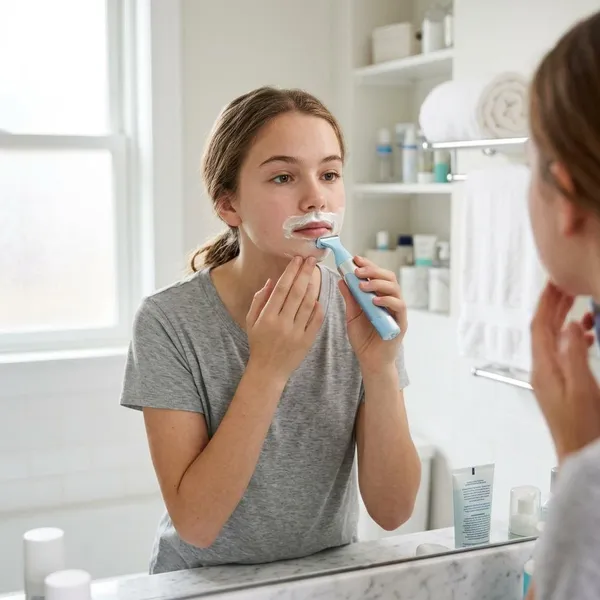
How to shave facial hair safely as a teenager
Safe shaving is less about using a fancy tool and more about avoiding the mistakes that irritate young skin: dirty blades, too much pressure, shaving over pimples, and skipping moisturizer. The first check should always be the skin itself. If it is broken, inflamed, or painful, wait or use a less direct method like trimming.
Start with clean skin and a clean tool
Wash off sweat, sunscreen, makeup, and oil before shaving. A clean surface helps the razor glide instead of drag, and a clean tool lowers the chance of irritation around tiny nicks.
Do not share facial razors or trimmers. If a blade feels rough, looks rusty, or starts tugging, it should be replaced rather than pushed through one more shave.
Use light pressure and short strokes
Light pressure gives better control than pressing hard. Short strokes are especially helpful around the upper lip, chin, and jawline because those areas are curved and easier to scrape.
Avoid active pimples and broken skin
Do not shave directly over raised pimples, cuts, scabs, or irritated patches. A blade can open the area, make it sting, and sometimes worsen the breakout.
For a teen with frequent acne, trimming around the area is often a better temporary option than trying to get a close shave. If shaving always leads to painful bumps, it is worth asking a dermatologist or doctor for advice on both the acne and the hair removal routine.
Moisturize after shaving
After shaving, use a simple moisturizer that does not sting. Fragrance-free and non-comedogenic products are usually safer choices for teen skin, especially if acne products are already part of the routine.
Skip scrubs, strong acids, and heavily scented products right afterward. Freshly shaved skin does not need more "treatment"; it needs a chance to calm down.
Keep the tool clean between uses
Rinse manual razors well and store them somewhere dry. For electric trimmers, brush out trapped hair and clean the head according to the device instructions.
When should teen facial hair be checked by a doctor?
Most teen facial hair is normal, especially fine peach fuzz or light upper lip hair during puberty. A medical check becomes more important when the pattern changes quickly, the hair becomes unusually coarse or widespread, or other body changes appear at the same time.
This is not about panicking over normal hair. It is about noticing when hair growth might be part of a bigger hormone pattern. A parent, guardian, pediatrician, family doctor, or dermatologist can help decide whether it fits puberty and family traits or needs more evaluation.

Hair growth increases suddenly
A gradual change over puberty is common. A noticeable jump over a few weeks or months is more worth checking, especially if the teen feels the amount of hair is very different from earlier in the year.
- Note when the change started.
- Write down which areas are affected.
- Mention any new acne, period changes, or body changes.
Coarse facial hair becomes unusually extensive
A few darker hairs can be normal, but widespread coarse hair on the chin, jaw, cheeks, or neck deserves more attention if it keeps increasing. Shaving or trimming can still manage the look, but it will not explain why the pattern changed.
This is especially worth discussing if hair removal starts affecting daily confidence, school routines, or social plans. Sometimes reassurance is enough; sometimes a doctor may want to look for hormone-related causes.
Other hormone-related changes appear
Facial hair matters more when it appears together with other changes, such as irregular or missed periods, severe acne, scalp hair thinning, rapid body hair changes, unexpected weight changes, or voice changes. One symptom alone may not mean much, but the combination is worth medical advice.
Conclusion
For most teens, the best choice is the mildest method that matches the hair and the skin on that day: shave fine fuzz, trim sensitive upper lip hair, tweeze only the odd coarse hair, and avoid working over irritated skin. If the hair pattern suddenly changes or comes with other hormone-related symptoms, getting medical advice is more useful than repeatedly trying stronger removal methods.
FAQS
Can a teenager safely shave facial hair?
Yes, if the skin is not broken or badly inflamed and the tool is clean. The safest approach is light pressure, short strokes, and moisturizer afterward.
Can a 14-year-old girl remove facial hair?
Yes, a 14-year-old girl can remove facial hair if she wants to. Gentle shaving or trimming is usually a better first step than waxing, creams, or aggressive plucking.
Are facial hair removal creams safe for teenagers?
Sometimes, but they can sting or burn sensitive teen facial skin. If one is used, it should be a face-specific product, patch-tested first, and avoided near irritated skin or active breakouts.

Popular Articles