Which Facial Hair Removal Method Suits Asian Skin?
Asian facial hair removal is usually safest when you match the method to the hair, not just the face. Fine peach fuzz often does best with gentle shaving or dermaplaning, brows usually suit threading, and coarse dark chin or upper-lip hair may be worth discussing with an experienced laser provider. The biggest thing to avoid is repeated irritation, because that is what often leads to bumps, redness, or dark marks.
What is the safest facial hair removal method for Asian skin?
The safest method is the one your skin can repeat without getting inflamed. For many Asian skin tones, that means choosing lower-trauma options first and saving stronger methods for hair types that truly need them.
Shaving or dermaplaning for fine facial hair
For fine cheek fuzz, jawline fuzz, or light upper-lip hair, shaving is often the gentlest place to start because it cuts hair at the surface instead of pulling from the root. Dermaplaning can give a smoother finish, but it also removes some surface buildup, so it is easier to overdo if your skin is dry, acne-prone, or already using exfoliating acids or retinoids.
- Best for: peach fuzz, quick maintenance, makeup sitting more smoothly.
- Be careful if: your skin stings easily, flakes, or is breaking out.
- Common mistake: using too much pressure or going over the same patch again and again.
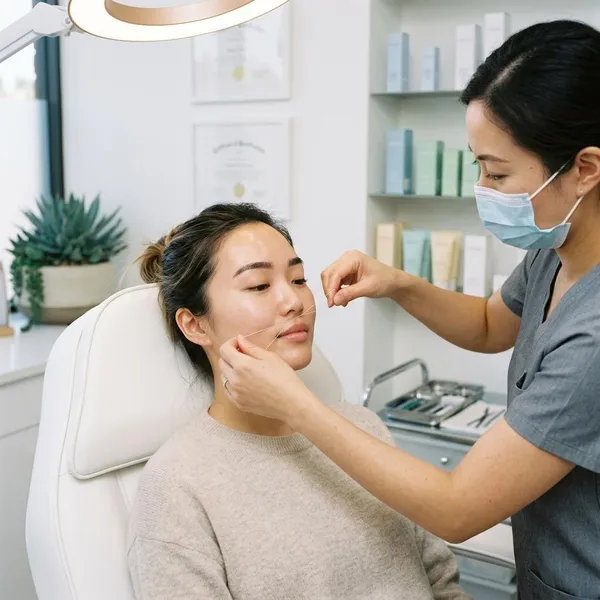
Threading for brows and small areas
Threading works well when precision matters, especially around the brows. It avoids wax heat and depilatory chemicals, which can be useful if your skin dislikes those, but it still creates friction and pulling.
Professional laser for coarse dark hair
Coarse dark hairs on the chin, upper lip, or jawline are where professional laser can make the most sense. If you are plucking the same thick hairs every few days and getting bumps or marks, reducing the hair over time may be kinder than constantly disturbing the follicle.
Asian skin tones need careful assessment because heat-based treatments can cause burns or pigmentation when the wrong device or settings are used. Ask the clinic what device they use, whether it suits your skin tone, whether they recommend a test spot, and what aftercare they expect you to follow. IPL is not the same as laser and may not be the safest first choice for medium to deeper facial skin tones.
Waxing and creams for suitable, tolerant skin
Waxing and depilatory creams can work, but they are not the most forgiving facial options. Waxing adds heat and pulling; creams use chemicals that dissolve hair and can sting the skin barrier.
They are better treated as occasional options for skin that has already tolerated them well, not as the default for reactive skin. Skip them if the area is sunburned, peeling, freshly exfoliated, broken out, or already irritated.
What matters most when choosing a method?
Start with four checks: your actual skin tone, the color and thickness of the hair, your tendency to get irritation or post-inflammatory hyperpigmentation, and the exact area you want to treat. Those details matter more than what is popular online.
Your actual skin tone
Asian skin includes very fair, medium, olive, tan, and deeper brown tones, so the same treatment can behave differently from person to person. Lighter skin may show redness quickly, while deeper skin may show less redness at first but develop brown marks later.
Your own history is the best clue. If acne spots, scratches, or insect bites often leave marks on your skin, choose the method that causes the least heat and pulling, even if it is not the longest-lasting option.
Your hair color and thickness
Fine, soft peach fuzz usually does not need root removal. Shaving or light dermaplaning is often enough and may cause less irritation than waxing or threading a large area.
Thick dark hair is a different situation. If the same chin or upper-lip hairs keep coming back and you keep plucking them, laser may be worth considering because the issue is not just hair removal—it is the repeated inflammation from constant maintenance.
Your sensitivity and PIH risk
If your skin is sensitive or prone to post-inflammatory hyperpigmentation, put "calm recovery" ahead of "perfect smoothness." A method that leaves the skin quiet the next day is usually better than one that looks flawless for six hours and then causes bumps or darkening.
- Lower-risk starting point: gentle shaving with a clean facial razor.
- Use caution: threading over reactive upper-lip skin or waxing near active breakouts.
- Higher-risk combination: hair removal plus retinoids, exfoliating acids, scrubs, or benzoyl peroxide on the same day.
The area you want to treat
The face is not one single treatment zone. Brows need detail, cheeks need low friction, the upper lip is often reactive, and the chin may have thicker hormonal hairs.
For a temporary situation, such as cleaning up peach fuzz before an event, gentle shaving a day before is often more predictable than trying a new wax or cream the night before. For a long-term problem like coarse chin hair, it makes more sense to think about a method that reduces repeat irritation over months, not just what removes hair fastest today.
How do facial hair removal methods compare?
The easiest way to compare methods is by matching them to the job they do best. Speed, precision, pain, cost, and pigmentation risk all matter, but hair type and skin reaction should lead the decision.
| Method | Best use | Main caution |
|---|---|---|
| Shaving or dermaplaning | Fine fuzz and quick at-home maintenance | Too many passes can cause scraping and irritation |
| Threading | Brows and small precise areas | Friction can trigger bumps or marks on sensitive skin |
| Waxing or creams | Short-term smoothness for tolerant skin | Higher risk if the barrier is weak or recently exfoliated |
| Professional laser | Coarse dark hair needing long-term reduction | Device choice and provider experience matter for Asian skin tones |

How to prevent dark spots after facial hair removal
Dark spots are usually easier to prevent than fade. The goal is to reduce inflammation before it starts: do not remove hair over irritated skin, avoid stacking strong skincare around treatment days, calm the skin afterward, and protect it from sun exposure.
If you are prone to pigmentation, treat facial hair removal like a small skin stress. The smoother result is not worth it if you create a mark that lasts much longer than the hair would have.
Avoid aggressive hair removal on irritated skin
Postpone hair removal if the area is sunburned, peeling, broken out, freshly waxed, or stinging from skincare. Even waiting until the skin feels normal again can lower the chance of bumps and lingering marks.
If you truly need to tidy the area, choose the gentlest option and do less than usual. One careful pass with a clean razor is often safer than waxing, threading repeatedly, or using a cream on skin that is already upset.
Keep exfoliation gentle around treatment days
Hair removal can already act like exfoliation, especially dermaplaning and waxing. Using scrubs, acids, retinoids, or strong acne treatments too close to removal can push the skin barrier too far.
Soothe and moisturize the skin afterward
After removal, aim for comfort rather than correction. A gentle cleanser and a bland, fragrance-free moisturizer are usually enough; a cool compress can help if the area feels warm.
- Use: simple moisturizers with barrier-supporting ingredients such as glycerin, ceramides, or panthenol.
- Avoid: fragrance, scrubs, strong serums, and rubbing the area repeatedly.
- Do not pick: small bumps often turn into marks when they are touched too much.
Protect treated skin from the sun
Sun exposure can deepen fresh irritation and make upper-lip or cheek discoloration more stubborn. Use a sunscreen your skin already tolerates, and add shade or a hat after waxing, threading, dermaplaning, or laser.
This matters even outside summer. If your treated skin is tender or newly irritated, everyday light and heat can still make pigmentation more noticeable.
Conclusion
The best choice is the method your skin can tolerate repeatedly, not the one that sounds the most powerful. Start with the hair type and area: gentle shaving or dermaplaning for fuzz, threading for brows, cautious wax or creams only if your skin has proven it can handle them, and professional laser for coarse dark hair that keeps causing irritation. If your skin marks easily, choose the calmer option and protect the treated area afterward.
FAQS
Does shaving facial hair make it grow back thicker?
No. Shaving cuts the hair bluntly at the surface, so it may feel sharper during regrowth, but it does not change the follicle or make the hair grow thicker.
Is threading safe for sensitive Asian skin?
It can be safe for small areas like brows if the technique is gentle and hygienic. If your upper lip or cheeks mark easily, test cautiously because friction alone can still trigger irritation.
Can facial hair removal cause hyperpigmentation?
Yes, especially when the method causes heat, pulling, burns, repeated friction, or barrier damage. The risk is higher on skin that already leaves marks after acne or minor irritation.


Popular Articles




