What Is the Safest Facial Hair Removal for Black Skin?
For African American facial hair removal, the safest choice is usually the one that protects your skin first and removes hair second. Start by checking your exact skin tone, hair color, and history of bumps or dark marks before choosing between shaving, at-home IPL, Nd:YAG laser, or electrolysis.

How to choose a facial hair removal method
The first decision is not "Which method removes hair fastest?" It is "Which method is least likely to leave irritation, ingrown hairs, burns, or post-inflammatory hyperpigmentation on my face?" Darker skin can respond strongly to friction, heat, chemicals, and repeated inflammation, so a method that works well on another person may not be the right match for you.
A simple priority order helps: check skin tone first, then hair color, then curl and thickness. After that, compare irritation risk, how long you want results to last, and what you can realistically afford to maintain.
Check your exact skin tone
Light-based options such as IPL and laser depend heavily on the contrast between skin pigment and hair pigment. Broad labels like "brown skin" or "Black skin" are too vague because two people with similar complexions can fall into different safety ranges on a device chart.
Check your natural, untanned skin in daylight and compare it with the official chart for the device or clinic treatment you are considering. If your face has uneven tone, recent dark marks, or a history of keloids, treat that as a reason to be more cautious, not as a small detail.
Consider your hair color
Dark brown or black facial hair usually responds best to IPL and laser because the light needs pigment in the hair to target. Gray, white, blonde, and many red hairs are less predictable and may not respond well at all.
If you have mixed hair colors, do not judge the whole treatment by the darkest strands. A common situation is dark chin hair with a few gray or light hairs left behind; laser or IPL may reduce the dark growth while electrolysis handles the resistant hairs one by one.
Assess hair thickness and curl
Coarse, tightly curled facial hair is more likely to curve back into the skin after shaving or trimming. That is why razor bumps around the chin, jawline, and neck are often part of the decision, not a separate problem.
If your main issue is a few fine hairs on the upper lip, a careful temporary method may be enough. If you are shaving coarse chin hair daily and getting bumps every week, it may be worth looking at longer-term reduction instead of repeating the same irritating routine.
Compare irritation risks
Each method irritates skin in a different way. Waxing and threading can create pulling and friction. Depilatory creams can sting or burn if the formula is too strong or left on too long. IPL and laser use heat, so the risk shifts toward burns or pigment changes if the method is wrong for your skin tone.
- High bump risk: avoid very close shaving and repeated plucking.
- High dark-spot risk: be careful with waxing, harsh creams, and aggressive exfoliation.
- Heat-sensitive skin: do not use IPL outside the approved tone range.
- Active acne or broken skin: wait before treating that area.
Choose temporary or long-term results
Temporary methods make sense when the hair is light, occasional, or easy to manage without irritation. Shaving, trimming, threading, and creams can be practical for a quick cleanup before an event or for someone who only notices a few hairs now and then.
Long-term options are more useful when the hair keeps coming back quickly or the maintenance itself is damaging your skin. Nd:YAG laser can reduce growth over a series of professional sessions, while electrolysis is better for permanent removal of individual hairs, especially when the hair is sparse or light-colored.
Set your budget and pain limit
Think in terms of total burden, not just the price of one session or one razor. A cheap method that causes bumps, dark marks, or constant touch-ups may become the more expensive choice over time.
- Lowest upfront cost: shaving or trimming, if your skin tolerates it.
- Best for privacy at home: compatible IPL, but only within the approved skin tone and hair color range.
- Best for coarse dark hair reduction: professional Nd:YAG laser with an experienced provider.
- Best for precise permanent removal: electrolysis, especially for small areas or lighter hairs.
Can Black skin use Ulike Air 10 on facial hair
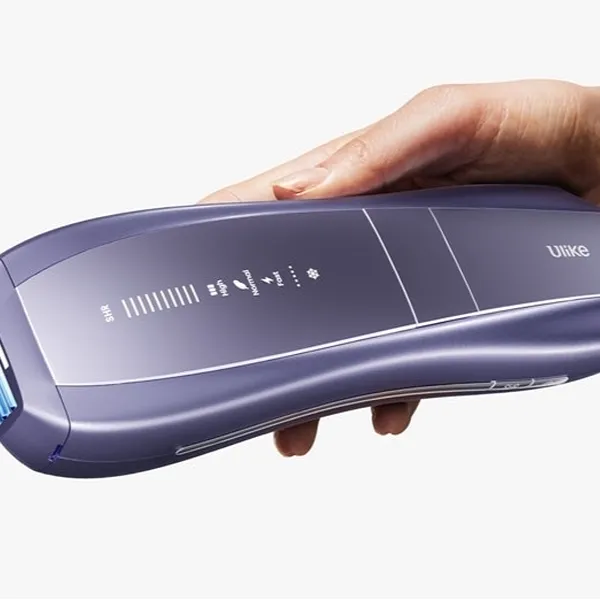
Some Black users may be able to use Ulike Air 10 on facial hair, but only if both their skin tone and hair color fall clearly within the official compatibility range. Ulike Air 10 is an IPL device, not a professional Nd:YAG laser, so it is more limited for deeper skin tones.
For facial use, treat compatibility as a safety gate. If your tone is near or beyond the cutoff on the chart, do not try to "make it work" by lowering the setting or doing fewer flashes. The face is too visible and too prone to lasting marks for that kind of experiment.
Check the Ulike skin tone chart
Use the official Ulike skin tone chart for the exact model before treating your face. Do not rely on social media examples, filtered photos, or how someone else describes their complexion.
Check the area you plan to treat in natural light, and judge your current skin tone, not your winter shade if you are now darker from sun exposure. If your face is uneven from melasma, acne marks, or recent irritation, be more conservative because IPL may react differently across the area.
Confirm your hair color is compatible
Ulike IPL is most likely to work on dark facial hair. If the hair is gray, white, blonde, or very light brown, it may not absorb enough light for useful reduction.
A practical example: someone with dark upper-lip hair and a compatible skin tone may see gradual softening with consistent use, while someone with mostly gray chin hairs may spend weeks treating with little change. In the second case, electrolysis is usually a more logical option.
Avoid use on unsuitable deep skin tones
If your skin tone is outside the approved Ulike range, skip IPL on the face. The concern is not only poor results; it is the possibility of burns, blistering, or dark marks because the device may heat skin pigment as well as hair pigment.
Deeper Black skin tones often need a different route, such as electrolysis or a professional laser provider experienced with Nd:YAG treatment for skin of color. That does not mean facial hair cannot be treated; it means at-home IPL may not be the safest tool.
Follow the facial treatment boundaries
Only treat facial zones the manufacturer approves, and keep the device away from the eyes, eyebrows, eyelids, and any area the instructions exclude. Do not use IPL over irritated skin, fresh waxing, cuts, active breakouts, or strong exfoliating products.
- Before treatment: cleanse and dry the skin; do not apply oils or heavy creams first.
- During treatment: stay within approved areas and avoid overlapping flashes aggressively.
- After treatment: keep the routine gentle and protect the area from unnecessary irritation.
Patch test before full treatment
A patch test is not optional on facial skin. Treat a small approved area first, use the recommended starting level for your tone, and wait 24 to 48 hours before doing more.
Stop if you notice blistering, lasting redness, swelling, stinging, or delayed darkening. Mild temporary warmth can happen, but visible pigment change is a warning sign, especially on melanin-rich skin.
Ulike IPL vs Nd:YAG laser vs electrolysis
Ulike IPL, Nd:YAG laser, and electrolysis solve different problems. Ulike IPL is about compatible at-home reduction, Nd:YAG laser is usually the stronger professional option for reducing coarse dark hair on darker skin, and electrolysis is the most precise route for permanent removal of individual hairs.
Ulike IPL for compatible at-home use
Ulike IPL can be useful if you clearly match the approved skin tone and hair color range and want a private, at-home routine. It is better viewed as gradual reduction, not an instant fix.
It is not the best choice for deeper tones, very sensitive skin, or facial hair that seems linked to a sudden hormonal change. If new facial hair appears quickly alongside acne, irregular periods, or other body changes, it is sensible to ask a medical professional about possible underlying causes instead of only treating the hair.
Nd:YAG laser for professional reduction
Nd:YAG laser is commonly preferred for darker skin because its longer wavelength can reduce surface pigment risk compared with some other laser types. It can be especially helpful for coarse dark hair and recurring razor bumps.
The machine alone is not enough. A good provider should have experience treating skin of color, ask about your history of hyperpigmentation, adjust settings carefully, and tell you what to avoid before and after treatment. If the consultation feels rushed or dismissive, that is a reason to look elsewhere.
Electrolysis for precise permanent removal
Electrolysis treats one follicle at a time, so it works across skin tones and does not rely on dark hair pigment the way IPL and laser do. It is often the better choice for gray hairs, isolated chin hairs, or small areas where precision matters more than speed.
The trade-off is patience. A few stubborn hairs may be manageable with short sessions, but dense facial growth can take many appointments. On darker skin, choose an electrologist who understands how to minimize irritation and post-treatment marks.
Shaving between light-based treatments
Shaving is usually the preferred way to manage visible hair between IPL or laser sessions because it leaves the follicle target in place. Waxing, tweezing, and threading remove the hair from the root, which can make light-based treatment less effective.
- Use a sharp, clean blade: dull blades drag and increase irritation.
- Shave with the grain: a super-close shave is not worth more ingrowns.
- Keep passes light: one or two careful passes are usually enough.
- Moisturize after: choose a gentle, fragrance-free product if your skin marks easily.
Conclusion
The best facial hair removal plan for Black skin is the one that fits your actual skin tone, hair color, curl pattern, and tolerance for irritation. If you are clearly compatible and want at-home convenience, Ulike IPL may be worth considering; if your skin is deeper, your hair is coarse, or you already struggle with bumps and dark marks, professional Nd:YAG laser or electrolysis is usually the more careful path.
FAQS
Can facial hair be removed permanently on Black skin?
Yes. Electrolysis can permanently remove treated facial hairs on Black skin because it targets each follicle directly; laser is better described as long-term reduction rather than guaranteed permanent removal.
Can waxing cause dark spots on darker skin?
Yes. Waxing can trigger inflammation that leads to dark spots, especially on the upper lip, chin, or jawline, and the risk is higher if the skin is acne-prone, recently exfoliated, or using retinoids.
Does facial shaving make coarse hair thicker?
No. Shaving does not change the follicle or make hair grow thicker, but the blunt cut edge can feel rougher as it grows back.
Is Ulike IPL suitable for every Black skin tone?
No. Ulike IPL is only suitable for skin tones and hair colors within the official device range; deeper tones should avoid using it on the face and consider professional options instead.


Popular Articles