Which Facial Hair Removal Method Suits You Best?
If you are wondering what is better for facial hair removal laser or electrolysis, start with two checks: the color of the hair and how permanent you want the result to be. Laser is usually the easier first choice for dark, dense facial hair over a wider area, while electrolysis is usually better for light hairs, a few stubborn hairs, or the most permanent removal of treated follicles.
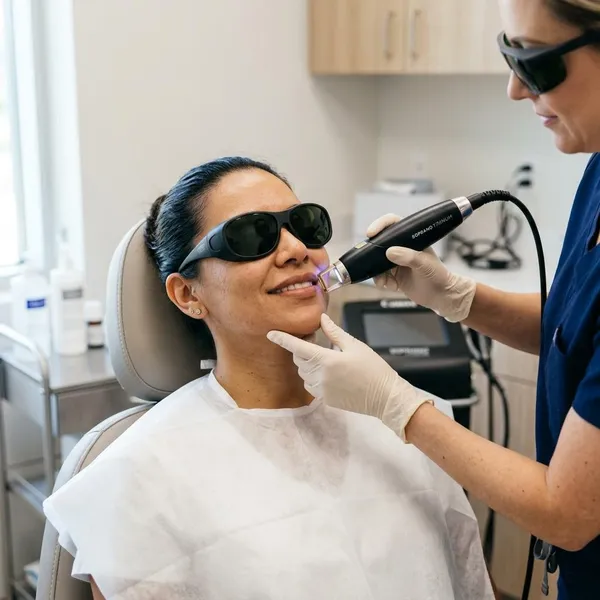
How do laser and electrolysis remove facial hair
Both methods target the follicle, but they do it in very different ways. That difference affects who gets the best result, how long appointments take, and whether the goal is reduction or permanent removal.
Laser targets pigment in the hair follicle
Laser hair removal uses light energy that is attracted to pigment in the hair. The darker the hair, the more clearly the laser can target the follicle, which is why dark brown or black facial hair usually responds better than blonde, gray, white, or red hair.
On the face, laser makes the most sense when there are enough dark hairs to treat at once, such as on the chin, jawline, upper lip, cheeks, sideburns, or neck. The realistic expectation is usually long-term reduction: less hair, slower growth, finer regrowth, and possible maintenance later.
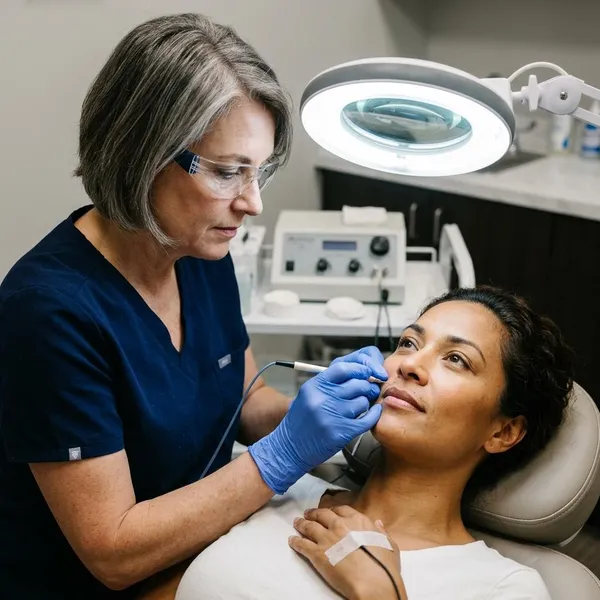
Electrolysis treats each follicle individually
Electrolysis uses a fine probe to treat one follicle at a time with a small electrical current. Because the follicle is treated directly, it does not need dark pigment in the hair to work.
- Best strength: permanent removal of treated follicles.
- Best fit: light-colored hair, sparse hairs, detail work, or cleanup after laser.
- Main tradeoff: it is slower because every hair is treated individually.
When is laser better for facial hair
Laser is better when your main problem is volume: a visible area of dark facial hair that you want to reduce quickly and manage more easily. It is often the more practical starting point for dense chin hair, jawline growth, sideburns, or a wider upper lip area.
You have dark pigmented hair
If the unwanted facial hair is dark brown or black, laser usually has the strongest advantage. Coarse dark chin hairs, dark upper lip hairs, and dark sideburn growth often show faster visible improvement with laser than with follicle-by-follicle electrolysis.
Mixed facial hair needs a more realistic plan. Laser may reduce the dark hairs well, while pale or gray hairs in the same area may need electrolysis later.
You want to treat a larger area
A fuller jawline, broad chin patch, lower cheeks, or sideburn area usually favors laser because one session can cover many follicles. Trying to clear a dense area with electrolysis can become slow, expensive, and hard to keep up with.
You want shorter treatment sessions
Laser appointments are usually shorter because the device treats multiple follicles with each pulse. If you are fitting treatments around work, school, childcare, or travel, that convenience can be the difference between finishing a course and constantly postponing appointments.
This matters most for someone with widespread dark growth who wants progress without spending long sessions on a sensitive facial area.
You are comfortable with long-term reduction
Laser is a good fit if you would be happy with facial hair becoming thinner, slower, and less noticeable rather than expecting every hair to disappear forever. For many people, that still means less shaving, less tweezing, less shadow, and fewer irritated bumps.
Hormonal facial hair can be more unpredictable. If new dark hairs continue to appear because of hormonal changes, laser may still help a lot, but occasional touch-ups may be part of the long-term plan.
When is electrolysis better for facial hair
Electrolysis is better when precision matters more than speed. It is the stronger choice for hairs laser cannot target well, for small visible areas, and for people who want the most permanent result on specific follicles.
You want permanent hair removal
If your priority is permanent removal of treated hairs, electrolysis is usually the better choice. It treats follicles individually and is widely recognized as the more permanent method compared with laser reduction.
It still takes repeated visits. Facial hair grows in cycles, so not every follicle is ready to treat in one appointment.
You have light-colored facial hair
Blonde, gray, white, red, or very pale facial hair usually points toward electrolysis. Laser needs enough pigment in the hair to guide the energy, and light hairs often do not give it a useful target.
This is especially frustrating when the hairs are not dark but are still visible under makeup, in sunlight, or in a magnifying mirror. Electrolysis is often the more dependable professional option for those hairs.
You only need to treat a small area
For a few upper lip hairs, isolated chin hairs, or scattered jawline hairs, electrolysis can be more efficient than it sounds. The appointment may be slower per hair, but you are not treating a whole zone you do not need treated.
- Good electrolysis area: a few recurring chin hairs.
- Good laser area: a dense patch across the chin or jawline.
- Worth avoiding: choosing laser for pale sparse hairs just because it sounds faster.
You have a few stubborn remaining hairs
Electrolysis is often the finishing step after laser. Once laser has reduced the dark dense growth, the remaining hairs may be too light, too fine, or too scattered for more laser sessions to make sense.
That combined approach is common for facial hair: laser first for bulk reduction, then electrolysis for the last stubborn hairs that still bother you in the mirror.
How to choose between laser and electrolysis
The cleanest way to decide is to rank your situation in this order: hair color first, area size second, permanence third, then time and budget. Skin tone also matters because laser settings and provider experience affect safety, especially on the face.
| Your situation | Usually better fit | Why it matters |
|---|---|---|
| Dark, coarse hair over a wider area | Laser | Faster reduction across many follicles |
| Blonde, gray, white, or red hair | Electrolysis | Does not depend on hair pigment |
| A few recurring chin or upper lip hairs | Electrolysis | Precise treatment without covering a whole area |
| Dense dark growth plus pale leftovers | Both, in stages | Laser reduces bulk; electrolysis cleans up what remains |
Check your hair color and texture
Hair color is the first filter. Dark, coarse facial hair is usually the best laser candidate because the pigment gives the device a clear target. Fine, pale, gray, or white hairs are usually better matched to electrolysis.
If your face has a mix, do not force one method to do everything. A practical plan may be laser for the obvious dark growth and electrolysis for the lighter hairs that laser is unlikely to catch.
Consider your skin tone
Darker skin tones can often have laser facial hair removal, but the clinic should be able to explain which device and settings they use for melanin-rich skin. A vague answer is a warning sign, especially when treating visible facial areas where burns or pigmentation changes would matter.
Electrolysis can also be a strong option across skin tones, particularly for small areas or light hairs. The better choice depends on both your hair and the provider's experience, not only on your skin color.
Compare the size of the treatment area
Match the method to the scale of the job. Laser is better for broad reduction across the chin, jawline, sideburns, cheeks, or neck. Electrolysis is better for detail work, small patches, and individual hairs.
Decide how permanent you want the result
If "much less hair" would solve your problem, laser may be enough. If the same few hairs coming back would still bother you, electrolysis is more aligned with that goal.
Compare your time and budget
Laser often costs more per session, but it can be more efficient for larger dark areas because appointments are short. Electrolysis may be better value for a small number of hairs, even if it takes several visits.
Before booking, ask for a realistic treatment plan rather than only a per-session price. You want to know how many visits are typical for your area, whether maintenance is expected, and what happens if some hairs do not respond.
Conclusion
Choose laser if your facial hair is dark, dense, and spread across an area where faster reduction would make daily upkeep easier; choose electrolysis if the hairs are light, sparse, stubborn, or you want the most permanent option for specific follicles. For many faces, the smartest answer is staged rather than either-or: reduce the bulk with laser, then use electrolysis where precision matters.
FAQS
Is electrolysis more permanent than laser?
Yes. Electrolysis is generally considered more permanent because it treats individual follicles directly, while laser is usually best described as long-term reduction.
Can darker skin tones have laser facial hair removal?
Often, yes, but the provider and device matter. Ask what laser they use for your skin tone and how they reduce the risk of burns or pigmentation changes.
Can you use laser and electrolysis together?
Yes. A common approach is laser for dark dense facial hair, then electrolysis for the lighter or stubborn hairs that remain.



Popular Articles