What Is the Best Way to Remove Cheek Hair?
For cheek hair removal, start by checking two things: whether the hair is fine peach fuzz or thicker coarse hair, and whether your skin is calm enough to handle removal. Fine fuzz usually needs a gentle surface method like shaving or dermaplaning, while darker or stubborn hairs may need threading, waxing, epilation, laser, or electrolysis. If your cheeks are irritated, acne-prone, sunburned, or affected by strong skincare actives, choosing the "stronger" method can easily backfire.
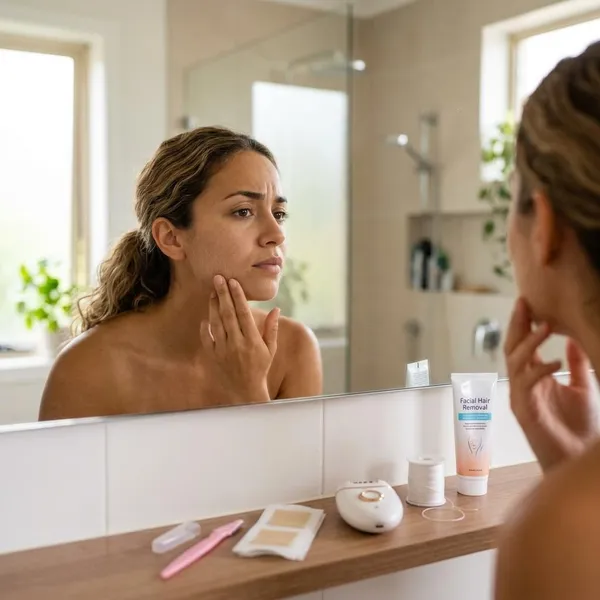
Which cheek hair removal methods can you use?
You can remove cheek hair at the surface, from the root, with a depilatory cream, or through professional long-term treatments. The easiest option is not always the best one: a quick shave may be perfect before makeup, while a few dark hairs near the sideburns may be better handled with tweezing or electrolysis.
Shaving or dermaplaning for surface removal
Shaving and dermaplaning cut cheek hair at skin level, so they are best for fine peach fuzz rather than thick, stubborn hair. They are useful if your main goal is smoother skin texture or easier makeup application, especially before a one-off event.
Use a clean facial razor or dermaplaning tool, keep the pressure light, and avoid scraping the same patch again and again. If your cheeks feel tight, stingy, or look shiny and overworked afterward, space sessions farther apart or switch to a less exfoliating method.
Threading or tweezing for small areas
Threading and tweezing make more sense for small areas than for removing every bit of cheek fuzz. Tweezing is good for a few coarse hairs that keep appearing in the same place; threading can clean up a visible edge near the sideburn or upper cheek without shaving the whole area.
Waxing or sugaring for root removal
Waxing and sugaring remove hair from the root, so the result usually lasts longer than shaving. They can be worth considering if cheek hair grows back quickly and you do not want to touch it every few days.
They are not casual options for irritated or heavily treated skin. Avoid waxing over sunburn, active breakouts, broken skin, or skin recently exposed to strong exfoliants. If you use tretinoin, isotretinoin, prescription acne treatments, or strong acids, get professional advice first because the risk of lifted or raw skin is higher.
Facial epilators for root removal at home
A facial epilator can be practical if you want root removal at home and can tolerate some stinging. Choose a face-specific device rather than a large body epilator, because cheeks need more control and a narrower head.
This option suits someone who wants regular upkeep without salon appointments. It is less appealing if you are prone to inflamed follicles, ingrown hairs, or acne-like bumps after pulling methods, so test a small area before treating both cheeks.
Face-approved creams for temporary removal
Depilatory creams dissolve hair close to the surface, but only products clearly labeled for facial use belong on the cheeks. Body hair removal creams are too risky for this area.
Do a patch test and respect the timer. Burning, sharp tingling, or fast-spreading redness means the cream should come off immediately, even if the suggested time has not passed.
How to choose a cheek hair removal method
The best method is the one your skin can tolerate repeatedly. A smooth result is not a win if you spend the next three days dealing with redness, bumps, or a damaged skin barrier.
| What you notice first | Usually worth trying | Be more careful if |
|---|---|---|
| Soft peach fuzz | Shaving or dermaplaning | Your skin is dry, flaky, or easily over-exfoliated |
| A few dark hairs | Tweezing, threading, or electrolysis | The hairs are appearing suddenly or spreading |
| Frequent coarse regrowth | Waxing, epilation, laser, or electrolysis | You get ingrowns, acne flares, or lasting redness |
| Very reactive skin | Small-area testing and the gentlest effective method | You use retinoids, acids, or prescription acne products |
Identify peach fuzz or coarse hair
Fine peach fuzz is soft, light, and spread thinly across the cheeks. It usually does not need aggressive removal; shaving or dermaplaning often gives the best balance of smoothness and control.
Coarse cheek hair is darker, thicker, or more noticeable as individual strands or patches. If that kind of hair has appeared suddenly, become denser, or changed alongside other symptoms, it is sensible to ask a medical professional about possible hormonal or medication-related causes before committing to repeated cosmetic removal.
Consider skin sensitivity and acne
If your cheeks are calm and rarely react, you have more options. If you deal with rosacea-like redness, active acne, a weak skin barrier, or frequent clogged pores, start with the least disruptive method and avoid removing hair over broken spots.
Compare discomfort and irritation
Shaving and dermaplaning are usually low-pain. Tweezing, threading, waxing, sugaring, and epilation hurt more because they pull from the root.
Do not judge only by pain during the session. The bigger clue is what your skin looks like later: redness that fades quickly is different from swelling, itchy bumps, or tenderness that hangs around into the next day.
Weigh lasting results against upkeep
For a quick pre-makeup smoothness boost, surface removal is often enough. For hair that bothers you every week, root removal or professional reduction may be more realistic than shaving constantly.
Check medication and skincare restrictions
Review what you have used on your face recently before removing cheek hair. Retinoids, exfoliating acids, benzoyl peroxide, peels, sun exposure, and prescription acne treatments can all make skin more reactive.
If your cheeks feel tight, hot, flaky, or raw, wait. A method that normally works well can become harsh when the skin barrier is already stressed.
Can you remove cheek hair permanently?
Some cheek hair can be removed permanently or reduced long term, but the answer depends on the hair. Coarse, pigmented hair is usually a better candidate for professional treatment than soft peach fuzz.
Electrolysis for permanent removal
Electrolysis treats individual follicles and is widely considered the permanent option for facial hair removal. It can work on hair colors that laser often struggles with, including blonde, gray, white, and red hair.
The trade-off is time. Because each follicle is treated separately, electrolysis is better for stubborn individual hairs or smaller patches than for broad areas of soft fuzz. On the cheeks, choose someone experienced with facial work rather than treating this like a basic body-hair service.
Laser for suitable pigmented hair
Laser can reduce cheek hair when the hair has enough pigment for the device to target. It usually works poorly on very light, gray, white, or red hair, and settings need to be appropriate for your skin tone.
For someone shaving coarse cheek hair every few days and getting razor burn, professional laser may be worth discussing. For soft facial fuzz, it may be disappointing or unsuitable, so an assessment matters before paying for sessions.
Fine cheek hair needs careful assessment
Fine cheek hair should not be rushed into laser treatment. Very fine vellus hair can respond unpredictably, and some people are warned about the possibility of paradoxical hair growth, where treated facial hair becomes more noticeable.
How to remove cheek hair safely at home
Safe at-home removal comes down to preparation, restraint, and knowing when to stop. Most problems start when someone uses a dirty tool, skips a patch test, treats irritated skin, or keeps going after the skin is already reacting.
Follow the product or tool instructions
Use each tool the way it is meant to be used. A facial razor needs light strokes, a cream needs its exact timing, and a device may require a specific angle or speed. Leaving a cream on longer or pressing harder with a blade does not make the result better; it just raises the chance of irritation.
Complete required patch tests
Patch test new creams, waxes, sugaring products, and unfamiliar devices on a small area first. Check not only right away, but also later that day, because delayed redness or bumps can tell you more than the first five minutes.
Use clean tools on clean skin
Remove makeup, sunscreen, and excess oil before you start. Clean tweezers, razors, or epilator heads according to the instructions so you are not pushing bacteria or product buildup into freshly disturbed follicles.
Avoid broken or irritated areas
Skip areas with active pimples, scabs, rashes, sunburn, cuts, or peeling. Hair removal over damaged skin can make inflammation worse and may leave marks that last much longer than the hair would have.
This is the high-risk scenario where waiting is the better choice. If your cheek already hurts or feels raw before you begin, no removal method is likely to feel gentle.
Stop if the skin reacts badly
Stop if you notice burning, swelling, welts, strong redness, or pain that feels sharper than normal discomfort. Remove any product, cool the area with a clean compress, and keep aftercare plain: no fragrance, no scrubs, no retinoids, and no strong acids until the skin settles.
Conclusion
The safest cheek hair removal choice is usually the gentlest method that solves your actual problem: surface removal for peach fuzz, precise removal for a few coarse hairs, and professional options for persistent growth that keeps causing irritation or frustration. If your skin is reactive or your hair pattern has changed suddenly, pause before doing more at home and get proper advice instead of turning your cheeks into a testing ground.
FAQS
Does shaving cheek hair make it thicker?
No. Shaving only cuts the hair bluntly at the surface, so regrowth can feel sharper for a short time, but the hair itself has not become thicker.
Can you wax your cheeks while using retinoids?
Usually, no. Retinoids can make facial skin easier to lift or tear during waxing, so ask a dermatologist or licensed professional before combining the two.
Can cheek hair removal cause breakouts?
Yes. Breakouts or bump-like irritation can happen when follicles are inflamed, tools are not clean, or hair is removed over already stressed skin.
Popular Articles