Which Natural Hair Removal Methods Work Best?
If you want natural hair removal products that actually remove hair, start with methods that pull hair from the root: sugaring paste, plant-based wax, or a good ready-made kit. Turmeric, papaya, scrubs, and oils may make skin feel smoother, but they should not be treated as reliable hair removal or permanent reduction. The best choice depends first on the body area, then on hair thickness and how reactive your skin is.

Which natural hair removal products work best?
The strongest natural options are the ones that grip hair and remove it from the root. For most at-home users, that usually means sugaring paste for a gentler start, plant-based wax for thicker body hair, facial wax for small delicate areas, or a ready-made kit if you want less guesswork.
A quick way to choose is to look at the job you need the product to do:
- Fine or medium hair: sugaring is often enough and is easier to clean up.
- Coarse underarm or bikini hair: plant-based wax may grip better.
- Upper lip or chin: use a face-specific sugar or wax product, not a strong body wax.
- First time at home: a ready-made kit is usually safer than guessing with a DIY recipe.
Sugaring paste for longer-lasting smoothness
Sugaring paste is often the most balanced option because it removes hair from the root while using a simple mix such as sugar, water, and lemon juice. When the paste is the right texture and the hair is long enough to grip, smoothness can last longer than shaving because the hair is not just cut at the surface.
It is a good place to start if you want to treat legs or arms at home. For a beginner, lower legs are a lower-risk practice area: the skin is easier to see, easier to stretch, and more forgiving than the bikini line or upper lip.
Plant-based wax for coarse body hair
Plant-based wax is usually better when the hair is dense, stubborn, or too coarse for a soft sugar paste. It can work well on underarms, lower legs, and the outer bikini line because it grips more firmly.
The trade-off is that stronger grip can be harder on the skin. If you already turn red easily, bruise from waxing, or tend to get bumps after hair removal, use smaller sections and stop if the skin starts feeling hot or raw instead of trying to finish the whole area.
Gentle facial wax for smaller areas
Facial hair needs a more cautious approach than leg or arm hair. A gentle facial wax or face-safe sugaring product is better for the upper lip, chin, and small stray hairs because it gives you more control and is made for thinner skin.
Avoid facial waxing or sugaring if the area is sunburned, peeling, broken out, freshly exfoliated, or irritated from retinoids, acne treatments, or strong acids. In that situation, waiting is not overcautious; it is the difference between removing hair and damaging already stressed skin.
Ready-made kits for easier at-home use
Ready-made kits are useful when you care more about predictable results than making the product yourself. They usually come with measured product, strips or applicators, and instructions for that specific formula, which reduces the chance of overheating, applying too much, or using the wrong texture.
They make the most sense for occasional at-home use, travel, or anyone trying root removal for the first time. If you plan to remove hair regularly, a kit can also help you learn what the correct consistency and removal feel should be before experimenting with DIY sugaring.

Do natural remedies reduce hair growth?
Most natural remedies do not reliably reduce hair growth. Some can exfoliate, soften skin, or make fine hair seem less noticeable, but that is different from removing hair from the root or changing how the follicle grows hair.
Turmeric paste is not a proven permanent hair remover
Turmeric paste is better viewed as a traditional skin treatment than a dependable hair remover. It may lightly exfoliate or make very fine fuzz seem less noticeable for some people, but it does not pull hair from the root and should not be expected to give wax-like smoothness.
It can also stain skin, nails, towels, and clothing. If you try it anyway, test a small hidden area first and avoid using it right before you need your skin to look even-toned.
Papaya masks lack strong evidence for lasting reduction
Papaya is often mentioned because it contains papain, but a papaya mask is not a proven way to permanently reduce body hair. It may leave skin feeling softer, which can make fine hair less obvious, but it is unlikely to make a meaningful difference on coarse underarm, leg, or bikini hair.
Exfoliating scrubs do not stop hair growth
Scrubs help with skin texture, not hair growth. A gentle sugar, oatmeal, or fruit-based scrub can lift dead skin cells and may reduce the chance of trapped hairs between waxing or sugaring sessions.
Do not scrub right before root hair removal or immediately after it. If the skin feels tender, looks shiny, or stings when you apply plain moisturizer, it is not ready for exfoliation.
Natural oils should not be treated as permanent hair removal
Natural oils can be useful after hair removal because they reduce dryness and friction, but they do not remove existing hair. Cyperus oil is sometimes promoted for slowing regrowth, yet the evidence is not strong enough to treat it as a reliable permanent solution.
Use oils as aftercare only if your skin tolerates them. For acne-prone facial areas or the bikini line, a light fragrance-free moisturizer may be a safer choice than a heavy oil.
Which natural hair removal product fits each body area?
The product should match both the skin and the hair in that area. Face usually needs the gentlest formula, legs and arms are more forgiving, underarms need good grip, and the bikini line needs the most careful technique.
If you are deciding between products, check in this order: how sensitive the skin is, how coarse the hair is, and whether you can work in small controlled sections. That order matters more than choosing the product with the longest "natural ingredients" list.
Gentle sugaring or facial wax for the face
For facial hair, choose a product made specifically for the face. A soft sugaring paste or gentle facial wax is usually suitable for the upper lip or chin because it can remove small areas without needing the stronger pull of body wax.
- Better situation: fine upper-lip hair on calm, healthy skin.
- Riskier situation: skin recently treated with retinol, acids, acne medication, or strong exfoliation.
- Practical check: if plain moisturizer stings, postpone facial hair removal.
Sugaring or wax for underarms
Underarms often need more grip than facial areas because the hair can be thick and grow in different directions. Sugaring may be a gentler first try, while plant-based wax can be better if the hair is dense and does not lift cleanly.
Work in small sections and hold the skin taut. Afterward, skip strong deodorant, fragrance, or alcohol-heavy products for the rest of the day if your skin is prone to stinging.
Sugaring or wax for legs and arms
Legs and arms are usually the easiest body areas for at-home sugaring or waxing. The surface is larger and flatter, so it is easier to spread the product evenly and remove it at the right angle.
This is the best place to practice if you are new. Someone preparing for a short trip may only need a ready-made strip or sugar kit for quick smoothness, while someone removing hair year-round may prefer learning sugaring properly because it is easier to clean and repeat at home.
Gentle root-removal products for the bikini line
The bikini line needs a product that can handle coarse hair without encouraging repeated pulling. A firm sugar paste or sensitive-skin plant-based wax can work, but only in very small sections.
Trim longer hair first if needed, avoid broken or irritated skin, and do not keep going over the same spot. If you are nervous, very sensitive, or trying to remove more than the outer bikini line, a professional treatment is often the more sensible choice than forcing a difficult at-home session.
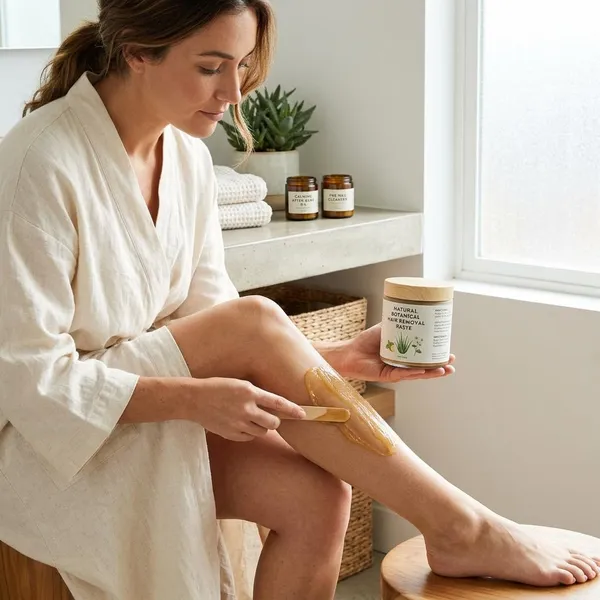
How to use natural hair removal products safely
Safe use comes down to three things: calm skin, correct product texture, and gentle removal. Many bad results come from rushing, reheating too much, pulling upward, or trying to remove every last hair with repeated passes.
Before treating a visible or sensitive area, practice on a less reactive spot such as the lower leg. That gives you a chance to learn how the product spreads, how firmly it grips, and how your skin reacts before you move to the face, underarms, or bikini line.
Patch test before full use
Patch test any new product, including natural waxes, sugaring pastes, oils, and DIY mixtures. Apply a small amount to a discreet area and wait at least 24 hours if you can, especially if the formula contains citrus, fragrance, essential oils, or botanical extracts.
A patch test does not guarantee every body area will react the same way, but it can catch obvious irritation before you treat a larger or more visible area.
Avoid irritated or broken skin
Do not use root-removal products on sunburned, cut, inflamed, peeling, or freshly exfoliated skin. Natural formulas can still pull at the skin surface, and damaged skin is more likely to sting, lift, or stay red longer.
- Wait if: the area feels hot, sore, raw, or unusually tight.
- Postpone if: you have active rashes, open spots, or inflamed acne.
- Be extra cautious: after retinoids, acids, strong peels, or recent shaving irritation.
Follow the recommended temperature and timing
Warm should never mean painfully hot. Test a small amount before applying it widely, and follow the product's timing instead of leaving it on longer for "better" results.
If the wax or sugar becomes hard to control, stringy, runny, or unusually sticky, stop and adjust rather than pushing through. Poor texture often causes broken hairs, messy removal, and unnecessary redness.
Remove hair gently without repeated passes
Hold the skin taut and remove the product close and parallel to the skin rather than pulling straight upward. This usually gives a cleaner result and puts less stress on the skin surface.
If a few hairs remain, tweeze them or leave them for another day. Going over the same sensitive patch again and again is one of the fastest ways to turn a normal session into irritation.
Keep aftercare simple and soothing
Aftercare should calm the skin, not overload it. A cool compress, aloe gel, or plain fragrance-free moisturizer is usually enough.
- For the first day: avoid hot baths, heavy sweating, tight friction, and direct sun on treated skin when possible.
- Skip strong actives: acids, retinoids, fragranced lotions, and harsh scrubs can sting after hair removal.
- Keep it boring: if the skin feels comfortable and clean, you do not need five extra products.
Conclusion
The most practical choice is simple: use sugaring for a balanced at-home option, plant-based wax when you need more grip, and face-specific or sensitive-area products where the skin is delicate. Treat turmeric, papaya, scrubs, and oils as skin-support extras rather than dependable hair removal. If your skin is calm, the product matches the body area, and you avoid repeated passes, natural hair removal can be useful without turning into an irritating experiment.
FAQS
What is the best natural hair removal product?
For most people, sugaring paste is the best starting point because it removes hair from the root and is easier to clean up than many waxes. Choose plant-based wax instead if your hair is very coarse or does not lift well with sugar paste.
Is sugaring better than waxing for sensitive skin?
Often, yes, especially if your skin dislikes strong pulling or sticky residue. It still depends on technique, so sensitive skin can react badly to sugaring too if the paste is used too hot or pulled repeatedly over the same spot.
Does Cyperus oil actually stop hair growth?
Not reliably. Cyperus oil may be worth using as a soothing aftercare oil if your skin likes it, but it should not be treated as a proven way to stop hair growth.
What is the best natural hair removal product for facial hair?
Use a gentle facial sugaring product or facial wax made for small areas. Avoid body wax on the face, and wait if your skin is irritated or recently exposed to retinoids, acids, or strong acne treatments.

Popular Articles




