What's the Safest Way for Women to Remove Neck Hair?
Hair removal on neck for women is safest when you choose the method by hair type first, then check skin sensitivity and long-term goals. Fine fuzz usually needs a gentler fix than coarse dark growth, and sudden or heavy new hair deserves more caution than routine touch-ups. If you are considering Ulike IPL, the first checks are simple: approved area, compatible skin tone, compatible hair color, and calm skin.

Best neck hair removal by hair type
The neck is a visible, easily irritated area, so the "strongest" method is not always the best one. Start by deciding what kind of hair you are dealing with: soft peach fuzz, a few coarse hairs, a larger patch of darker hair, or light/gray hairs that do not respond well to light-based devices.
| Neck hair pattern | Most practical first choice | When to consider something longer-term |
|---|---|---|
| Fine peach fuzz | Facial trimming | If frequent trimming irritates the skin or the hair becomes darker |
| A few coarse hairs | Tweezing | If the same hairs keep returning, electrolysis may be worth it |
| Widespread dark growth | Shaving for control, IPL or laser for reduction | If you want fewer touch-ups and your hair/skin are compatible |
| Gray, white, blonde, or red hair | Trimming or electrolysis | If permanent removal of individual hairs is the goal |
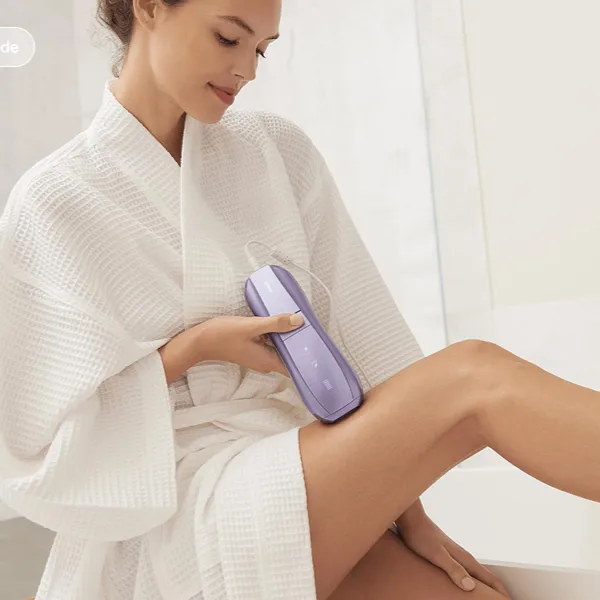
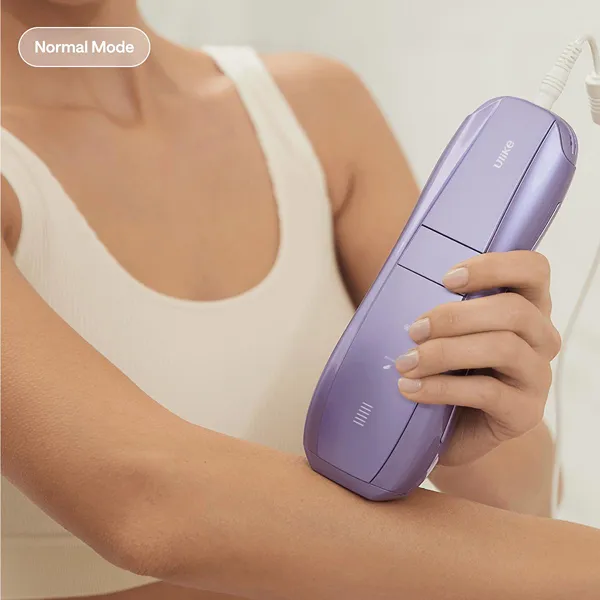
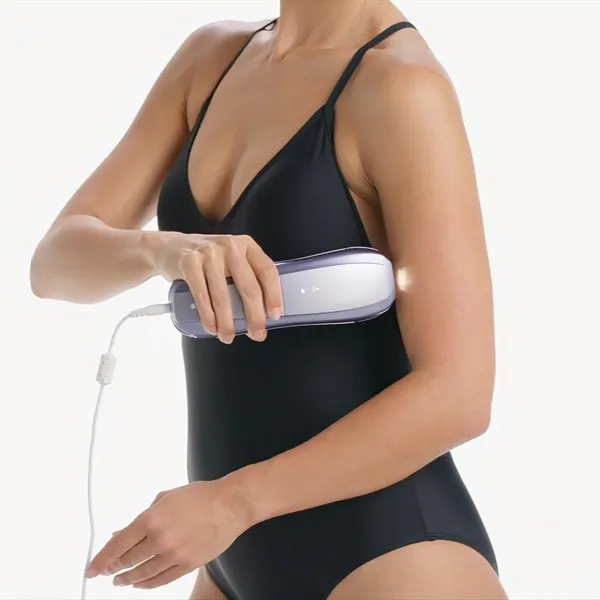
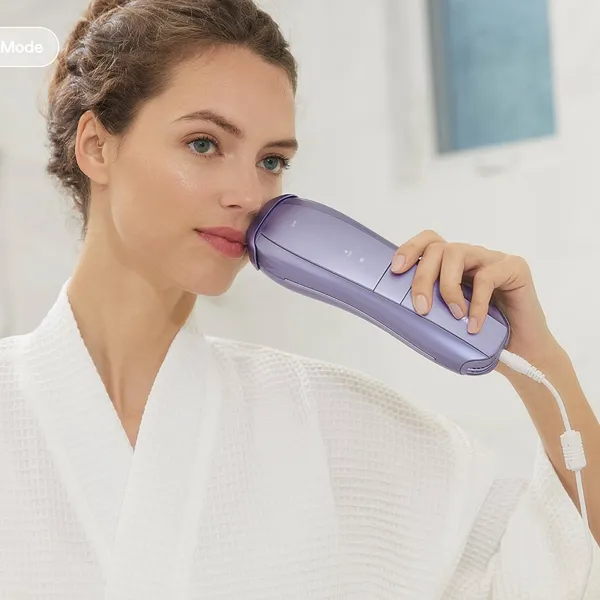
Can women use Ulike IPL on neck hair
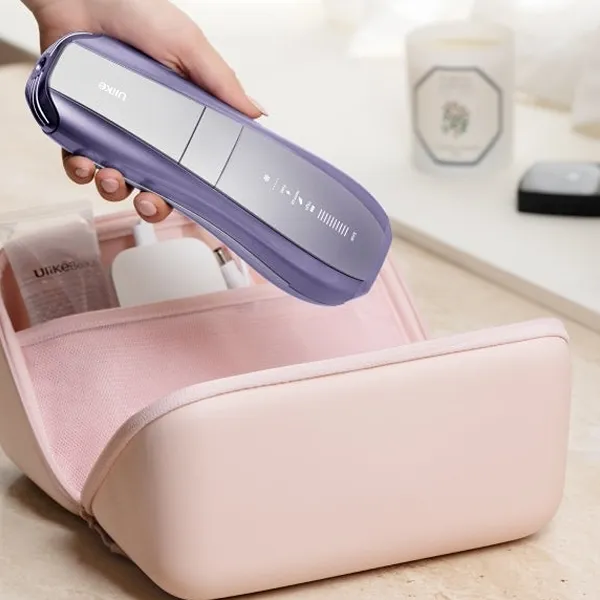
Women can use Ulike IPL on neck hair only when the exact treatment area is allowed by the device instructions and the skin and hair match the compatibility guidance. The neck should be treated more cautiously than legs or arms because the skin is thinner, more visible, and often exposed to fragrance, collars, sweat, and sun.
Confirm the exact area is approved
Do not assume that "face" or "body" approval automatically includes every part of the neck. Check the Ulike manual for the exact zone you want to treat, especially if the hair is on the front of the throat rather than the nape or jawline area.
If the manual is unclear, the safest move is to contact the brand or ask a dermatologist before using light-based treatment there. Guessing is not worth a burn or dark mark on a highly visible area.
Check skin tone compatibility
Skin tone compatibility is one of the main safety checks for IPL. The device needs enough contrast between hair pigment and skin, and deeper skin tones may have a higher risk of excess heat, irritation, burns, or pigmentation changes depending on the device.
- Use the brand's tone chart or built-in sensor if available.
- Check the neck itself, not only your arm or leg, because sun exposure can make it darker.
- Pause if you are recently tanned or sunburned.
Check hair color compatibility
Dark brown or black neck hair is usually the best candidate for IPL. Very light, gray, white, or red hair often does not contain enough pigment for the device to work well.
Patch test before full treatment
A patch test is especially important on the neck, even if you have used IPL elsewhere. Treat a small area at the recommended starting setting, then wait the time suggested by the manual before doing a wider session.
Avoid irritated or damaged skin
Skip Ulike IPL on skin that is sunburned, scratched, inflamed, freshly waxed, recently tweezed, or reacting to skincare. Calm skin is the baseline; IPL should not be used to "push through" irritation.
This matters in everyday situations too. If you wore a tight collar all day, used a strong exfoliating acid, or shaved roughly that morning, waiting is often the better decision.
Which long-term neck hair removal option is best
The best long-term option depends on what you are trying to reduce: a broad area of dark hair, a few stubborn follicles, or hair growth that may be linked to hormones. IPL and laser are reduction methods for compatible pigmented hair; electrolysis is the better fit when individual hairs need permanent removal or when the hair color is not suitable for light-based treatment.
Ulike IPL for convenient home treatments
Ulike IPL is a good fit for someone with compatible dark neck hair who wants privacy, lower ongoing clinic commitment, and a routine they can do at home. It is less suitable if you know you will not keep a treatment schedule, because results depend heavily on regular use.
Think of it as a maintenance project, not an instant removal session. If you currently shave a dark neck patch often and want slower regrowth over time, home IPL may be a practical middle ground.
Professional laser for clinic-led reduction
Professional laser may be the better choice for larger or denser areas of pigmented neck hair, especially if you want a trained provider to assess settings, reaction, and progress. Clinic treatment can also feel more reassuring when the target area is on the front of the neck rather than a less visible body area.
Costs vary, and most people need multiple sessions. Before booking, ask which exact neck area is included, how many sessions are commonly needed for similar hair, and whether maintenance sessions are expected.
Electrolysis for individual follicles
Electrolysis is strongest when the problem is specific: a few coarse hairs, gray hairs, mixed-color growth, or stubborn strands that survive other methods. It is also the only FDA-approved method for permanent hair removal.
The drawback is pace. Because each follicle is treated separately, electrolysis can feel slow for a large patch, but it can be very satisfying for the small visible hairs that are most annoying.
Medical care for hormone-related growth
Medical care becomes important when neck hair appears suddenly, spreads quickly, becomes much darker, or comes with symptoms such as irregular periods, acne, scalp thinning, or unexplained weight changes. Hair removal can manage appearance, but it cannot explain why the pattern changed.
- Book a medical check if the change is new or rapid.
- Mention medications, cycle changes, acne, and family history.
- Use cosmetic removal gently while the cause is being assessed.
For hormone-related growth, the most effective plan may combine medical management with a removal method that suits the hair color and skin tone.
How to remove neck hair without irritation
Irritation usually comes from a mix of the method, the skin's condition, and how many times the same area is worked. The safest routine is boring in the best way: clean skin, clean tools, light pressure, simple aftercare, and sun protection when the neck will be exposed.
Clean and dry the skin
Start with clean skin so oil, sunscreen, sweat, and skincare residue do not interfere with the method. For shaving, slightly damp skin with a shaving gel can reduce drag; for IPL, the skin generally needs to be clean and fully dry according to the device instructions.
Avoid scrubbing right before hair removal. The neck can turn reactive quickly, and freshly exfoliated skin is more likely to sting, redden, or mark.
Use clean hair removal tools
Dirty tweezers, dull blades, and product-coated trimmer heads are common causes of bumps. Rinse and dry razors properly, disinfect tweezers, clean trimmer attachments, and replace blades once they tug instead of glide.
Work gently with minimal passes
The neck does not reward aggressive technique. One careful pass is usually better than chasing perfect smoothness until the skin feels hot.
- Shaving: use short strokes and light pressure.
- Tweezing: pull in the direction of growth, not upward at random.
- IPL: follow the overlap guidance instead of flashing the same spot repeatedly.
Follow the product instructions
Instructions matter most when the product can irritate or heat the skin, such as depilatory creams, IPL devices, and strong aftercare products. Do not leave creams on longer than directed, do not use higher IPL settings just to speed things up, and do not treat an area the manual excludes.
Apply fragrance-free aftercare
After hair removal, choose plain, fragrance-free aftercare such as a bland moisturizer or soothing gel if your skin tolerates it. Skip perfume, strong acids, retinoids, and harsh spot treatments on the area for the day.
Protect the area from sunlight
Freshly treated neck skin can be more prone to redness and uneven marks after sun exposure, especially after IPL, laser, waxing, or electrolysis. Once the skin is comfortable, use broad-spectrum sunscreen on exposed areas, and consider shade, a collar, or a scarf if you will be outside for a long time.
For summer or vacation use, plan hair removal before heavy sun days rather than right before them. If the neck is already sunburned, wait until it has fully recovered.
Conclusion
The best choice is the one that solves the actual neck hair problem without over-treating delicate skin: trim fine fuzz, tweeze only the odd coarse hair, shave wider growth carefully, and reserve Ulike IPL, laser, or electrolysis for hair that truly fits those methods. If the growth pattern is new, fast, or linked with other symptoms, get medical advice instead of treating it as only a grooming issue.
FAQS
Does shaving neck hair make it grow back thicker?
No. Shaving cuts hair at the surface, so regrowth can feel blunt or stubbly, but it does not change the follicle or make the hair grow thicker.
Can neck hair be removed permanently?
Yes, electrolysis can permanently remove treated neck hairs. Laser and IPL are better described as long-term reduction methods, and some maintenance may still be needed.
Can you use Ulike IPL after tweezing or waxing?
Not right away. IPL needs hair pigment in the follicle to target, so shaving is usually the preferred prep method while tweezing and waxing should be avoided before treatment.

Popular Articles