Is Facial Hair Removal Cream Safe for Your Face?
You can use depilatory cream on facial hair, but only if the product is clearly made for the face and for the exact area you want to treat. The biggest things to check first are the label, your skin condition, recent skincare use, and the maximum time allowed. If your skin is irritated, sunburned, freshly exfoliated, or the cream starts to burn, it is better to stop than to chase a perfectly smooth result.
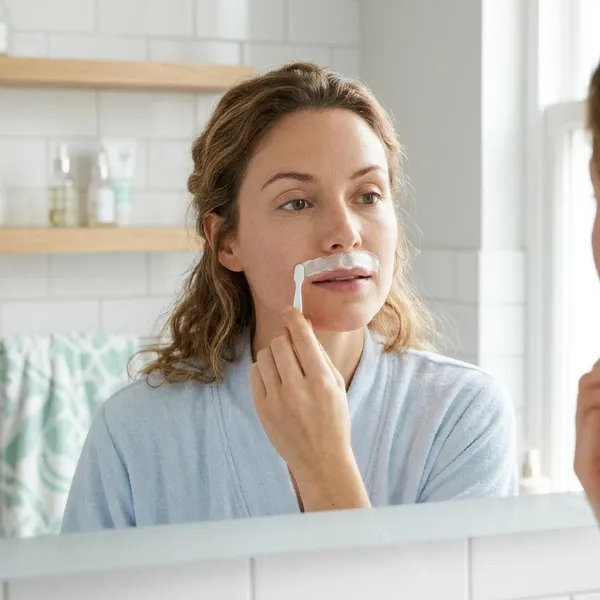
What to expect from facial depilatory cream
Facial depilatory cream is a quick surface-level hair removal method. It can be useful for light upper-lip hair, peach fuzz, or a small chin area when you want smooth skin without waxing or tweezing. It is not a long-term reduction method, and it is not automatically gentle just because the word "facial" appears on the package.
Hair removal without pulling out the root
Depilatory cream works by breaking down the visible hair shaft so it can be wiped away. It does not pull the hair from the follicle like waxing, threading, or tweezing, which is why many people find it less painful.
This makes the cream more appealing for a small area before a night out than for someone trying to manage heavy daily regrowth. If the hair is coarse or beard-like, a standard facial formula may remove it unevenly or irritate the skin before it gives a clean result.
Temporary smoothness rather than lasting reduction
The smoothness is temporary because the root stays in place. Some people feel the result lasts a little longer than shaving, but it is still usually a short-term fix rather than something that changes future growth.
- Good fit: fine upper-lip hair, occasional touch-ups, or peach fuzz that bothers you in makeup or bright light.
- Less ideal: thick stubble, fast regrowth, or a situation where you want weeks of smoothness.
- Wrong expectation: using cream and expecting the hair to grow back slower, finer, or permanently reduced.
Possible irritation even with facial formulas
A facial formula can still sting, redden the skin, or leave dry patches. The same ingredients that weaken hair can also bother the skin barrier, especially if the cream is left on too long or used after strong skincare.
People using retinoids, exfoliating acids, acne treatments, or anyone with rosacea, eczema, or very reactive skin should be more cautious. In that higher-risk situation, patch testing is not just a formality; it is the safest way to see whether your skin is likely to tolerate the product.
What to check before using cream on your face
The label matters more than the front of the box. Before opening the tube, check whether the product is approved for facial use, which areas it allows, how long it can stay on, and how soon it can be used again. Then check your skin, because a product that was fine last month can feel harsh after sun, exfoliation, or irritation.

Facial use and approved treatment areas
Use only a product that clearly says it is suitable for the face. A body depilatory may be too strong for facial skin, and "hair removal cream" by itself is not enough reassurance.
Broken, irritated, or sunburned skin
Skip the cream if the skin is cut, scraped, peeling, inflamed, freshly picked, windburned, or sunburned. Damaged skin lets irritation build much faster, and a small upper-lip patch can turn into a very visible red mark.
Skincare products and recent skin treatments
Be extra careful if you have recently used retinoids, benzoyl peroxide, salicylic acid, glycolic acid, lactic acid, prescription acne products, scrubs, or strong peels. These can leave the skin more reactive even when it looks normal.
- After a simple cleanser and moisturizer routine: risk is usually lower, assuming the skin looks calm.
- After exfoliating, waxing, dermaplaning, laser, or a peel: wait until the skin feels fully settled and follow any professional aftercare advice.
- During an eczema, acne, or rosacea flare: avoid treating that area unless a clinician has told you it is safe.
Maximum application time and repeat-use interval
The maximum time is not a suggestion. Leaving the cream on longer rarely fixes missed hairs; it mostly increases the chance of burning or lingering tenderness.
Also check the repeat-use interval before you start. If some hair remains, rinse and wait for the label's recommended interval rather than reapplying immediately. A few missed hairs are easier to manage than several days of irritated facial skin.
How to use facial hair removal cream
Good results come from control: small area, clean skin, exact timing, gentle removal, and simple aftercare. Do not treat it like a face mask or moisturizer. The cream should sit on the hair for the allowed time and then come off completely.
Test a small area and wait as directed
Patch test first, especially with a new product. Apply it to a small, discreet part of the intended area, remove it exactly as directed, and wait the full time stated on the label before using it more widely.
A patch test cannot promise zero irritation, but it can catch obvious problems before they happen across your upper lip or chin. This is especially useful if you are trying depilatory cream before an event; testing the day of the event is cutting it too close.
Prepare your skin following the label
Most labels call for skin that is clean, dry, and free from makeup, sunscreen, oil, or heavy skincare. Avoid scrubbing first, because freshly exfoliated skin is more likely to sting.
Apply without rubbing and start a timer
Spread an even layer over the hair without massaging it into the skin. Start a timer as soon as the cream is on, not after you finish tidying the bathroom or checking your phone.
- Use good lighting so you can keep the cream only on the treatment area.
- Avoid lips, nostrils, and the eye area unless the label specifically gives safe instructions for nearby use.
- Remove early if it burns instead of waiting for the timer to end.
Remove gently within the time limit
Remove the cream with the tool, cotton pad, or damp cloth recommended by the product. Use light pressure only. If the hair does not come away easily, scrubbing harder is not the solution.
This is where many people overdo it. If you got most of the hair but a few strands remain, stop and let the skin rest. Trying to perfect the result in one session is one of the easiest ways to create irritation.
Rinse thoroughly and follow the aftercare instructions
Rinse the area well with cool to lukewarm water so no cream is left behind, then pat dry. For the rest of the day, keep skincare boring: no acids, retinoids, scrubs, aftershave-style products, or fragrance-heavy formulas unless the label says otherwise.
If the skin feels tight, a plain fragrance-free moisturizer may help. If you will be outside, protect the area from sun once the skin feels calm and the product instructions allow it.
What to do if the cream burns or stings
A little mild tingling may be mentioned on some labels, but burning, sharp stinging, growing heat, or pain is a stop sign. At that point, finishing the hair removal no longer matters. Shortening contact time is the priority.
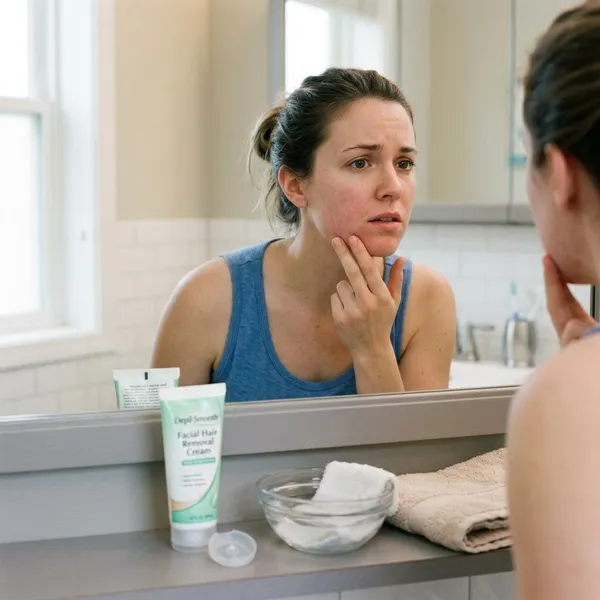
Remove it immediately and rinse with water
Take the cream off right away and rinse with plenty of cool to lukewarm water. Do not wait to see if the burning settles while the product is still on your skin. Avoid rough wiping; let the water remove as much residue as possible, then blot gently.
Stop further hair removal and irritating skincare
Leave the area alone while it calms down. Do not shave, wax, thread, tweeze, exfoliate, or reapply depilatory cream to "fix" the missed hair.
Seek medical help for severe or lasting symptoms
Get medical advice if you have severe redness, swelling, blistering, oozing, strong pain, eye exposure, or symptoms that keep getting worse. Facial chemical irritation can need professional care, especially if the skin blisters or the pain does not settle after rinsing.

Conclusion
Facial depilatory cream is best for small, low-risk areas and short-term smoothness, not for forcing stubborn hair off at any cost. If the label matches your treatment area, your skin is calm, and you respect the timing, it can be a convenient option; if your skin is reactive, recently treated, sunburned, or dealing with coarse beard growth, a different method may be the safer choice.
FAQS
Does facial hair grow back thicker after depilatory cream?
No. Depilatory cream does not change the follicle, so it should not make facial hair grow back thicker or darker. Regrowth can look more noticeable simply because the hair returns at the surface again.
Can facial hair removal cream cause dark marks?
Yes, especially if it irritates or burns the skin. Dark marks are more likely after inflammation, so removing the cream on time and avoiding damaged skin matters more if you are prone to hyperpigmentation.
Is depilatory cream better than shaving for sensitive skin?
Not always. Cream avoids razor friction and nicks, but the chemicals can be more irritating for some people. If shaving gives you cuts but cream stings during a patch test, neither should be pushed aggressively.
What if some facial hair remains after treatment?
Rinse, stop, and wait for the repeat-use interval on the label. For a few leftover hairs, careful tweezing later may be less irritating than immediately applying more cream to the same skin.


Popular Articles